How Each Budgeting Method Actually Works
Understanding how these two frameworks are structured helps clarify why they feel so different in practice. For a plain-language primer on common budgeting terminology, see budgeting terms you should actually know before diving in.
Zero-Based Budgeting
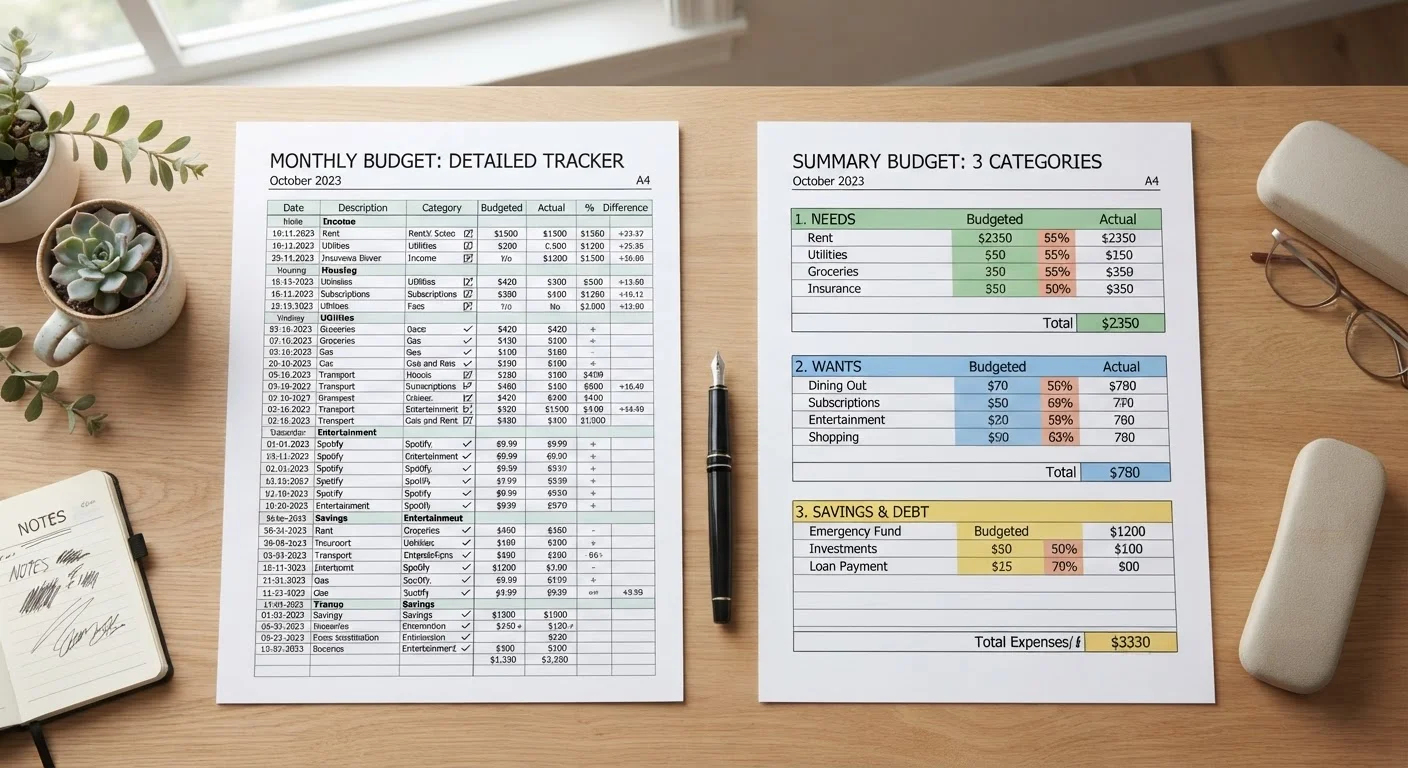
With zero-based budgeting, you start each budget period with your total expected income and assign every dollar to a specific category - rent, groceries, savings, debt payments - until the remaining balance reaches zero. That does not mean you spend everything; savings and investments are categories too. The discipline here is intentionality: no dollar is left unassigned or spent on autopilot.
Percentage-Based Budgeting
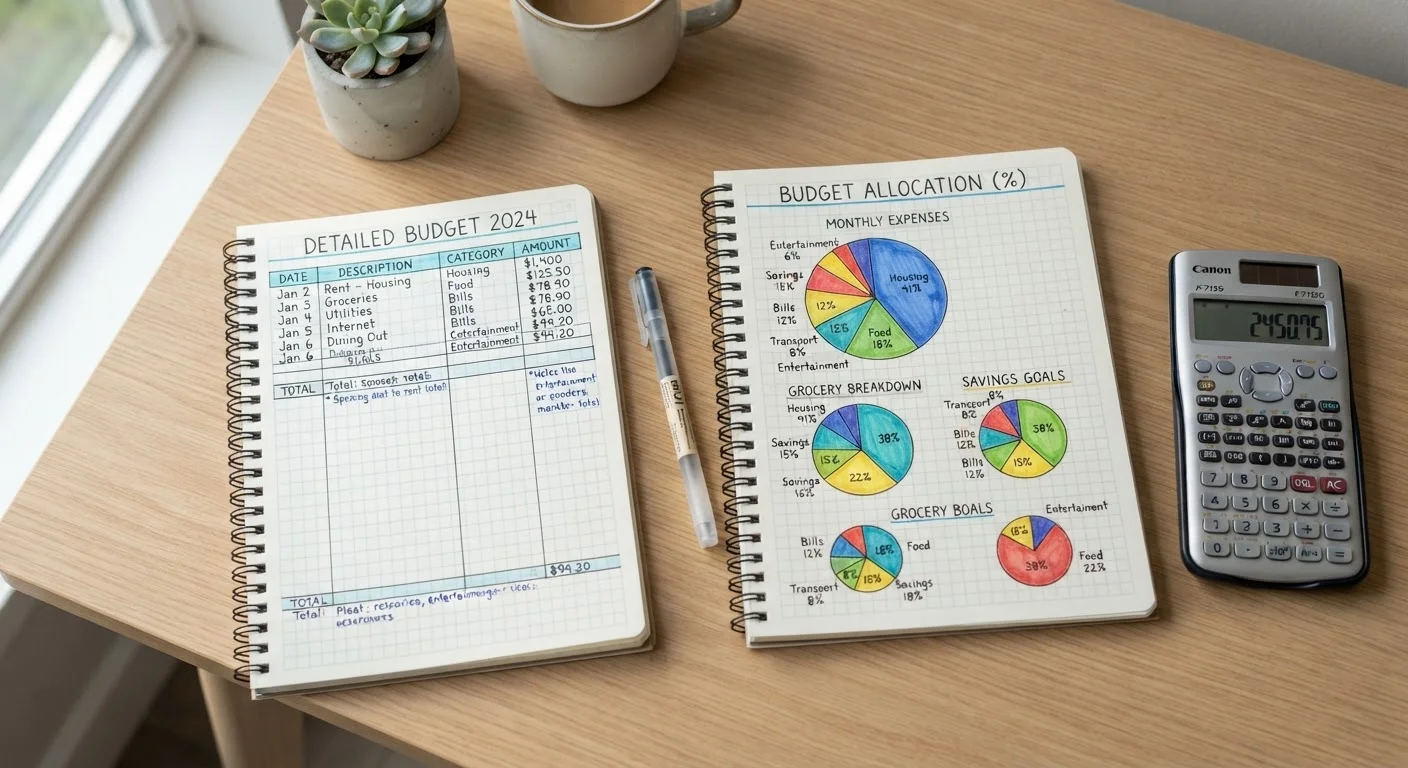
Percentage-based budgeting divides income into broad buckets using fixed ratios. The widely recognized 50/30/20 rule, for example, directs 50% toward needs, 30% toward wants, and 20% toward savings and debt repayment. Because the allocations are proportional, the dollar amounts shift automatically when income rises or falls. For a deeper side-by-side look at those two specific frameworks, see zero-based budgeting vs. the 50/30/20 rule.
| Criterion | Zero-Based Budgeting | Percentage-Based Budgeting |
|---|---|---|
| Core mechanic | Assign every dollar until balance = zero | Split income by fixed percentage ratios |
| Monthly setup time | High - rebuilt each period | Low - ratios stay constant |
| Granularity | Line-item detail per category | Broad buckets (needs, wants, savings) |
| Works best with | Stable, predictable income | Stable or variable income |
| Spending visibility | Very high - every dollar is tracked | Moderate - categories are wide |
| Flexibility | Lower - requires re-allocation if plans change | Higher - proportions adapt automatically |
| Best for beginners? | Steeper learning curve | Easier starting point |
Strengths and Limitations of Each Approach
Both methods can build real financial progress - but each has trade-offs worth weighing before you commit.
~33%
Americans with a detailed monthly budget
Gallup polling has consistently found that fewer than one in three Americans maintain a detailed household budget, suggesting significant room for adoption of any structured method.
20%
Savings target in the 50/30/20 rule
The 50/30/20 guideline - widely cited by consumer finance educators - designates 20% of after-tax income for savings and debt repayment above minimum payments.
Where Zero-Based Budgeting Excels
Because you rebuild the budget from scratch each period, you are forced to justify every category. This tends to surface spending leaks that percentage methods can obscure inside broad buckets. It is particularly useful when managing fixed vs. variable expenses that shift month to month, such as utility bills or irregular subscriptions.
The main limitation is time. Creating a detailed line-item budget monthly takes effort, and if income is unpredictable, you may find yourself rebuilding mid-month.
Where Percentage-Based Budgeting Excels
The simplicity of fixed ratios lowers the barrier to starting. You do not need to track dozens of categories - you just verify that your broad spending patterns roughly match your chosen proportions. This makes it forgiving for people whose schedules or confidence levels make detailed tracking feel overwhelming.
The trade-off: broad buckets can hide problem areas. If your "needs" category is chronically overfull, a percentage system may not pressure you to investigate why. If you have wondered whether budgeting misconceptions are holding you back from starting at all, budgeting myths that keep people from starting addresses several of the most common ones.
Choosing the Right Framework - or Combining Both
The most effective budget is one you will actually maintain. For a broader look at how these approaches compare alongside other popular systems, a budgeting method comparison walks through several frameworks side by side.
Some people find that a hybrid works well: use percentage targets to set guardrails for major categories, then apply zero-based discipline within each category when detail matters most - for example, treating your discretionary "wants" bucket as a zero-based sub-budget. This preserves simplicity at the macro level while retaining intentionality where overspending tends to occur.
Start by honestly assessing two things: how much time you can realistically commit each month, and how stable your income is. If both are high, zero-based budgeting offers the most control. If either is limited, a percentage-based approach provides a durable, lower-friction structure you are more likely to stick with over time. Explore more strategies in the budgeting basics hub.
This article is for general informational and educational purposes only and does not constitute personalized financial advice. For guidance specific to your situation, consider consulting a qualified financial professional.