
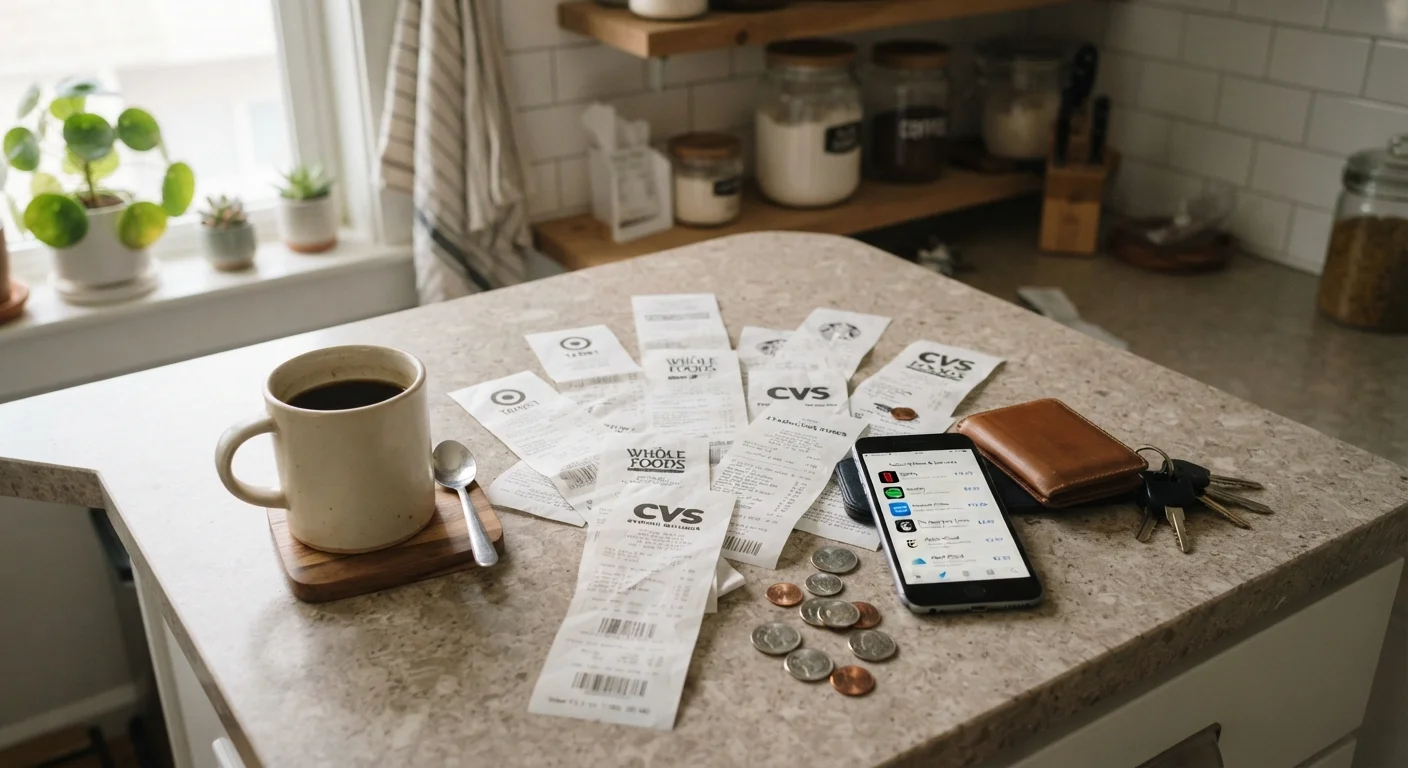
Why Small Spending Leaks Are So Hard to See
A budget leak isn't dramatic. It doesn't arrive as a single large purchase you'll regret - it shows up as $9.99 charged on a Tuesday, a $3 fee you didn't notice, a delivery markup you accepted without thinking. Individually, each is forgettable. Together, they can account for a meaningful share of monthly income slipping away without a clear sense of where it went.
The psychological mechanics are worth understanding. Our brains are generally good at flagging large, one-time expenditures as significant - but routine, small, automatic charges bypass that awareness almost entirely. Behavioral economists call this inattentional spending: costs we accept not because we've evaluated them, but because we haven't noticed them.
This is why tracking your spending consistently matters so much. It converts invisible outflow into visible data - and visible data is something you can act on.
$219/mo
Average underestimate of monthly discretionary spending
A survey by Rocket Money found that consumers routinely underestimate their monthly subscription and discretionary spending by roughly this amount.
4-7
Average number of forgotten subscriptions per household
Consumer research consistently finds that most households are paying for at least several services they rarely or never use, often totaling $50-$100 monthly.
The Most Common Spending Leaks - and How to Plug Them
The mistakes below aren't about irresponsibility. They're structural: the way modern billing, convenience culture, and habit work together to make certain costs feel smaller than they are. Recognizing them is the first step toward making intentional choices.
Keeping subscriptions you no longer actively use.
Why it happens: Streaming services, apps, and membership clubs are designed to auto-renew with minimal friction. Once set up, they rarely send reminders - so they quietly charge your card month after month.
Paying convenience and delivery fees without tracking their cumulative cost.
Why it happens: Individual fees - $2.99 here, $4.50 there - feel trivial in the moment. But food delivery platform fees, service charges, and tipping norms can add 30-40% to the base cost of a meal.
Using out-of-network ATMs repeatedly instead of planning cash withdrawals.
Why it happens: When cash is needed urgently, the nearest ATM wins - regardless of fees. Many people don't realize that both their own bank and the ATM operator may charge separate fees, often totaling $3-$6 per transaction.
Letting grocery habits inflate the food budget through small, unplanned additions.
Why it happens: Pre-cut produce, single-serve snacks, and checkout-aisle additions are priced at a significant premium over their unprocessed equivalents. These feel like small decisions but occur multiple times per week.
Ignoring bank fees, minimum balance penalties, and account maintenance charges.
Why it happens: These fees often appear as small line items on statements, and many people don't review their statements in detail. A monthly maintenance fee of $12-$15 totals $144-$180 per year.
If you're ready to address these leaks systematically, a good starting point is building a simple monthly budget from scratch - which walks through how to categorize and cap spending in each area of your financial life.
Automatic Renewals Are Designed to Be Easy to Miss
Many services intentionally send renewal notices to email folders you rarely check, or bury the charge in a line item that doesn't clearly identify the service name. Don't rely on notifications to remind you - build your own review process. Check your bank and credit card statements directly, line by line, at least once a month.
Turning Awareness Into a Monthly Habit
Plugging spending leaks isn't a one-time task - it's a habit. Subscriptions re-accumulate. Convenience fees creep back in. Bank accounts change their fee structures. The most effective approach is a brief, regular review rather than a periodic overhaul.
Consider building a monthly financial check-in into your routine. Even 20-30 minutes at the end of each month - reviewing your statements for recurring charges, unexpected fees, and unplanned categories - can surface problems before they compound. Over time, this kind of awareness of habits that undermine savings is what separates people who make incremental financial progress from those who feel like they're always running in place.
The goal isn't to eliminate all convenience or spontaneity from your finances. It's to make sure every dollar leaving your account reflects an actual choice - not an oversight.
This article is for general informational and educational purposes only and does not constitute personalized financial advice. For guidance specific to your financial situation, consider consulting a qualified financial professional.