Sound Quality: The Signal Path Makes the Difference
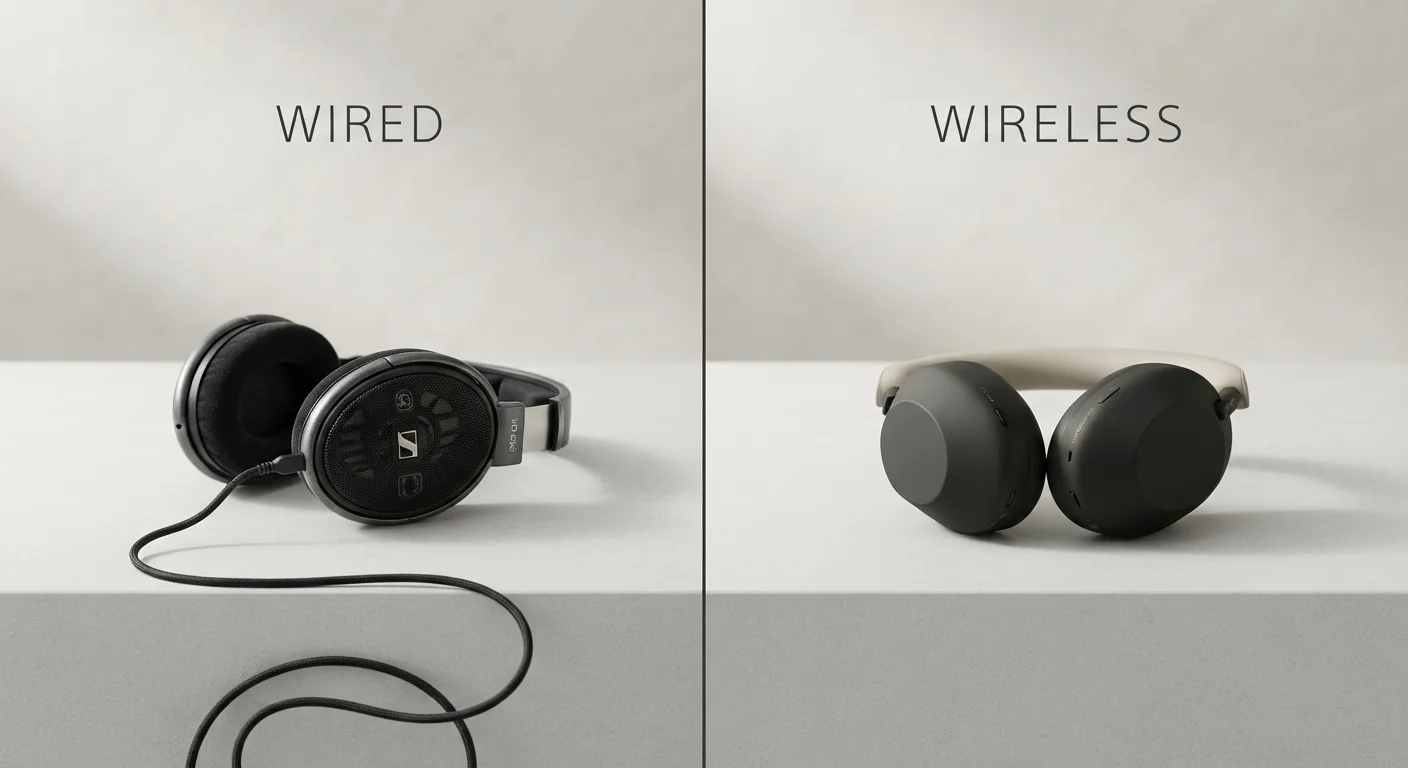
Sound quality hinges on how audio data travels from your device to your ears. With wired headphones, the signal is purely analog by the time it reaches the driver - the component that converts electrical signals into sound waves. There is no compression step in the wireless transmission chain, which means the audio information arrives intact.
Wireless headphones use Bluetooth to transmit audio, and Bluetooth requires the audio to be encoded (compressed) for transmission, then decoded at the headphone end. The codec used - aptX, AAC, LDAC, or the standard SBC - determines how much audio detail is preserved. LDAC, developed by Sony and supported by many Android devices, transmits roughly three times more data than SBC, coming closer to wired-quality results. However, the listening environment and the quality of the headphone drivers themselves often matter more than the wired-versus-wireless distinction for casual listeners.
For the average consumer streaming music or podcasts, the audible difference between a well-implemented wireless codec and a wired connection is minimal. The gap is more meaningful in professional or audiophile contexts where subtle detail and dynamic range are evaluated closely.
| Criterion | Wired Headphones | Wireless Headphones |
|---|---|---|
| Audio compression | None - uncompressed analog signal | Codec-dependent (SBC, AAC, aptX, LDAC) |
| Latency | Effectively zero | 30-200ms (codec and device dependent) |
| Battery required | No | Yes - typically 20-40 hours per charge |
| Compatibility | Universal (3.5mm or USB-C) | Bluetooth version and codec dependent |
| Freedom of movement | Limited by cable length | Up to ~30 feet from source device |
| Wireless interference risk | None | Possible in crowded Bluetooth environments |
| Typical use case fit | Studio, desk, critical listening | Commuting, exercise, multi-device use |
Latency: When Milliseconds Actually Matter
Latency - the delay between a sound being triggered and you hearing it - is effectively zero with a wired headphone. Wireless Bluetooth audio introduces a measurable delay, typically between 30 and 200 milliseconds depending on the codec and device pairing. To put that in perspective, latency affects more than people realize across digital audio and video experiences.
For music listening, latency is irrelevant - you are not watching a lip-sync reference. However, it becomes noticeable when watching video content or playing games. A 100ms delay means audio arrives a tenth of a second after the visual event, which many people perceive as a slight echo or lip-sync mismatch. Some wireless headphones include dedicated low-latency modes that reduce this to around 40ms, which most users find acceptable for casual video watching.
Low-Latency Bluetooth Modes Explained
Some wireless headphones advertise a "gaming mode" or "low-latency mode" that switches to a faster but lower-quality codec to reduce audio delay. This can bring Bluetooth latency down to around 40ms, which is less noticeable for most users. However, enabling this mode often disables noise cancellation and may reduce audio fidelity slightly - it is a deliberate trade-off rather than a free improvement.
Gamers and video editors who require frame-accurate audio sync are best served by wired connections, where latency is not a variable to manage.
Daily Use: Compatibility, Convenience, and Battery
Wired headphones connect via a 3.5mm audio jack or USB-C, and they work immediately with any compatible device - no pairing, no charging, no connection dropouts in crowded wireless environments. The trade-off is the cable itself, which limits range of motion and can become a point of wear over time.
Wireless headphones remove the cable entirely but add battery management as an ongoing responsibility. Most full-size wireless headphones offer between 20 and 40 hours of playback per charge. Running out mid-commute is a real possibility if charging routines are inconsistent. Many models include a wired fallback mode for emergencies, though this typically bypasses the active noise cancellation circuitry.
Bluetooth pairing has also become considerably more reliable in recent years, with many headphones supporting multipoint connection - meaning they can stay connected to two devices simultaneously, like a laptop and a phone. Just as wired connections offer reliability advantages over Wi-Fi in networking contexts, wired headphones eliminate wireless interference as a variable entirely.
~40ms
Bluetooth latency in low-latency mode
Manufacturers commonly cite this figure for dedicated low-latency gaming modes; standard Bluetooth audio typically ranges from 100-200ms.
3×
More data transmitted by LDAC vs. SBC
Sony's LDAC codec is documented to transmit up to 990kbps compared to SBC's maximum of approximately 328kbps, preserving significantly more audio detail.
20-40 hrs
Typical wireless headphone battery life
Most mid-range to premium over-ear wireless headphones on the market advertise battery life in this range under standard playback conditions.
For most everyday consumers, the convenience of wireless outweighs the marginal audio advantages of wired - but understanding those trade-offs helps you match the tool to your actual needs.