The Psychology Attackers Exploit
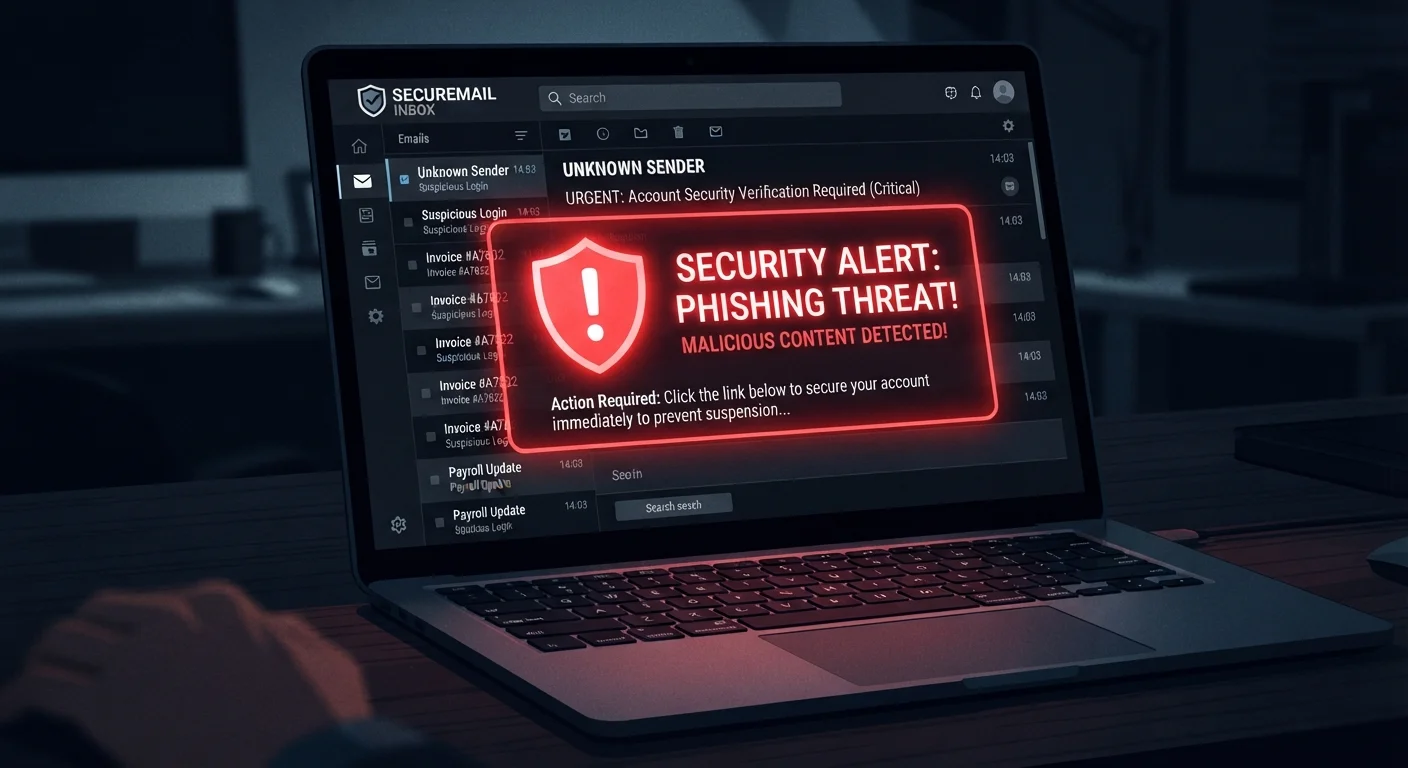
Phishing works not because people are careless, but because it is engineered to exploit mental shortcuts that every human relies on. Researchers in behavioral psychology have identified several core triggers that attackers deliberately activate.
Authority: When a message appears to come from the IRS, your employer, or your bank, the instinct is to comply. We are conditioned to respond to institutional authority without reflexively questioning it.
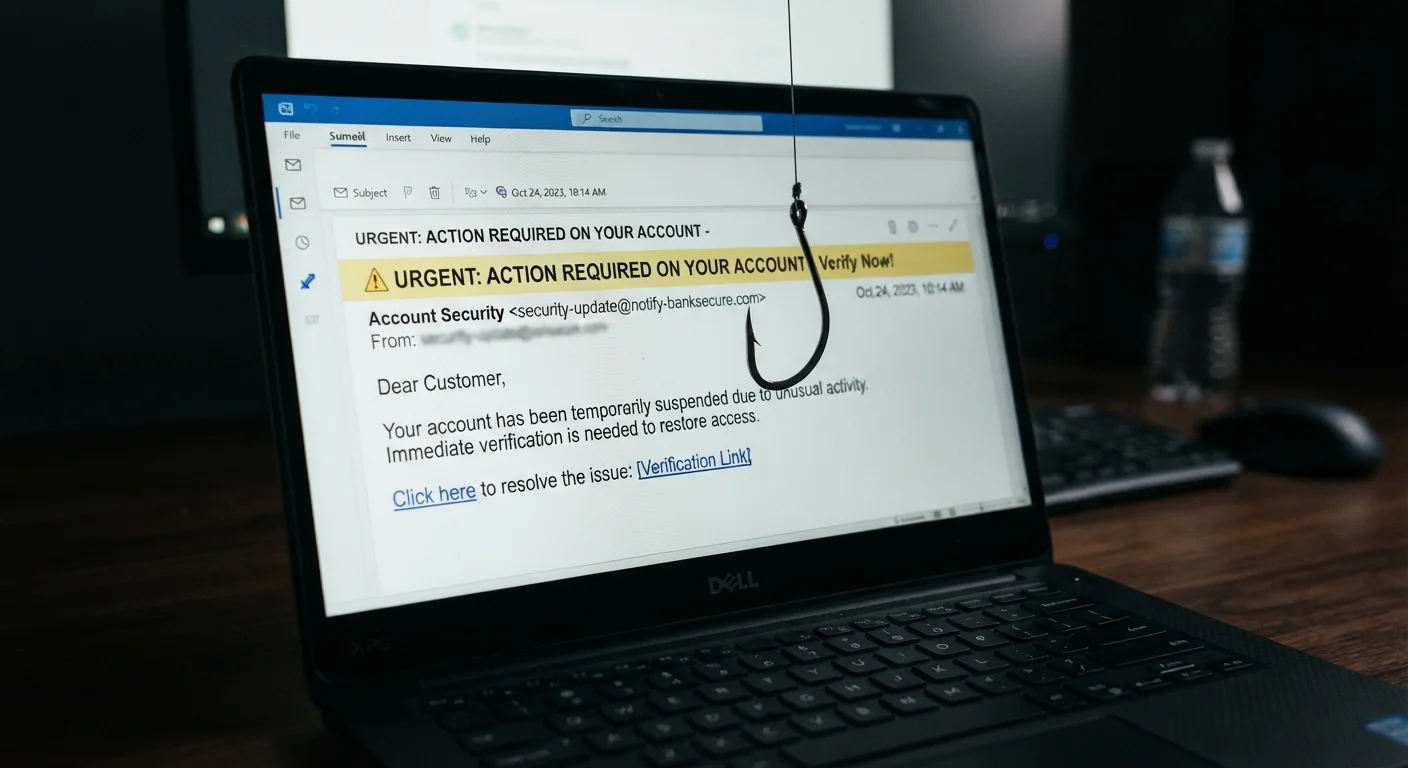
Urgency and scarcity: Phrases like "your account will be closed in 24 hours" or "immediate action required" compress decision-making time. Under pressure, people skip the verification steps they would otherwise take.
Fear of loss: Warnings about unauthorized access to your account or a pending charge you didn't make trigger a stress response that pushes action before reflection.
These aren't weaknesses unique to unsophisticated users. They are universal cognitive patterns, and attackers test and refine their messages to maximize their effectiveness against all of us.
“Phishing is fundamentally a human problem, not a technology problem. Attackers don't need to break encryption - they just need to convince one person to hand over the key.”
— Cybersecurity and Infrastructure Security Agency (CISA), U.S. federal agency for cybersecurity guidance
Why Technical Sophistication Doesn't Always Protect You
A common misconception is that phishing is a problem only for people who aren't tech-savvy. In reality, modern phishing campaigns are often indistinguishable from legitimate communications - even to trained eyes.
Attackers now harvest personal data from social media profiles, data breaches, and company websites to build highly personalized messages, a technique called spear phishing. An email addressed to you by name, referencing your employer, and mentioning a project you're working on is far harder to dismiss than a generic alert.
Beyond personalization, technical deception has become sophisticated. Criminals register domains that differ from legitimate ones by a single character - "paypa1.com" instead of "paypal.com" - a technique called typosquatting. They obtain legitimate SSL certificates so browsers display the padlock icon. They clone the visual design of real websites pixel-for-pixel.
The result is that even people who know what phishing is can find themselves pausing and reconsidering whether a message might be real. That moment of doubt is exactly what attackers are counting on. Everyday digital habits can also increase your exposure without you realizing it, making personalized attacks easier to execute.
The Verification Habit That Stops Most Attacks
When you receive any email requesting action - especially involving login credentials, payments, or personal data - make it a habit to verify the request through a separate channel. Call the organization using a number from their official website, or navigate there directly in a new browser tab. This single habit disrupts the vast majority of phishing attempts because it removes the attacker's ability to control what you see.
What Makes Modern Phishing So Hard to Spot
Several converging factors have made contemporary phishing dramatically more convincing than it was a decade ago.
- Generative AI and translation tools have eliminated the grammatical errors and awkward phrasing that once served as reliable red flags. Today's phishing emails are often polished and well-written.
- Lookalike infrastructure: Fraudulent sites now use valid HTTPS certificates and professional design templates, stripping away another layer of visual warning signs.
- Multi-stage attacks: Some campaigns don't ask for credentials immediately. Instead, they direct victims to a benign-seeming first page to build trust before redirecting to the actual credential-harvesting form.
- Context-aware timing: Attackers send messages timed to real events - tax season, major data breach news, or package delivery periods - so the email feels situationally plausible.
Understanding these mechanics matters because it shifts your defensive posture from "does this look suspicious?" to "can I independently verify this is real?" - a much more reliable question.
36%
Share of data breaches involving phishing
Phishing is consistently identified as one of the leading causes of organizational data breaches, according to Verizon's annual Data Breach Investigations Report.
3.4B
Phishing emails sent per day globally
Estimates from cybersecurity researchers suggest billions of phishing messages are distributed daily, making it the most common form of cybercrime by volume.
60 sec
Median time to first victim click
Research has found that in simulated phishing campaigns, the first person clicks within about a minute of a campaign launching, underscoring how quickly urgency works.
Building a Practical Defense
Awareness of the tactics above points directly toward the behaviors that provide real protection. No single tool or habit eliminates risk entirely, but a consistent approach significantly reduces it.
Pause before you act. Urgency is a manipulation signal, not a reason to rush. A legitimate organization will not penalize you for taking two extra minutes to verify.
Verify independently. If an email claims to be from your bank, close the email, open a new browser tab, and navigate directly to the bank's official website by typing the address yourself. Don't click the link in the message.
Inspect the sender address - carefully. Look at the full email domain, not just the display name. "PayPal Support" can be set as the display name for any email address. The actual sending domain tells the real story.
Use multi-factor authentication (MFA). Even if credentials are stolen through phishing, MFA creates an additional barrier that prevents immediate account takeover in most cases.
For a deeper look at the signals that distinguish real messages from fakes, see our field guide to suspicious emails. And if you want to understand how phishing compares to other scam types, this overview of common online scams is a useful companion read.
This article is for general informational and educational purposes only. It does not constitute legal, cybersecurity, or financial advice. If you believe you have been a victim of fraud, contact your financial institution and relevant authorities directly.