What's Actually Happening When You Season a Pan
The word "seasoning" is misleading. It has nothing to do with salt or spices. Instead, it describes a chemistry reaction that permanently alters the surface of your pan.
When you coat cast iron with oil and place it in a hot oven, the oil's fatty acid chains react with oxygen and heat. Once temperature exceeds the oil's smoke point, those chains begin linking together - a process called polymerization. The result is no longer liquid oil. It's a thin, hard, plastic-like film that bonds directly to the iron.
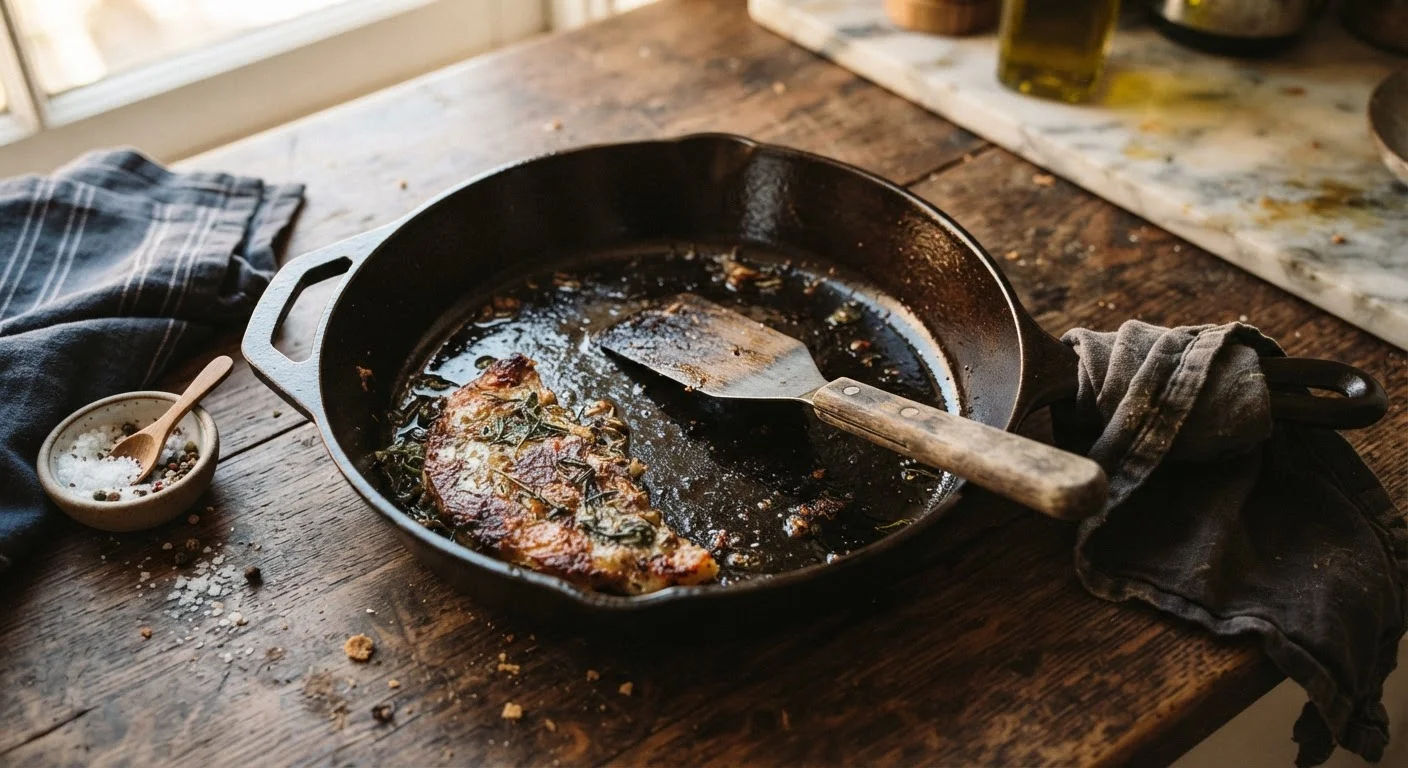
Each seasoning session adds another polymer layer. Over months of cooking, these layers build into the smooth, near-non-stick surface that well-used cast iron is famous for. This is also why a skillet used daily for decades often performs better than a new one straight from the store.
Always Apply Oil Thinner Than You Think
After coating the pan, use a clean cloth to wipe away most of the oil until the surface looks almost dry. This prevents pooling and gummy buildup during curing. Thin, consistent layers cure into hard polymer; thick ones stay tacky and uneven.
Why Oil Choice and Application Technique Matter
Not all fats polymerize equally. Oils high in polyunsaturated fatty acids - such as flaxseed, vegetable, or canola oil - cross-link more readily than saturated fats like lard or coconut oil. This makes them efficient choices for deliberate seasoning sessions.
Application technique is just as important as oil selection. A common mistake is using too much oil. A thick coat doesn't bake evenly - it pools, smokes excessively, and cures into a sticky, gummy layer rather than a hard one. The correct approach is to apply a very thin coat over the entire surface - inside, outside, and handle - then wipe away most of it before the pan goes into the oven. What looks like almost nothing is exactly the right amount.
Temperature matters here too. Baking the oiled pan upside-down at 400-500°F for around an hour gives the polymer time to fully cure. This is the same principle that makes managing pan temperature so central to good cooking results across the board.
400-500°F
Optimal oven temperature range for seasoning
This range exceeds the smoke point of most common cooking oils, triggering the polymerization reaction that cures the oil into a hard coating.
~2-3
Initial seasoning rounds recommended
Multiple thin-coat oven sessions build a more uniform base layer than a single application, giving the pan better initial non-stick properties.
How Everyday Cooking Builds and Threatens Seasoning
Deliberate oven seasoning is a starting point, but the skillet's surface is built most durably through regular use. Cooking bacon, searing meat, or pan-frying deposits additional fat into the surface with each session, reinforcing and deepening the polymer layers organically.
Certain habits work against this process. Acidic ingredients - tomatoes, wine, citrus - are mildly reactive with iron and can slowly dissolve the seasoning coating, particularly during long cooking times. Soaking the pan in water invites rust, which physically damages the surface. Even scrubbing too aggressively with abrasive pads can strip layers that took months to build.
The good news is that seasoning is fully restorable. A pan that has rusted or lost its coating can be scrubbed clean, dried thoroughly, and re-seasoned from scratch. Cast iron is among the most forgiving cookware in existence - the process just takes patience.
Understanding the surface chemistry also helps explain why cast iron behaves differently than stainless steel or non-stick coatings. For a broader look at how heat interacts with different pan materials and techniques, see our guides on sautéing, stir-frying, and pan-frying and dry heat vs. moist heat cooking methods.
Soap Won't Strip a Good Seasoning
The idea that any soap contact ruins cast iron comes from an era when lye-based soaps were common - those were genuinely harsh on the coating. Modern dish soap used briefly during a normal wash won't dissolve a well-cured polymer layer. The far greater risks are prolonged soaking and vigorous abrasive scrubbing.