Why These Three Methods Get Confused
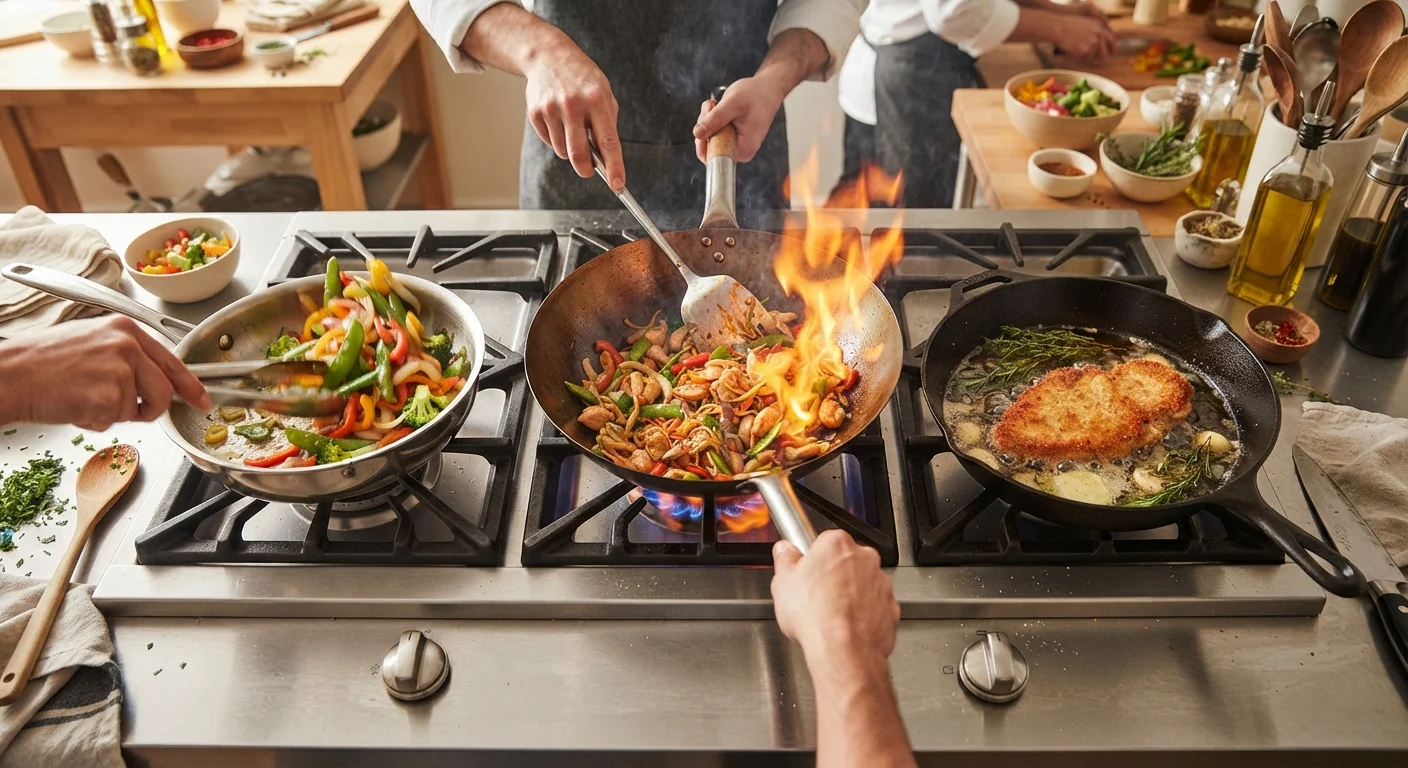
All three techniques happen on the stovetop in a pan with fat. That surface similarity leads most home cooks to use the terms interchangeably - but sautéing, stir-frying, and pan-frying produce meaningfully different results because they use different temperatures, different amounts of fat, and different levels of food movement. Getting clear on those three variables is what separates a properly browned chicken thigh from a pale, soggy one.
Each method falls under the broader category of dry-heat cooking, which you can explore further in our overview of dry heat vs. moist heat cooking methods. Within that category, the distinctions matter because they determine texture, color, and how much moisture the food retains.
| Sautéing | Stir-Frying | Pan-Frying | |
|---|---|---|---|
| Heat Level | Moderately high | Very high (maximum) | Moderate to moderately high |
| Fat Amount | Minimal (1-2 tsp) | Minimal (≤1 tbsp) | Moderate (¼-½ inch depth) |
| Food Movement | Frequent tossing or stirring | Near-constant tossing | Minimal - flip once or twice |
| Food Size | Small, uniform pieces | Thin strips or small pieces | Larger, thicker cuts |
| Ideal Pan | Skillet or sauté pan | Wok | Heavy skillet or cast iron |
| Signature Result | Even browning, tender texture | Charred edges, smoky depth | Thick golden crust, moist interior |
Sautéing: Fast, Light, and Moderate Heat
The word sauté comes from the French verb meaning "to jump," which tells you most of what you need to know. Food is cut into small, uniform pieces and cooked in a thin layer of fat - typically one to two teaspoons - over moderately high heat. The food is tossed or stirred frequently, sometimes continuously, to prevent burning and encourage even browning.
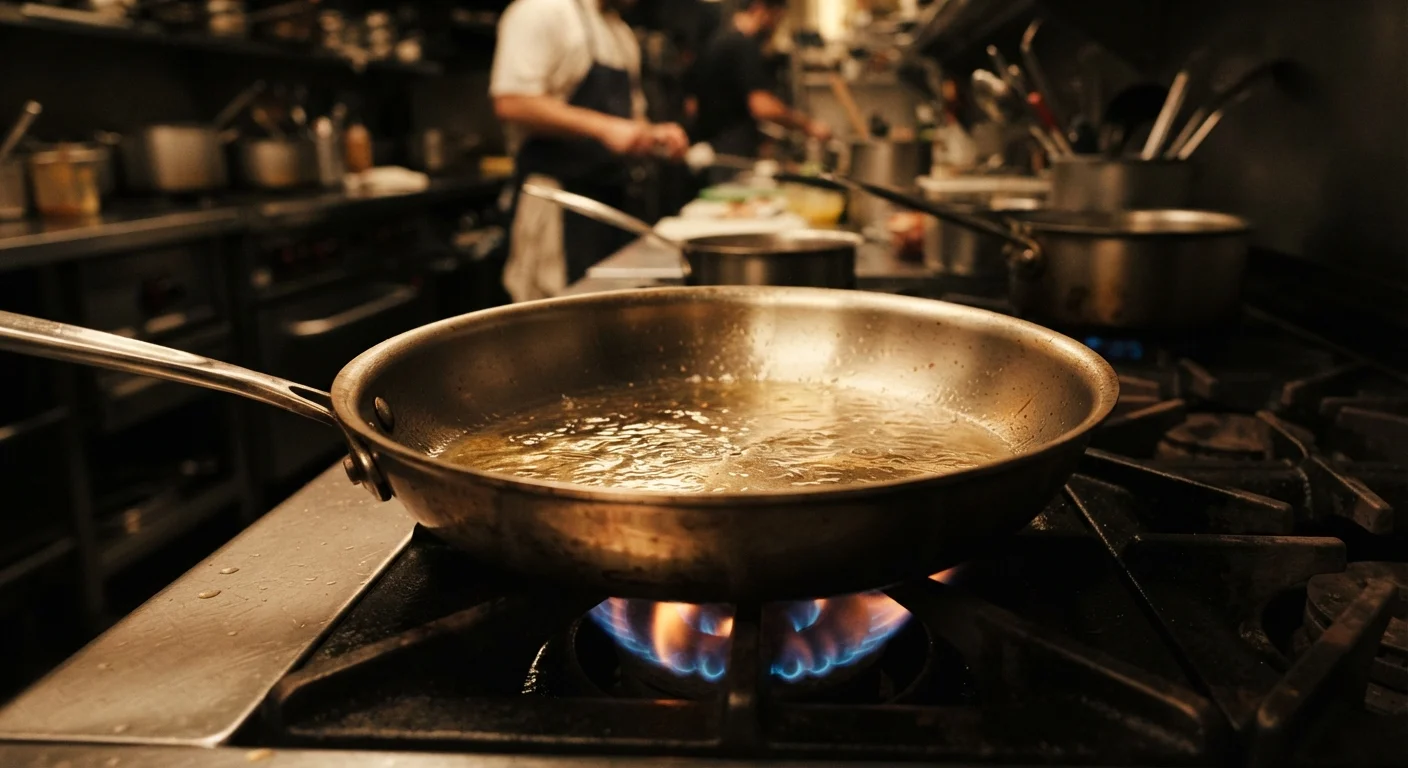
A good sauté relies on a pan that's genuinely hot before the food goes in. When food hits a properly preheated surface, moisture on the exterior evaporates quickly and the Maillard reaction - the browning process driven by heat reacting with proteins and sugars - can begin. If the pan is too cool, the food releases steam and essentially braises in its own moisture. This is why pan temperature matters more than most recipes acknowledge.
Best candidates for sautéing: diced onions, sliced mushrooms, shrimp, cubed chicken breast, spinach, and thin-sliced zucchini.
Let the Pan Do the Work
Resist the urge to stir constantly when sautéing denser ingredients like mushrooms or chicken. Give the food 30-60 seconds of contact time before moving it - this is what builds color. Constant stirring before browning begins simply slows the process and cools the pan surface.
Stir-Frying: Maximum Heat, Minimum Time
Stir-frying is sautéing taken to its extreme. It requires the highest heat of any of these three methods - traditionally a screaming-hot wok over a powerful burner - and near-constant tossing. The goal is to cook ingredients almost instantly, producing charred edges and a smoky depth known in Chinese cooking as wok hei (literally "wok breath").
Unlike sautéing, stir-frying typically sequences the cooking: aromatics go in first and are removed, proteins cook next and are set aside, vegetables are cooked last, and everything is combined at the end with a sauce. This keeps each component from overcooking and allows the wok's intense heat to work properly on each ingredient in turn.
Fat usage is light - usually a tablespoon or less of a high smoke-point oil - and food is cut into thin strips or small pieces specifically to withstand the speed of the process. A home gas burner or induction range on its highest setting approximates the results, though the wok hei effect is harder to replicate without professional-grade equipment.
Pan-Frying: More Fat, Less Movement, Bigger Results
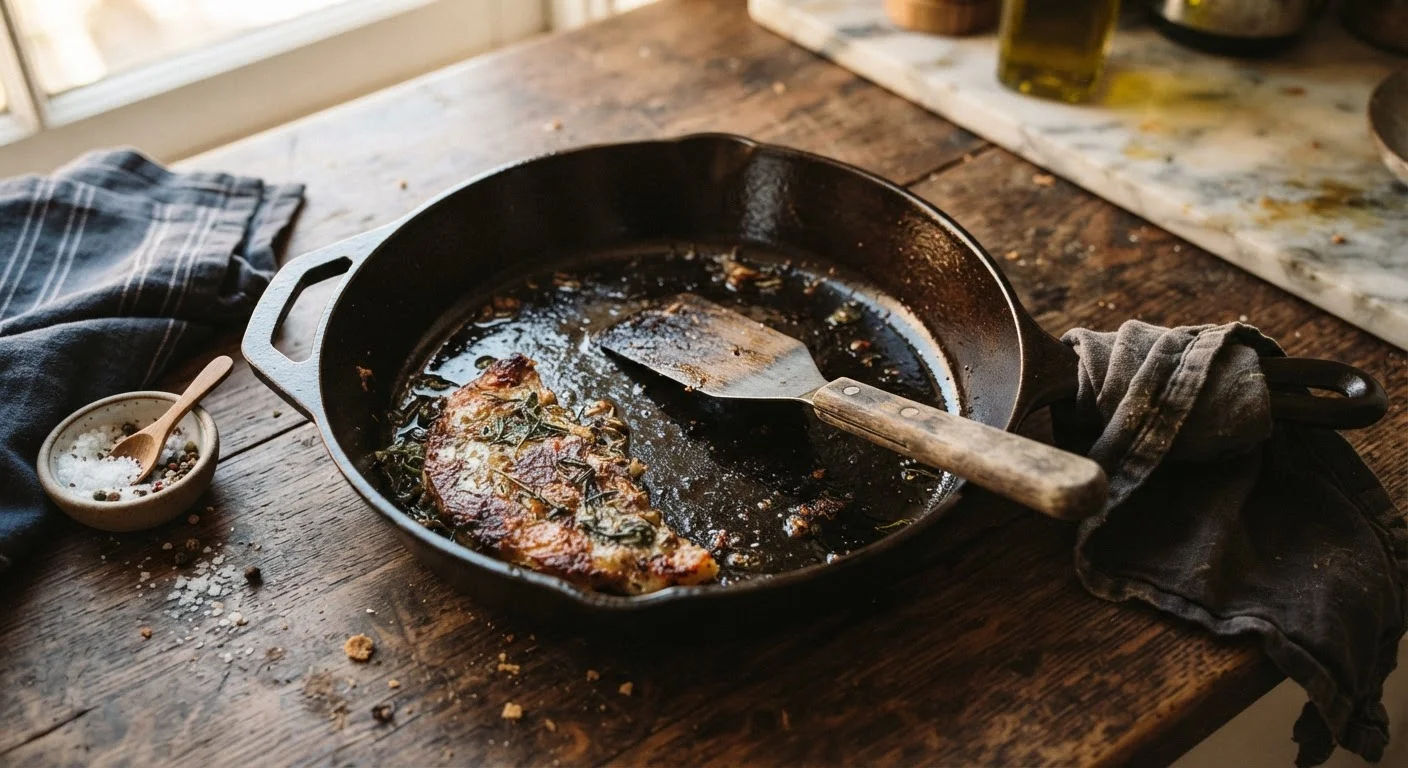
Pan-frying differs from the other two methods in one fundamental way: the food is largely left alone. A moderate depth of fat - enough to come roughly a quarter to halfway up the side of the food - is heated in a skillet, and the food is placed in and allowed to develop a crust before being flipped once or twice. That patience is what creates the deep, even browning on a pork chop or fish fillet.
The fat temperature in pan-frying is typically lower than in stir-frying, around 325-375°F (163-190°C), which allows larger, thicker cuts to cook through without the exterior burning. Unlike deep-frying, the food isn't fully submerged - it's cooked partway through the fat, then flipped. The result is a textured, golden crust and a moist interior.
A well-seasoned cast iron skillet is particularly well-suited to pan-frying because of its ability to retain and distribute heat evenly. For more on how that surface works, see our piece on what seasoning a cast iron skillet actually does.
Best candidates for pan-frying: bone-in chicken pieces, pork chops, breaded fish fillets, crab cakes, and thick-cut tofu slabs.
Choosing the Right Method for Your Ingredient
The quickest way to decide which method to use is to consider the size and density of your ingredient alongside the texture you want.
- Small, tender, or thin pieces that need quick cooking without a thick crust → sauté
- Very thin strips or bite-sized pieces where high char and speed are the goal → stir-fry
- Thicker cuts that need a substantial crust and time to cook through → pan-fry
Overcrowding is the most common mistake across all three methods. When too much food fills the pan at once, the surface temperature drops, steam builds up, and browning stops. Work in batches when needed - it's not optional if the result matters.
Once food is properly browned using any of these methods, the fond (browned bits) left in the pan can become the foundation of a pan sauce. Understanding how liquids behave at that stage connects directly to how different thickening methods change a sauce's texture and clarity.
This article is for general informational and educational purposes about cooking techniques. Individual dietary needs vary; consult a qualified nutrition or healthcare professional for personalized guidance.