Why Paint Finish Matters as Much as Color
Most homeowners spend hours picking the perfect color - then grab whatever finish is on the shelf. That's a mistake worth avoiding. A paint's finish (also called its sheen level) determines how light bounces off a surface, how washable the wall will be, and how forgiving it is of imperfections in the underlying drywall.
The spectrum runs from completely flat (no light reflection) to mirror-like high-gloss. Each stop along that spectrum has a practical home. Understanding the differences once means you'll choose correctly every time - no repainting required.
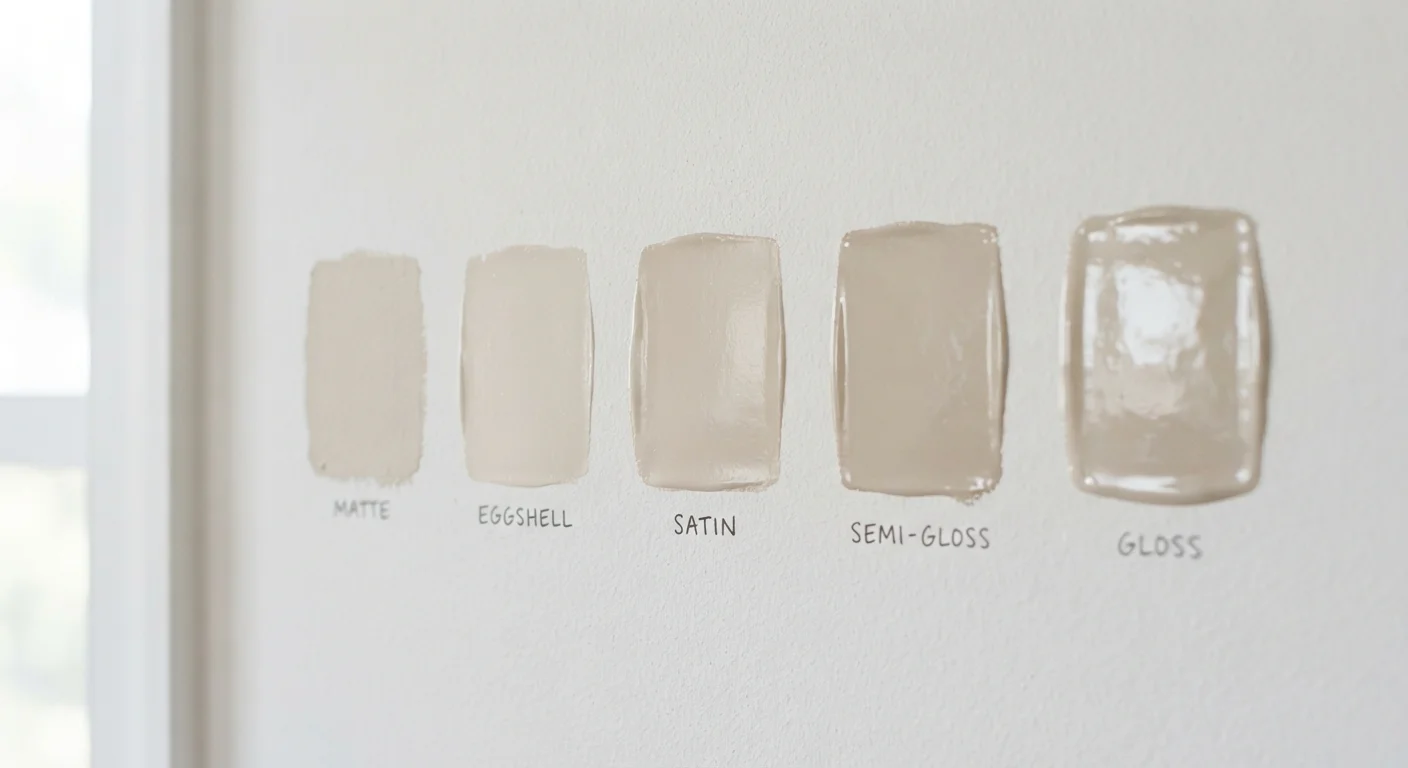
| Finish spectrum order | Flat → Matte → Eggshell → Satin → Semi-Gloss → Gloss |
| Best finish for ceilings | Flat or matte - hides texture and roller marks |
| Best finish for trim and doors | Semi-gloss - durable and easy to wipe down |
| Best finish for bathrooms & kitchens | Satin or semi-gloss - moisture-resistant and cleanable |
| Best finish for living rooms & bedrooms | Eggshell - balances appearance and moderate washability |
| Higher sheen = more visible imperfections | True - glossier finishes highlight drywall flaws; prep work matters more |
The Finish Glossary: Every Sheen Defined
Use the definitions below as a quick reference whenever you're planning a paint project.
Flat / Matte
The lowest sheen level - absorbs nearly all light, producing a velvety, non-reflective surface. Best for low-traffic walls and ceilings; difficult to scrub clean without removing paint.
Eggshell
A slight, soft sheen - named for the faint luster of an actual eggshell. More washable than flat, making it practical for living rooms, hallways, and bedrooms that see regular use.
Satin
A smooth, pearl-like finish that reflects moderate light. It cleans up well, resists mild moisture, and works in kitchens, bathrooms, and any room where durability is a priority.
Semi-Gloss
A noticeably shiny finish that reflects significant light and holds up to repeated cleaning. Standard for trim, doors, window frames, and high-humidity rooms like bathrooms.
High-Gloss
The most reflective finish available - almost mirror-like. Extremely durable and washable, but visually amplifies every surface imperfection. Typically reserved for cabinetry, furniture, and accent trim.
Sheen Level
The degree of light reflectivity in a paint finish. Measured on a scale from flat (0% reflectivity) to high-gloss. Higher sheen generally means greater durability and washability.
LRV (Light Reflectance Value)
A measure of how much light a paint color reflects, on a scale of 0 (black, absorbs all light) to 100 (white, reflects all light). LRV affects how bright or dark a room feels regardless of sheen.
Primer
A preparatory coating applied before paint to improve adhesion, cover stains, and create a uniform surface. Using primer reduces the number of finish coats needed and improves durability.
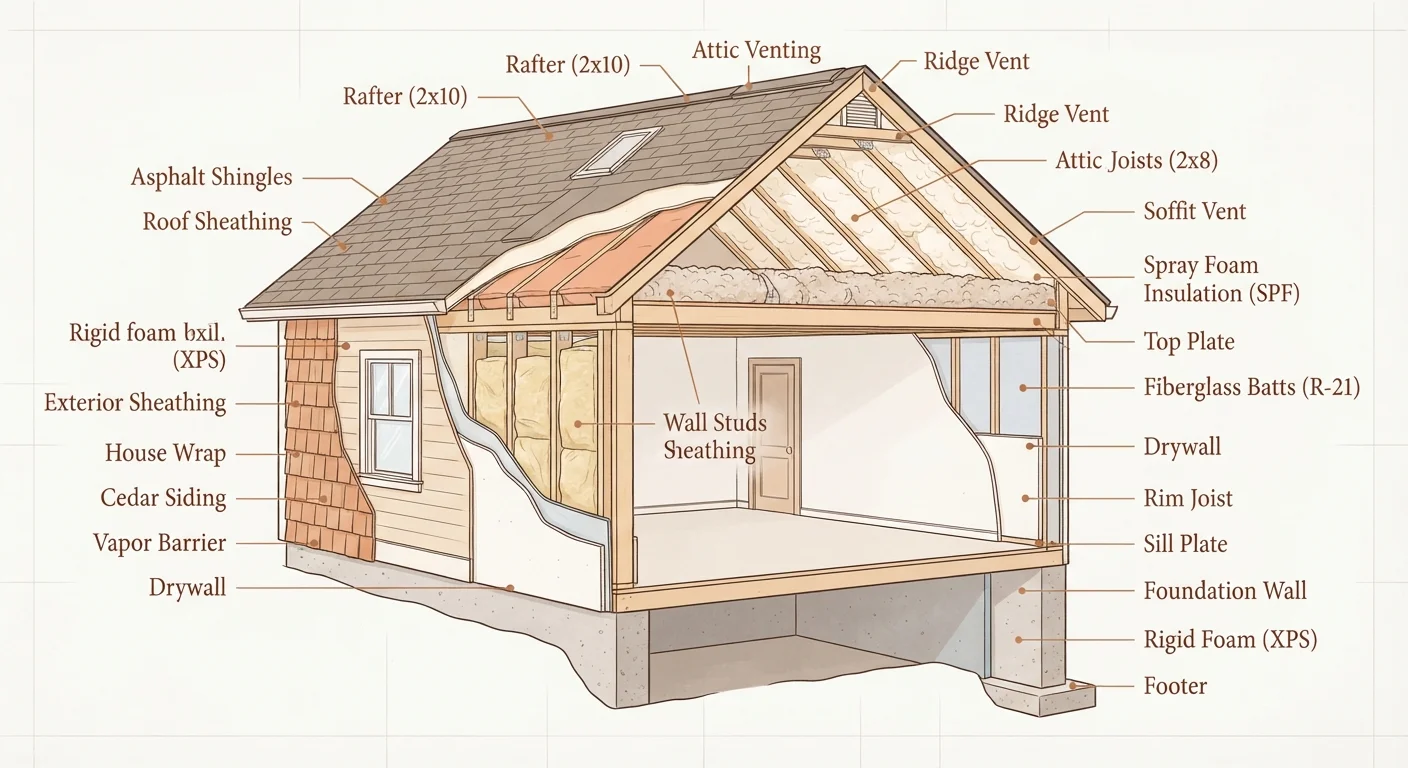
For a broader look at how individual home systems and materials work together - from walls to mechanicals - see our plain-language home systems reference.
Matching Finish to Room: A Practical Framework
Low-Traffic, Low-Moisture Rooms
Living rooms, formal dining rooms, adult bedrooms: Flat or matte finishes work well here. They absorb light rather than reflecting it, which creates a rich, sophisticated look and hides minor surface flaws. The trade-off is washability - spot cleaning can leave marks, so these finishes suit walls that won't see frequent scrubbing.
Moderate-Traffic Areas
Hallways, family rooms, children's bedrooms: Eggshell is the workhorse finish for these spaces. It's durable enough to wipe down, but not so shiny that it highlights every texture in the drywall. Satin steps up durability slightly and suits walls that need regular cleaning.
High-Moisture and High-Touch Areas
Kitchens, bathrooms, laundry rooms: Satin or semi-gloss is standard here. Both resist humidity and can handle repeated wiping with mild cleaners. Semi-gloss is also the conventional choice for trim, doors, and window casings throughout the home - the slight sheen creates a clean visual contrast with flatter wall paint.
Trim, Doors, and Cabinetry
Semi-gloss and gloss finishes are durable enough for surfaces that absorb daily contact. High-gloss is occasionally used on cabinetry for a lacquered effect, though it will highlight any surface imperfection, so prep work matters more.
Don't Skip Surface Prep
The shinier the finish, the more it will reveal any dents, seams, or texture in your wall. Before applying satin, semi-gloss, or high-gloss paint, fill holes, sand smooth, and prime bare patches. Skipping prep is the most common reason a finish looks worse after painting than before.
Just as different insulation materials belong in specific parts of a home, different paint finishes belong in specific rooms - the logic is the same. Our guide to insulation types and placement covers that parallel concept in depth.