Why Every Homeowner Should Know These Systems
Most home emergencies aren't random-they're the predictable result of a system that wasn't understood, monitored, or maintained. A burst pipe, a tripped breaker, or an HVAC unit running around the clock can each be traced back to a gap in basic knowledge. This reference is designed to close that gap.
You don't need to be a contractor to feel confident in your home. You need to know what the main systems do, where their key components are located, and when to call a licensed professional. Use this page as a lookup guide-and pair it with a seasonal maintenance schedule to stay ahead of problems year-round.
| Main shutoff locations | Electrical panel, main water valve, gas meter shutoff, HVAC disconnect |
| Air filter replacement frequency | Every 1-3 months (varies by filter type and household) |
| HVAC service interval | Once per year (ideally before heating or cooling season) |
| GFCI outlet locations required by code | Kitchens, bathrooms, garages, outdoors, basements, laundry areas (National Electrical Code (NEC) - verify local adoption) |
| Water heater lifespan (tank type) | 8-12 years on average |
| Permits typically required for | Electrical panel work, new circuits, plumbing rerouting, HVAC replacement (Varies by municipality - always verify locally) |
Electrical System
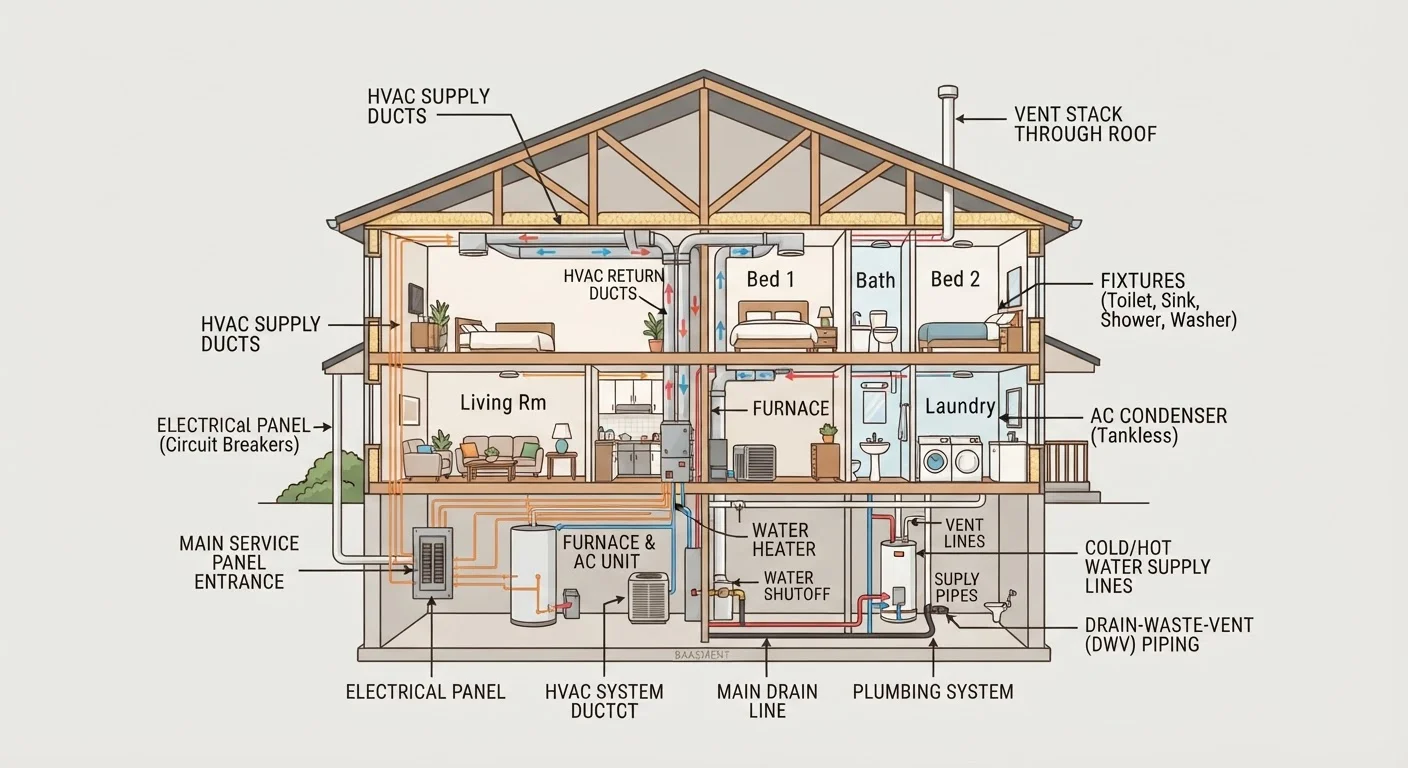
Your home's electrical system begins at the service panel (also called the breaker box or load center). This is the metal cabinet-usually in a utility room, basement, or garage-where electricity from the utility company is distributed to individual circuits throughout the house.
Each circuit is protected by a circuit breaker, a switch that automatically cuts power if a circuit is overloaded. When a breaker trips, you'll find it in the middle position between ON and OFF. To reset it, push it fully to OFF and then back to ON. If it trips again immediately, stop and contact a licensed electrician-do not bypass or tape a breaker.
GFCI outlets (Ground Fault Circuit Interrupter) are the outlets with TEST and RESET buttons found in kitchens, bathrooms, garages, and outdoors. They cut power in milliseconds if they detect a ground fault, reducing the risk of electric shock near water sources. Press RESET if one stops working; if it won't reset, have an electrician inspect it.
Safety note: Any work involving the service panel, new wiring runs, or changes to circuits typically requires a permit and a licensed electrician. This is not a DIY area for most homeowners.
Service Panel
The main electrical distribution box in a home, where the utility feed is divided into individual branch circuits. Each circuit is protected by its own breaker.
GFCI Outlet
Ground Fault Circuit Interrupter outlet. A safety device that cuts power almost instantly when it detects electrical current flowing through an unintended path, such as through water or a person.
Main Water Shutoff
A valve that stops all water flow into the home from the municipal supply or well. Turning it off is the first step in any plumbing emergency.
T&P Relief Valve
Temperature and Pressure relief valve on a water heater. It opens automatically if tank pressure or temperature reaches unsafe levels, preventing a dangerous buildup.
Air Handler
The indoor portion of a central HVAC system that circulates conditioned air through the ductwork. It houses the blower fan, evaporator coil, and filter.
DWV System
Drain-Waste-Vent system. The network of pipes that carries wastewater away from fixtures by gravity and uses vent pipes to equalize air pressure and prevent sewer gas from entering the home.
Circuit Breaker
A resettable safety switch in the electrical panel that interrupts power to a circuit when it detects an overload or short circuit, protecting wiring from overheating.
Condenser Unit
The outdoor component of a central air conditioning or heat pump system. It releases or absorbs heat from the refrigerant as part of the heating or cooling cycle.
Plumbing System
Your home has two distinct plumbing sides: the supply side (water coming in under pressure) and the drain-waste-vent (DWV) side (wastewater leaving by gravity). Knowing where to shut off water is the single most important piece of plumbing knowledge a homeowner can have.
The main water shutoff valve controls all water entering the house. It's typically located where the water line enters the foundation-often near the front of the home, in a basement or crawlspace, or in a utility area. In a water emergency, turning this valve fully clockwise (or to the perpendicular position if it's a ball valve) stops water to the entire home. Locate it before you ever need it.
Individual fixtures also have fixture shutoffs-small valves under sinks and behind toilets. These let you isolate one fixture without cutting water to the whole house.
Your water heater has its own shutoff on the cold-water inlet pipe. Most tank water heaters also have a temperature and pressure (T&P) relief valve, a safety device that releases pressure if the tank overheats. If it's dripping constantly, have a licensed plumber inspect it promptly.
HVAC System
HVAC stands for Heating, Ventilation, and Air Conditioning-the interconnected system that keeps your home comfortable and its air quality acceptable. Understanding its main components helps you maintain it correctly and recognize when something's wrong.
The air handler or furnace is the indoor unit that moves conditioned air through your ductwork. The condenser is the outdoor unit (in central air systems) that releases heat from the refrigerant. Together, they form a cycle that transfers heat in or out of your home depending on the season.
Your air filter sits in the return-air grille or inside the air handler itself. A clogged filter forces the system to work harder, reduces efficiency, and can damage equipment. Most standard filters should be checked monthly and replaced every 1-3 months depending on use and household conditions.
The thermostat controls when the system runs. Programmable and smart thermostats can reduce energy use by adjusting temperature automatically when rooms are unoccupied. For more on how smart home technology integrates with systems like this, see devices and apps guides.
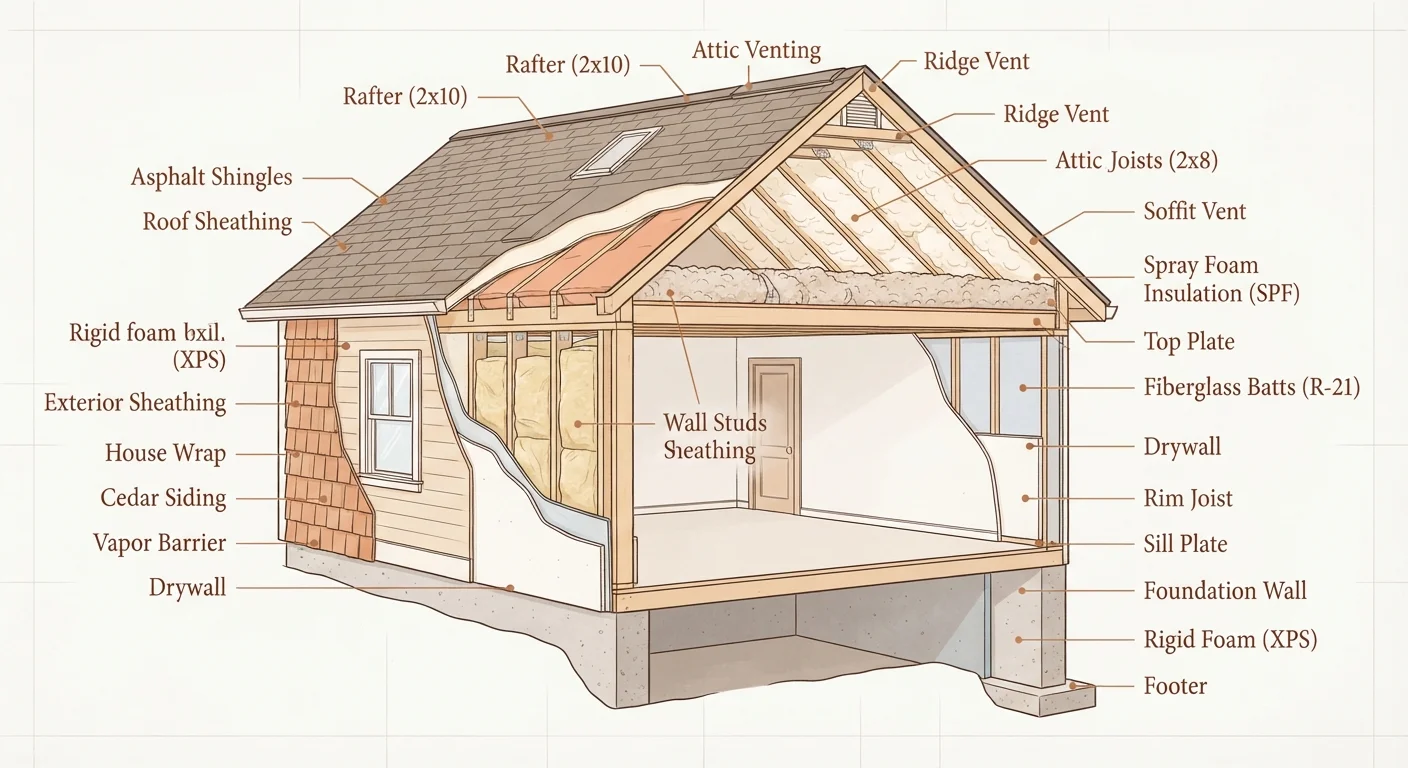
HVAC systems also benefit from annual professional servicing-a technician can check refrigerant levels, clean coils, and inspect components that aren't visible or safely accessible to homeowners. For deeper energy efficiency, pairing good insulation with your HVAC system can significantly reduce heating and cooling loads.
~47%
Of home fires attributed to electrical failures
According to the U.S. Fire Administration, nearly half of home structure fires involve electrical malfunction as a contributing factor.
1 in 4
Homeowners unaware of main water shutoff location
Industry surveys consistently find a significant share of homeowners have never located their home's main water shutoff valve.
15%
Average HVAC efficiency loss from a clogged filter
HVAC industry sources estimate a dirty or blocked air filter can reduce system airflow efficiency by roughly 15% or more.