
Why the Distinction Matters to Your Insurer
Most homeowners think of repairs and renovations as points on the same spectrum of home upkeep. To your insurance company, however, they represent two different categories with different implications for your coverage, premium, and claim eligibility.
A repair brings something back to how it was. A burst pipe that gets fixed, a broken window that gets replaced in kind, or a section of damaged siding that's patched - these are restorative actions. Because they don't change the value or structure of your home, repairs generally don't require any notification to your insurer.
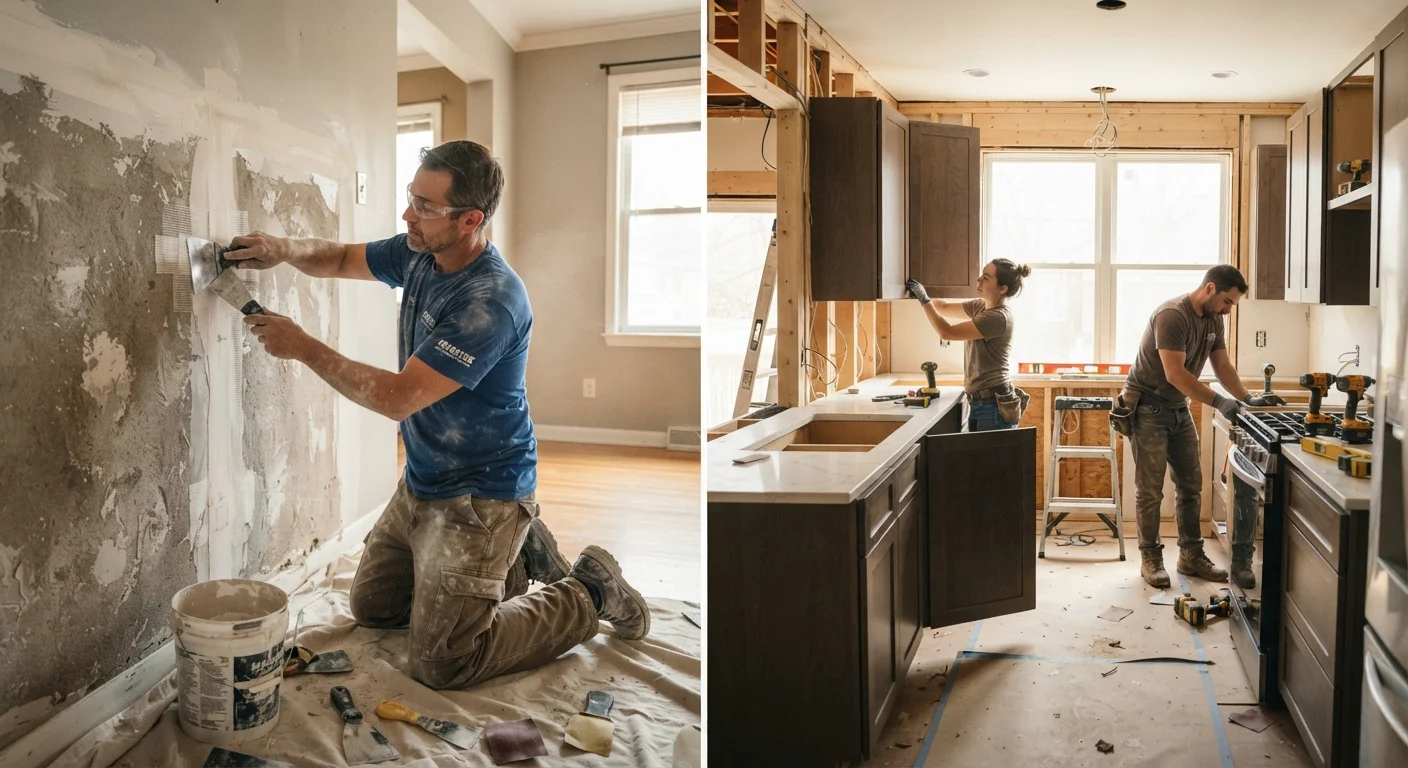
A renovation changes something. Adding a bathroom, updating your electrical panel, converting a basement into finished living space, or replacing standard cabinets with custom ones - these projects increase your home's value and, in some cases, alter its risk profile. That combination is exactly what insurers pay attention to.
Before you schedule contractors, it's worth reading our guide on what to assess before starting any major home renovation - including the financial and structural questions that belong in your planning phase.
How Renovations Can Affect Your Coverage
When you renovate, two insurance-related problems can emerge if you're not proactive.
Underinsurance
Your dwelling coverage is designed to pay for rebuilding your home to its current condition after a covered loss. If you add a finished basement, a custom kitchen, or an addition without updating your policy, your coverage limit may no longer reflect what it would actually cost to rebuild. In a worst-case scenario - a fire or major storm - this gap can cost tens of thousands of dollars out of pocket.
Coverage Gaps During Construction
Standard homeowner's policies are written for an occupied, completed home. While renovation work is underway, your property faces different risks: theft of materials, liability for workers on-site, and damage from work in progress. Many policies contain exclusions or limitations for these scenarios. A short-term endorsement or a separate builders risk policy can help cover this period, but you need to arrange it before work starts.
64%
Homeowners who are underinsured
Industry analyses have consistently found that a majority of insured homes carry dwelling coverage below their true rebuild cost, often due to unreported renovations.
~$50K
Average mid-range kitchen remodel cost
According to remodeling industry surveys, a mid-range kitchen renovation can exceed $50,000 - a figure that meaningfully affects a home's replacement value if not reflected in coverage.
If your renovation involves licensed contractors, make sure those contractors carry their own liability and workers' compensation insurance. Our article on what homeowners get wrong when hiring contractors explains exactly what documentation to verify before any work begins.
Projects That Commonly Require a Policy Update
Not every home improvement triggers a coverage conversation, but several common projects routinely should:
- Room additions or conversions: Any square footage added to your home increases its rebuild cost.
- Kitchen or bathroom remodels: High-end finishes, custom fixtures, and upgraded appliances all raise replacement value.
- Roof replacement with upgraded materials: Switching from standard shingles to metal or impact-resistant materials can affect both your coverage needs and your premium (often positively).
- Electrical or plumbing upgrades: Updating a knob-and-tube system or replacing old galvanized pipes reduces risk and is worth disclosing - some insurers adjust premiums favorably for modernized systems.
- Detached structures: Adding a garage, guest house, or large shed affects your other structures coverage.
Ask Your Insurer One Specific Question
Before starting any renovation, contact your insurer and ask: 'Does this project require me to update my dwelling coverage limit or add any temporary coverage?' That single question - asked before work begins - can prevent a significant coverage gap. Keep a written record of the conversation, including the date and the representative's name.
For projects that blur the repair-renovation line - like replacing an aging roof with equivalent materials after storm damage - your insurer's claims department and your policy language will determine how that project is categorized. When in doubt, ask before you begin, not after.
Steps to Take Before and After a Renovation
Managing your insurance during a renovation doesn't require expertise - it requires communication and timing.
- Review your current policy. Look at your dwelling coverage limit, your definitions section, and any renovation or construction exclusions.
- Call your insurer before work starts. Ask specifically whether the planned project requires a rider, a policy adjustment, or any documentation.
- Document your home's condition beforehand. Photographs and a written inventory of existing fixtures and finishes can simplify any future claim.
- Update your coverage when the project is complete. Provide your insurer with a summary of what changed, approximate cost, and any permits pulled.
Permits and Insurance Are Linked
When a renovation requires a permit - such as structural changes, electrical work, or plumbing modifications - unpermitted work can create insurance complications. If a claim arises and the insurer discovers unpermitted work contributed to the loss, coverage could be reduced or denied. Always check local permit requirements and verify with your insurer how permitted versus unpermitted work affects your policy.
Even if your renovation seems straightforward, the myths surrounding home improvement - like the assumption that all upgrades automatically raise your coverage - can lead to costly surprises. Always verify rather than assume.
This article provides general information about homeowner's insurance concepts and is not a substitute for advice from a licensed insurance professional. Coverage terms, exclusions, and requirements vary significantly by policy and insurer. Review your policy documents and consult your insurance provider or agent for guidance specific to your situation.