
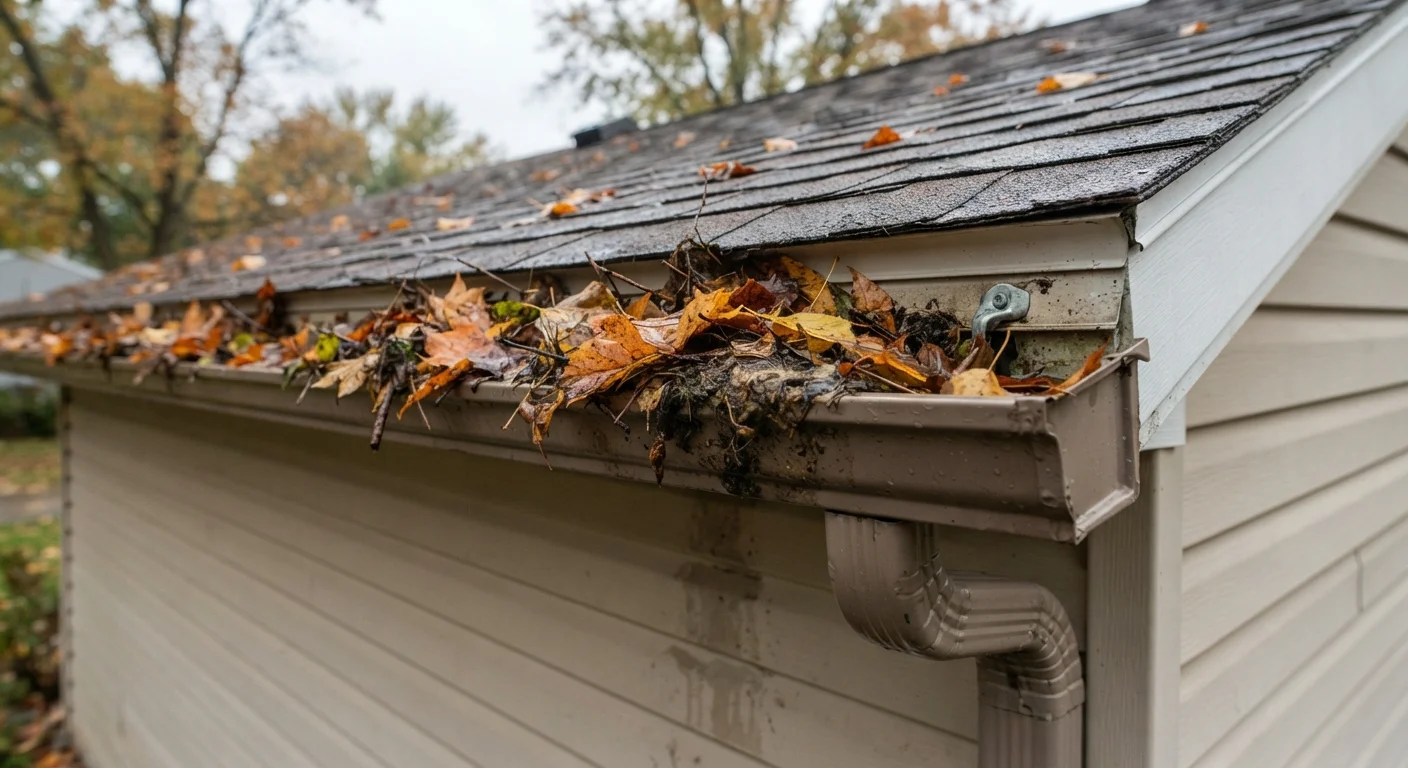
What Gutters Actually Do
Most homeowners know gutters catch rainwater - but the full picture matters a lot more than that. A properly functioning gutter system collects runoff from your entire roof surface and channels it through downspouts to discharge points safely away from your home. During a one-inch rainstorm, a 1,500-square-foot roof sheds roughly 900 gallons of water. Without gutters, all of that lands directly against your siding, foundation, and landscaping.
The consequences of uncontrolled runoff compound over time. Water that pools against a foundation puts pressure on concrete and masonry, increasing the risk of cracking and basement water intrusion. Runoff that splashes against wood siding accelerates rot. Soil erosion around the home can shift grading so that water flows toward the house rather than away - exactly the opposite of what you want.
Gutters are a relatively simple system, but they do a heavy job. As part of a complete maintenance routine, they deserve the same attention as your roof or HVAC system. For a broader view of what to check and when, see our seasonal home maintenance guide.
The Real Cost of Neglected Gutters
Gutter maintenance is easy to put off because the gutters are out of sight and the damage they prevent is invisible - until it isn't. Neglect tends to follow a predictable pattern: debris accumulates, water overflows or backs up under roofing materials, and moisture finds its way into places it shouldn't be.
$10,000+
Typical foundation repair cost range
Foundation repairs caused by water intrusion commonly run into the tens of thousands of dollars, according to home repair cost surveys - a stark contrast to routine gutter cleaning costs.
2x/year
Minimum recommended gutter cleaning frequency
Most home maintenance authorities recommend cleaning gutters at least twice annually, with additional cleanings advised for homes surrounded by trees.
900 gal
Water shed per inch of rain on a 1,500 sq ft roof
This figure, derived from standard rainfall-runoff calculations, illustrates why even moderate storms put significant demand on a home's gutter system.
Common repair scenarios linked to gutter failure include fascia board replacement (the wooden strip the gutter attaches to), soffit damage from trapped moisture, foundation waterproofing work, and mold remediation inside walls. Each of these repairs costs significantly more than routine gutter cleaning or a minor gutter repair would have.
This pattern - where skipping small maintenance tasks leads to compounding structural problems - is one of the most well-documented dynamics in home ownership. Our article on deferred maintenance explains exactly how that cycle works and how to break it.
Signs Your Gutters Need Attention
You don't need to be a contractor to spot gutter problems. Walk around your home during or just after a rainstorm and look for these indicators:
- Water spilling over the sides during rain - the most obvious sign of a clog or pitch problem
- Sagging sections or gutters pulling away from the fascia - usually caused by accumulated weight or failed hangers
- Water stains or streaking on siding below the gutterline
- Pooling water or soil erosion near your foundation after rain
- Peeling paint or rust on the gutter itself, suggesting standing water is sitting too long
- Plants growing from the gutter - a reliable sign of significant organic buildup
Check Downspout Discharge Points
After any significant rain, walk your downspout discharge points to confirm water is flowing away from the home. Splash blocks - the angled concrete or plastic pads placed at the base of downspouts - help direct flow but can shift over time. Repositioning them takes seconds and can prevent years of foundation moisture problems.
A dry-weather inspection is also useful. Look up into the gutter channel from a safe vantage point for debris, check that downspouts are firmly attached, and verify that water discharged from downspouts flows away from the home - not toward it.
Basic Gutter Maintenance You Can Do
For single-story homes, gutter cleaning is a manageable DIY task for most adults comfortable on a ladder. Use a stable, appropriately rated ladder - never lean it against the gutter itself. Wear work gloves and eye protection, as debris can include decomposed material, bird droppings, and sharp shingle granules.
Scoop out solid debris first, working from one end toward the downspout. Flush the channel with a garden hose and confirm water flows freely through the downspout. If flow is blocked, a plumber's snake or a strong burst of water from the hose typically dislodges clogs.
Check that each downspout extension directs water at least 4-6 feet from the foundation. Simple plastic extenders are inexpensive and easy to attach. Also look at the gutter pitch - water should visibly flow toward the downspout, not pool in flat sections. Minor pitch adjustments can usually be made by repositioning gutter hangers.
For multi-story homes, steeply pitched roofs, or any situation where ladder safety is a concern, hiring a professional is the prudent choice. The cost of a professional cleaning is far less than treating a fall injury or the repairs deferred maintenance eventually demands. This kind of practical perspective applies across many home systems - as we explore in our piece on home maintenance myths that cost money.