How Compound Interest Actually Works
The core mechanic is straightforward: each period, interest is calculated on a balance that already includes previously earned interest. A $1,000 savings balance earning 5% annually becomes $1,050 after year one. In year two, that 5% applies to $1,050 - not the original $1,000 - producing $1,102.50. The extra $2.50 may seem trivial, but over 30 years the same $1,000 grows to roughly $4,322 without a single additional deposit.
The formula behind this is: A = P(1 + r/n)nt, where P is the principal, r is the annual interest rate, n is compounding periods per year, and t is time in years. You don't need to memorize the formula - free online calculators handle the math - but understanding its variables helps you see why time and frequency matter so much.
$4,322
Value of $1,000 after 30 years at 5% annually
Illustrates compounding without any additional contributions, based on the standard compound interest formula.
20%+
Average credit card APR in recent Federal Reserve data
The Federal Reserve's G.19 consumer credit report tracks average credit card interest rates charged by commercial banks.
Daily
Most common compounding frequency for savings accounts
Many savings accounts compound interest daily, meaning even small balances accrue interest every calendar day.
The Saver's Advantage: Time Is the Key Variable
For savers, compound interest is one of the most powerful tools available - but it rewards patience. Two hypothetical savers illustrate the point: one invests $5,000 at age 25 and stops; another invests $5,000 at age 35 and also stops. Assuming identical returns, the earlier saver ends up with substantially more by retirement, despite contributing the same dollar amount. That gap is entirely due to compounding having more time to work.
This is why financial educators and widely cited frameworks like the CFPB's consumer guidance consistently emphasize starting early, even with small amounts. Waiting for the "perfect" time or a larger sum to invest often costs more than the wait saves.
Start Small, Start Now
You don't need a large lump sum to benefit from compounding. Even $25 or $50 per month invested consistently gives compounding time to build momentum. The most important action is simply beginning - waiting a few years to save a bigger amount typically results in a lower ending balance, not a higher one.
For a closer look at behaviors that slow savings growth, see habits that quietly undermine a savings plan.
The Borrower's Burden: When Compounding Works Against You
The same mechanism that grows savings can quietly expand debt. Credit cards are a common example: if you carry a $3,000 balance at 20% APR compounded daily and pay only the minimum each month, a significant portion of each payment goes to interest rather than reducing the principal. As unpaid interest is added to the balance, future interest charges are calculated on a higher number - a cycle that can keep a balance alive for years.
This is why understanding the difference between APR (what lenders charge on loans and credit cards) and APY (what savers earn) matters. The plain-language definitions of terms like APR and amortization can make these distinctions much clearer.
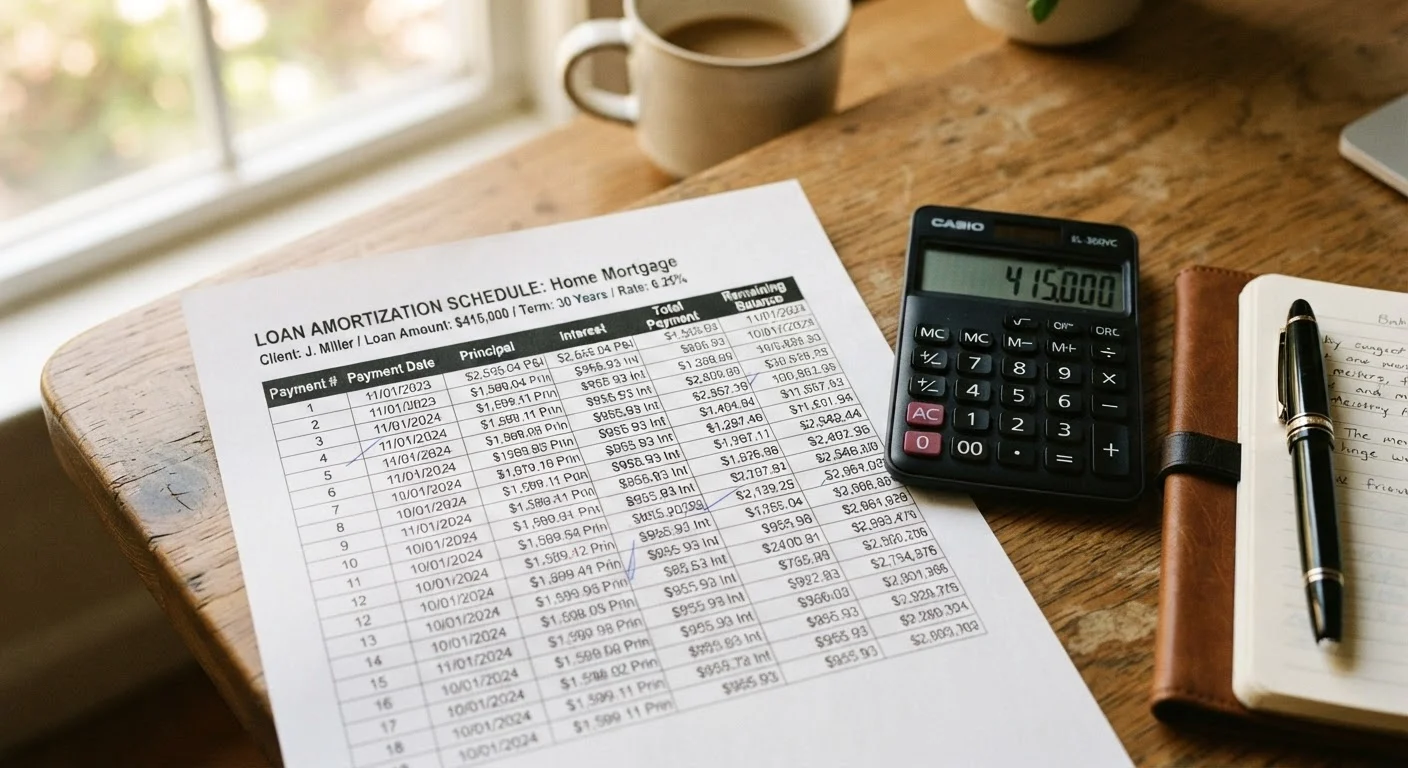
To see exactly how interest and principal are split across each loan payment, reading a loan amortization schedule is a practical next step.
Putting It Together: Practical Steps for Both Sides
Whether your goal is growing savings or reducing debt, a few concrete principles apply:
- For savers: Prioritize accounts with higher APY and more frequent compounding. Automate contributions so the habit is consistent rather than dependent on willpower.
- For borrowers: Pay more than the minimum whenever possible - even a small extra payment chips away at principal and slows compounding. Targeting high-interest balances first (a method known as the debt avalanche) minimizes total interest paid.
- For both: Recognize that time is the biggest lever. Delay in saving or in paying down high-interest debt compounds the cost of inaction.
If you're weighing whether to save and pay down debt simultaneously, the tradeoffs of saving and debt repayment at the same time breaks down that decision clearly. You can also explore broader everyday money tips for simple habits that support both goals.
APY vs. APR: Know the Difference
When evaluating savings accounts, look for APY (Annual Percentage Yield), which reflects actual earnings after compounding. When evaluating loans or credit cards, look at APR (Annual Percentage Rate). A higher APY is better for savers; a lower APR is better for borrowers. These two numbers aren't directly comparable to each other.
This article is for general informational and educational purposes only and does not constitute personalized financial advice. Consult a qualified financial professional before making decisions based on your individual circumstances.