What Actually Separates Braising from Stewing
Both braising and stewing are moist-heat, low-and-slow techniques - and that shared DNA causes a lot of confusion in home kitchens. The defining difference comes down to two variables: the size of the food and the amount of liquid used.
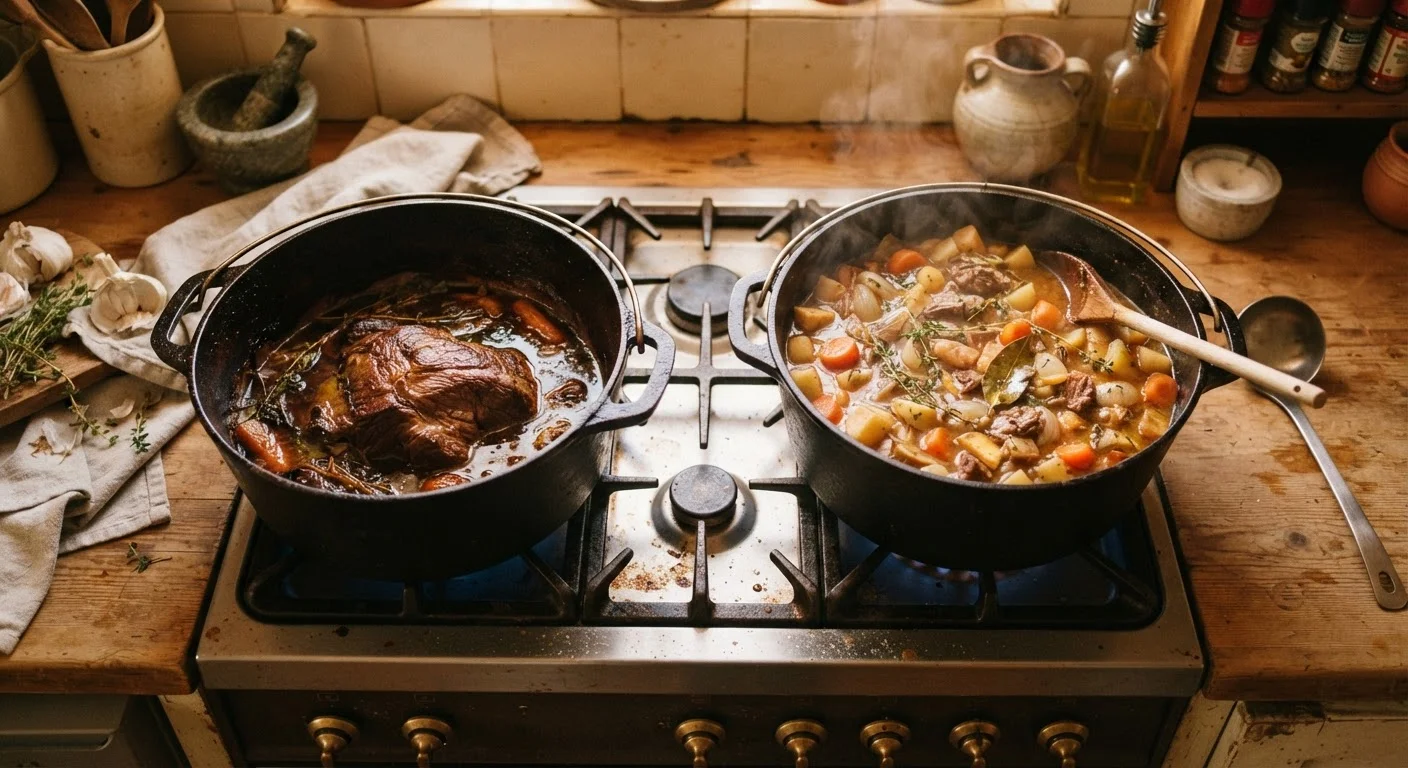
In braising, a large, typically bone-in cut of meat is seared first to develop surface color and flavor, then placed in a vessel with enough liquid to reach roughly one-third to halfway up its sides. The food cooks partially submerged, with steam handling the upper portion. In stewing, food is cut into smaller, roughly uniform pieces and fully submerged in liquid throughout the cook. The result is a cohesive mixture where every element shares the same surrounding broth.
Both methods belong to the broader category of moist-heat cooking. For a full overview of how moist and dry heat techniques differ in their effect on food, see our guide to dry heat vs. moist heat cooking methods.
| Criterion | Braising | Stewing |
|---|---|---|
| Food size | Large, whole or bone-in cuts | Small, bite-sized uniform pieces |
| Liquid level | Partial - ⅓ to ½ up the sides | Full - food completely submerged |
| Searing first | Standard practice | Common but not always required |
| Typical vessel | Dutch oven or heavy braising pan | Dutch oven or deep stockpot |
| End result | Tender centerpiece + reduced sauce | Complete dish with integrated broth |
| Vegetables | Often added later or as garnish | Cooked throughout with the protein |
| Meal structure | Main protein + separate sides | One-pot complete meal |
How Heat and Time Transform Tough Cuts
The reason both techniques work so well on otherwise chewy, collagen-rich cuts is straightforward: sustained, gentle heat converts collagen - the connective tissue in muscles - into gelatin. Gelatin dissolves into the surrounding liquid, giving braised and stewed dishes their characteristic silky, full-bodied mouthfeel.
This process requires time (generally 1.5 to 3+ hours, depending on the cut) and temperatures that stay well below boiling - a vigorous boil will tighten muscle fibers and make the meat stringy rather than tender. A gentle simmer, covered, is the target for both methods.
~160°F
Collagen-to-gelatin conversion temperature
Food science research indicates collagen begins converting to gelatin at around 160°F (71°C), with more complete conversion occurring with sustained heat over time.
1.5-4 hrs
Typical cook time for braised or stewed meats
Most tough, collagen-rich cuts require between 90 minutes and 4 hours of gentle, covered cooking to reach fork-tender texture.
The liquid you choose significantly shapes the outcome. Stock, wine, beer, tomatoes, or a combination each bring distinct acidity, body, and aromatics. For guidance on how cooking liquids differ in flavor and function, our article on stock, broth, and bone broth breaks down the key distinctions.
Finishing the Dish: Sauce vs. Broth
One of the most practical differences between the two methods shows up at the end of cooking. In braising, the cooking liquid - now enriched with rendered fat, gelatin, and fond - is typically reduced separately into a concentrated, glossy sauce that gets spooned over the meat. This reduction step is where much of braising's complexity is built.
In stewing, the liquid is an inseparable part of the final dish. It's meant to be served as a broth or lightly thickened sauce alongside the solid ingredients - not reduced away. If the stewing liquid is too thin for your preference, gentle thickening with a slurry or by simmering uncovered are common adjustments. Our comparison of sauce-thickening methods covers the tradeoffs of each approach.
Because stewing involves fully submerged vegetables cooking for extended periods, timing matters. Adding delicate vegetables too early leads to mushiness. If you've struggled with this, our article on why home cooks overcook vegetables addresses the most common errors and how to avoid them.
This article is for general informational and educational purposes. Cooking times and temperatures are guidelines; always use safe food-handling practices and ensure proteins reach recommended internal temperatures.