
Three Liquids, Three Different Jobs
Walk through any grocery aisle or scan a recipe and you'll encounter stock, broth, and bone broth used almost interchangeably - but these three liquids are genuinely different products with different culinary roles. Understanding what distinguishes them helps you choose the right one for a given dish and get more predictable results in the kitchen.
| Primary ingredient | Stock: bones | Broth: meat | Bone broth: bones (long simmer) |
| Typical simmer time | Stock: 2-8 hrs | Broth: 1-2 hrs | Bone broth: 12-24 hrs |
| Gelatin content | Stock: moderate | Broth: low | Bone broth: high |
| Seasoning | Stock: unseasoned | Broth: seasoned | Bone broth: varies |
| Primary culinary use | Stock: sauces, braises | Broth: soups, drinking | Bone broth: drinking, rich cooking base |
| Sets when chilled? | Stock: loosely | Broth: no | Bone broth: firmly |
The distinctions come down to three main variables: what goes into the pot, how long it simmers, and what comes out. Each liquid suits different cooking applications, from building a sauce to sipping straight from a mug.
Stock: Built on Bones and Collagen
Stock is made by simmering animal bones - often with some meat still attached - along with aromatic vegetables such as onion, celery, and carrot, plus herbs. The defining characteristic of stock is its collagen content. As bones simmer for an extended period (typically two to six hours for chicken, four to eight hours for beef), collagen from connective tissue converts to gelatin, which gives a well-made stock its slightly sticky, viscous quality and body. When chilled, a good stock should set like a loose jelly.
Stock is intentionally unseasoned or very lightly seasoned. This is by design - it functions as a base ingredient, and the cook controls salt levels in the finished dish. It is the foundation for pan sauces, braises, risottos, and gravies. Its body and gelatin content also make it particularly effective for reducing into sauces that coat and cling.
Stock
A cooking liquid made by simmering animal bones (and sometimes meat) with aromatics. Stock is rich in gelatin, typically unseasoned, and used primarily as a cooking base.
Broth
A thinner cooking liquid made primarily from simmered meat rather than bones. Broth is usually seasoned and has less body than stock, making it suitable for drinking and light soups.
Bone Broth
A long-simmered stock (typically 12-24 hours) that extracts high concentrations of gelatin and minerals from bones. It sets firmly when chilled and is often consumed as a drink.
Gelatin
A protein derived from collagen in animal bones and connective tissue that dissolves into liquid during long cooking. Gelatin gives stock its characteristic body and helps sauces cling to food.
Aromatics
Vegetables, herbs, and spices - most commonly onion, celery, carrot, and bay leaf - added to stocks and broths to build a foundational layer of flavor.
Reduction
The process of simmering a liquid over heat to evaporate water, concentrating its flavor and thickening its texture. Gelatin-rich stocks reduce into glossy, coating sauces.
Broth: Meat-Forward and Ready to Season
Broth is simmered primarily from meat rather than bones, which means it extracts flavor quickly but develops far less gelatin. The result is a thinner, more fluid liquid with a pronounced savory flavor. Unlike stock, broth is typically seasoned - sometimes significantly - making it drinkable on its own and suitable for soups where the liquid itself is a primary flavor component.
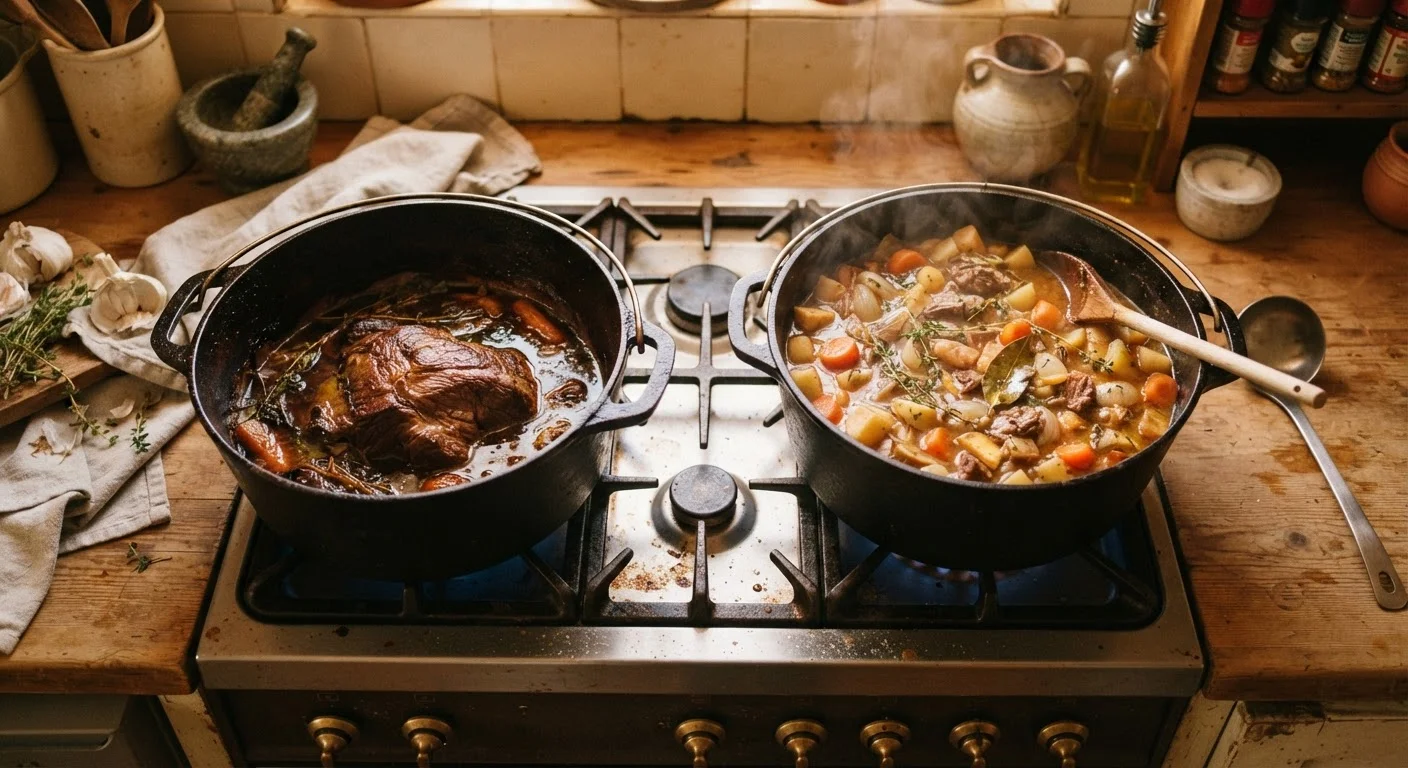
Because it lacks the body of stock, broth doesn't reduce as effectively into a clingy sauce. However, it shines in light soups, grain cooking (think rice or farro simmered in broth instead of water), and as a braising liquid when you want forward flavor without a heavy sauce. See how broth fits into slow-cooking techniques in our guide to braising vs. stewing.
Bone Broth: Long Simmer, Concentrated Result
Bone broth is, technically speaking, a form of stock - but simmered for a substantially longer period, often 12 to 24 hours. This extended cooking extracts higher concentrations of gelatin, minerals, and flavor compounds from the bones. The result is a deeply colored, intensely flavored liquid that gels firmly when chilled.
On Health Claims Around Bone Broth
Bone broth has received significant attention for potential health benefits, including gut health and joint support. While it does contain gelatin and certain minerals, the scientific evidence for specific health claims remains limited and ongoing. As general dietary guidance, bone broth is a nutritious, protein-containing food - but readers should consult a qualified healthcare professional before using it as a targeted remedy for any health condition.
Bone broth is often consumed as a warm drink rather than used strictly as a cooking ingredient, which is where it diverges most clearly from standard stock in everyday use. In cooking applications, it behaves like a rich stock and can substitute directly for it. For anyone following specific dietary patterns - including those described in our overview of plant-based, vegan, and vegetarian eating - vegetable-based alternatives exist for both stock and broth, though they won't replicate the gelatin content.
Choosing the Right Liquid for the Task
The choice between stock, broth, and bone broth depends on what a recipe actually needs:
- Building a pan sauce or gravy: Use stock or bone broth. Their gelatin content produces body and gloss as the liquid reduces.
- Sipping or light soups: Broth or bone broth work well here, especially since they carry seasoning and flavor that stands on its own.
- Cooking grains or legumes: Either broth or stock adds depth without overwhelming the dish; choose based on your salt preferences since broth is usually pre-seasoned.
- Braising meats: Stock is the classic choice - its body enriches the braising liquid as it reduces during the long cook. Learn more about how liquid behaves in moist heat cooking methods.
When substituting one for another in a recipe, account for salt: if a recipe calls for unseasoned stock and you're using a pre-salted broth, reduce or eliminate added salt elsewhere in the dish. Body differences matter less in dishes with plenty of other liquid but become noticeable in sauces that depend on reduction.
This article is for general informational and educational purposes only. It is not a substitute for advice from a qualified culinary or nutrition professional regarding specific dietary needs or health conditions.