
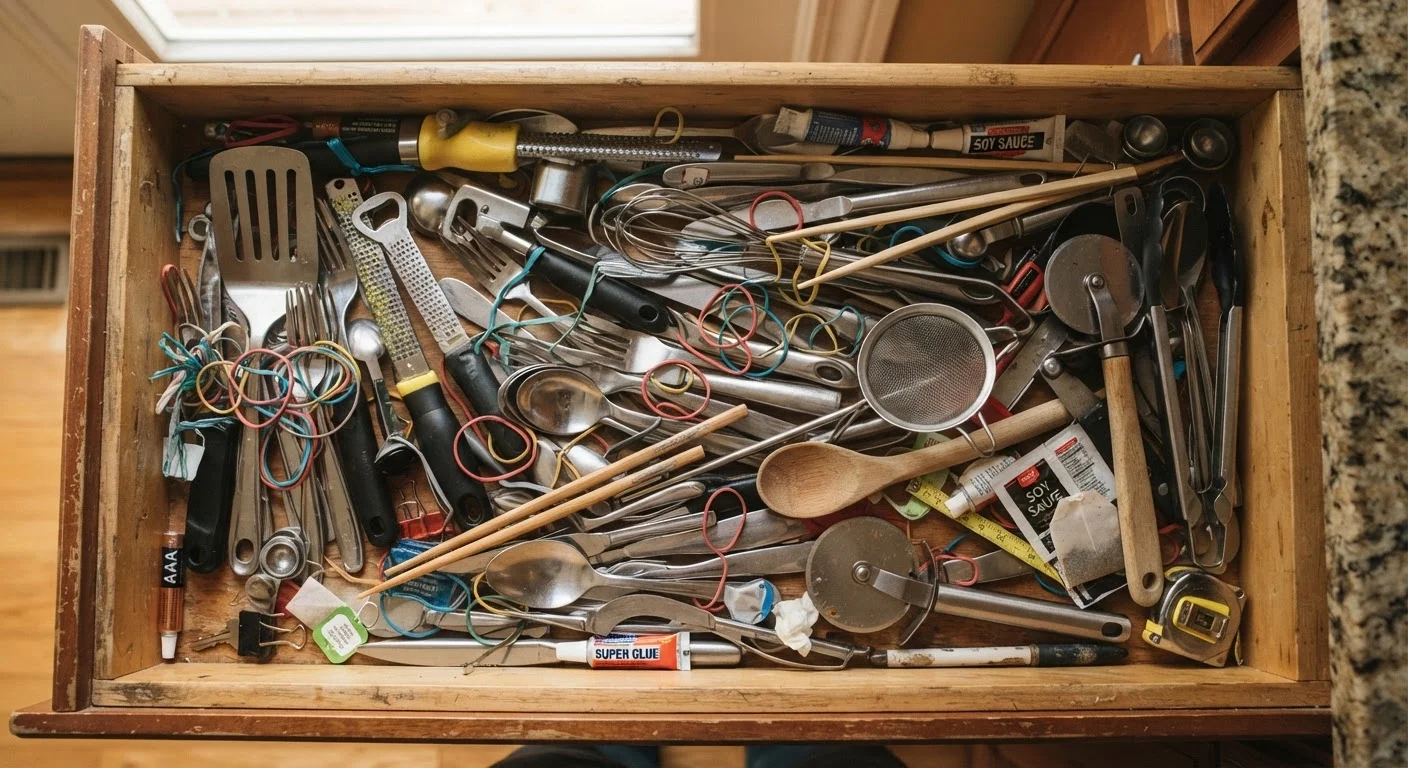
The Real Reason Drawers Keep Getting Messy
Kitchen drawers have a way of looking organized for about two weeks after a big clean-out - then quietly sliding back into disorder. If that cycle feels familiar, the problem usually isn't a lack of effort. It's that the underlying system has one or more structural flaws that make chaos the path of least resistance.
Understanding those flaws is more useful than simply reorganizing again. Before you pull everything out and start fresh, it's worth doing a quick assessment of what's actually breaking down - similar to the approach outlined in our room-by-room organization audit before rearranging anything.
Treating one drawer as a catch-all for everything that doesn't have a home elsewhere.
Why it happens: When items are uncertain or inconvenient to place properly, the nearest available drawer becomes a dumping ground. This happens gradually, so the problem isn't obvious until the drawer is unusable.
Installing dividers without first deciding what goes where.
Why it happens: Drawer organizers feel like the solution, so people buy them and install them before doing the harder thinking about which items actually belong in that drawer.
Storing items based on where they fit, not where they're used.
Why it happens: When drawers fill up, people find space wherever it exists rather than keeping tools near their point of use. This creates friction every time you cook.
Keeping items in the drawer "just in case" long after they've stopped being useful.
Why it happens: Scarcity thinking makes it hard to remove anything that might theoretically be needed someday, so drawers accumulate duplicate tools, mystery gadgets, and expired coupons.
Skipping the re-edit after a major kitchen change, such as a renovation or new appliance.
Why it happens: People reorganize drawers once and assume the system is set permanently, even after their kitchen layout or cooking habits change significantly.
Building Habits That Outlast the Initial Cleanup
Fixing the structural mistakes above gets you most of the way there - but drawers still need a small amount of ongoing maintenance to stay functional. The key is making the "right" behavior the easiest behavior.
~30%
Of kitchen tools used regularly
Professional organizers commonly note that most households regularly use only about a third of the tools they store, with the rest adding clutter without adding function.
5 min
Monthly maintenance to prevent drift
Home organization professionals generally recommend a brief monthly review of high-use areas like kitchen drawers to catch clutter before it compounds into a major overhaul.
A practical starting point: when you put something away, ask whether it belongs in the drawer or just ended up there. That single moment of friction catches most of the drift before it compounds. If multiple people share the kitchen, a brief conversation about where specific items live goes a long way - shared spaces require shared agreements, as explored in our piece on organizing a home you share with others.
Plan a five-minute drawer edit every month or two. Remove anything that migrated in without a reason, and relocate items that genuinely belong elsewhere. This rhythm is far easier than a periodic overhaul - and it's the same logic behind one-in, one-out habits that prevent clutter from quietly rebuilding over time.
Don't Reorganize Without Editing First
Reorganizing a cluttered drawer without removing unnecessary items first just rearranges the problem. The decluttering step - deciding what actually belongs - has to come before any containers or dividers are introduced. Skipping it means the drawer will fill back up faster because you've added structure without reducing volume.
Kitchen drawers are small systems, but they affect how your whole kitchen functions. Getting them right - and keeping them right - is less about perfection and more about removing the friction that makes disorder the default.