Why Audit Before You Organize
Most home organization attempts stall - or backfire - because they start with solutions before diagnosing the actual problem. A storage bin is useless if it's in the wrong room. Rearranging furniture won't help if the real issue is that there's no logical home for frequently used items.
A room-by-room audit is a structured way to observe your home before changing anything. It shifts the question from "How do I make this look organized?" to "Why does this room keep failing me?" The difference matters. One approach produces a temporary reset; the other produces a system that actually holds.
This checklist walks you through the key questions to ask in each room. Once you've identified where friction is occurring, you'll be ready to explore approaches like zoning your rooms by activity - a principle that can make even a cluttered space feel intentional and functional.
Notepad or note-taking app
Record observations in each room without relying on memory across the full audit.
Measuring tape
Measure awkward spaces, shelving gaps, or furniture clearances if you're considering layout changes.
Sticky notes or colored labels
Tag problem areas or misplaced items in place as you walk through, so patterns are visible at a glance.
How to Use This Checklist
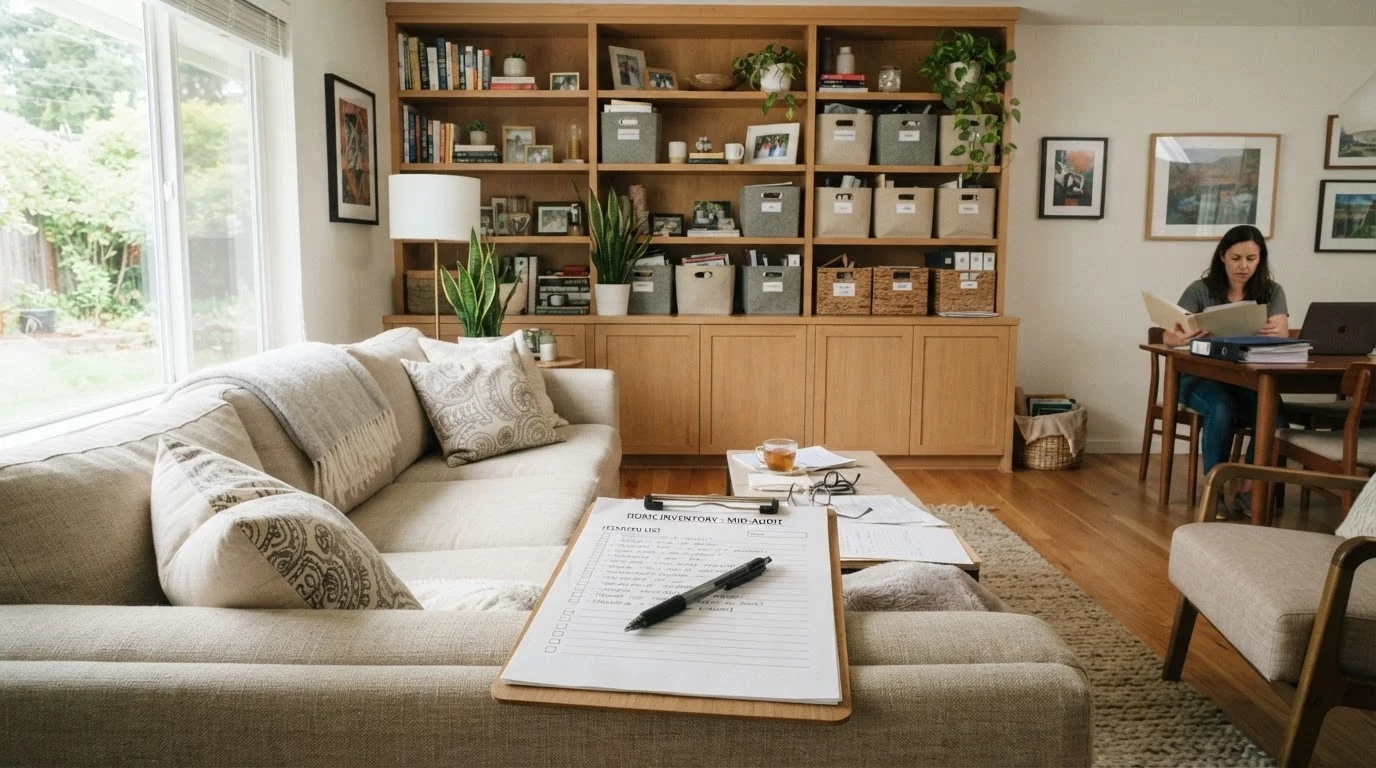
Walk through each room with a notepad or phone. You're not cleaning or moving anything yet - you're observing and recording. Take note of where things pile up, where you feel friction in your daily routine, and where you're consistently working around the layout rather than with it.
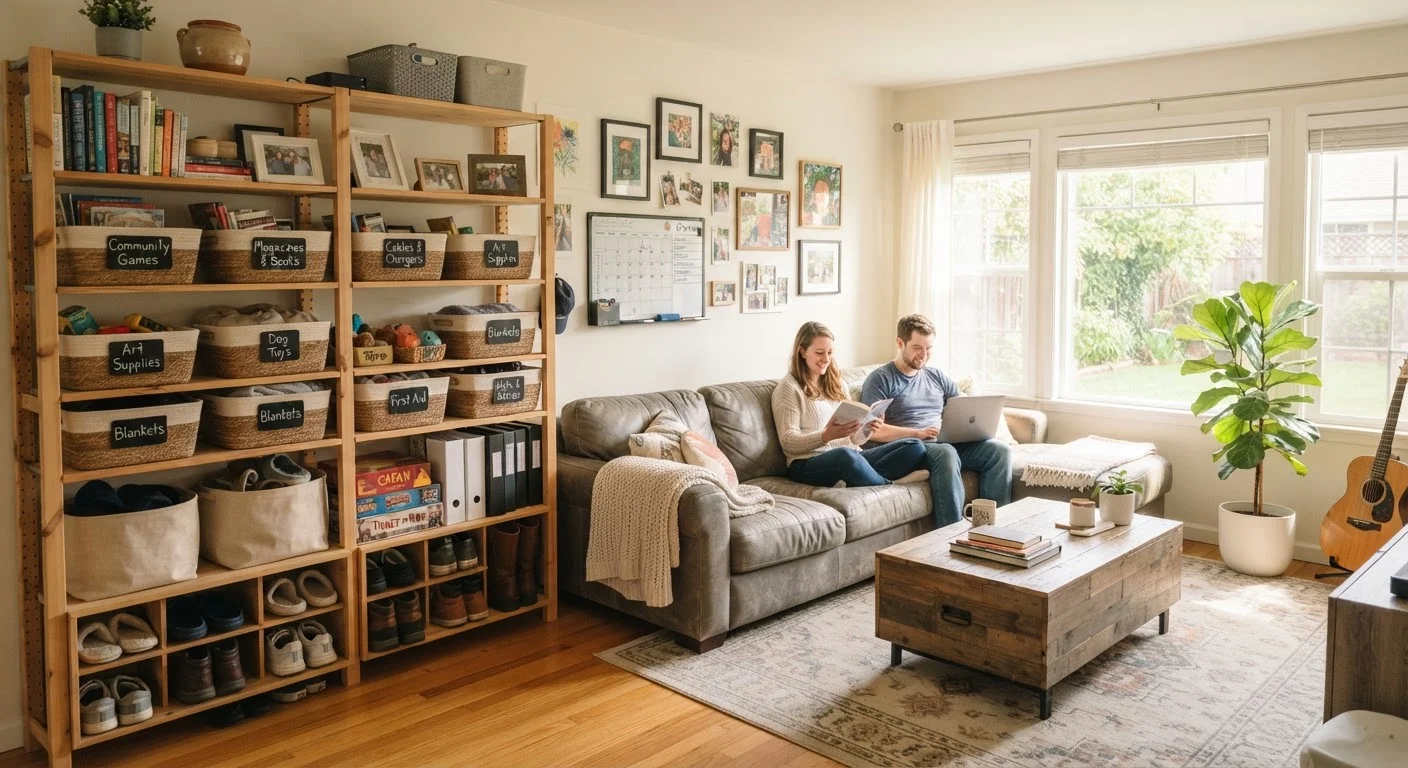
If you live with others, their habits are part of the audit too. Shared home organization requires accounting for multiple behavior patterns, not just your own. Note which breakdowns are individual and which are systemic.
Don't Reorganize Mid-Audit
It's tempting to start tidying or moving things as you notice problems. Resist this impulse. Reorganizing before you've assessed the full picture often means solving one room's problem by creating another. Complete your notes for every room before taking any action.
After completing the audit, review your notes for patterns. Recurring issues - surfaces that collect clutter, storage that no one uses, areas that feel chaotic despite effort - are your true starting points. From there, you can decide whether the fix is a storage solution, a layout change, or simply a new habit.
Every Room - Universal Assessment
Kitchen Assessment
Bedroom Assessment
Living and Common Areas
Entryway and Transition Spaces
Turning Audit Findings Into a Plan
Once you've completed the audit, resist the urge to immediately reorganize everything at once. Prioritize the one or two rooms where friction is highest and daily life is most disrupted. Fix those systems first, let them stabilize, then move on.
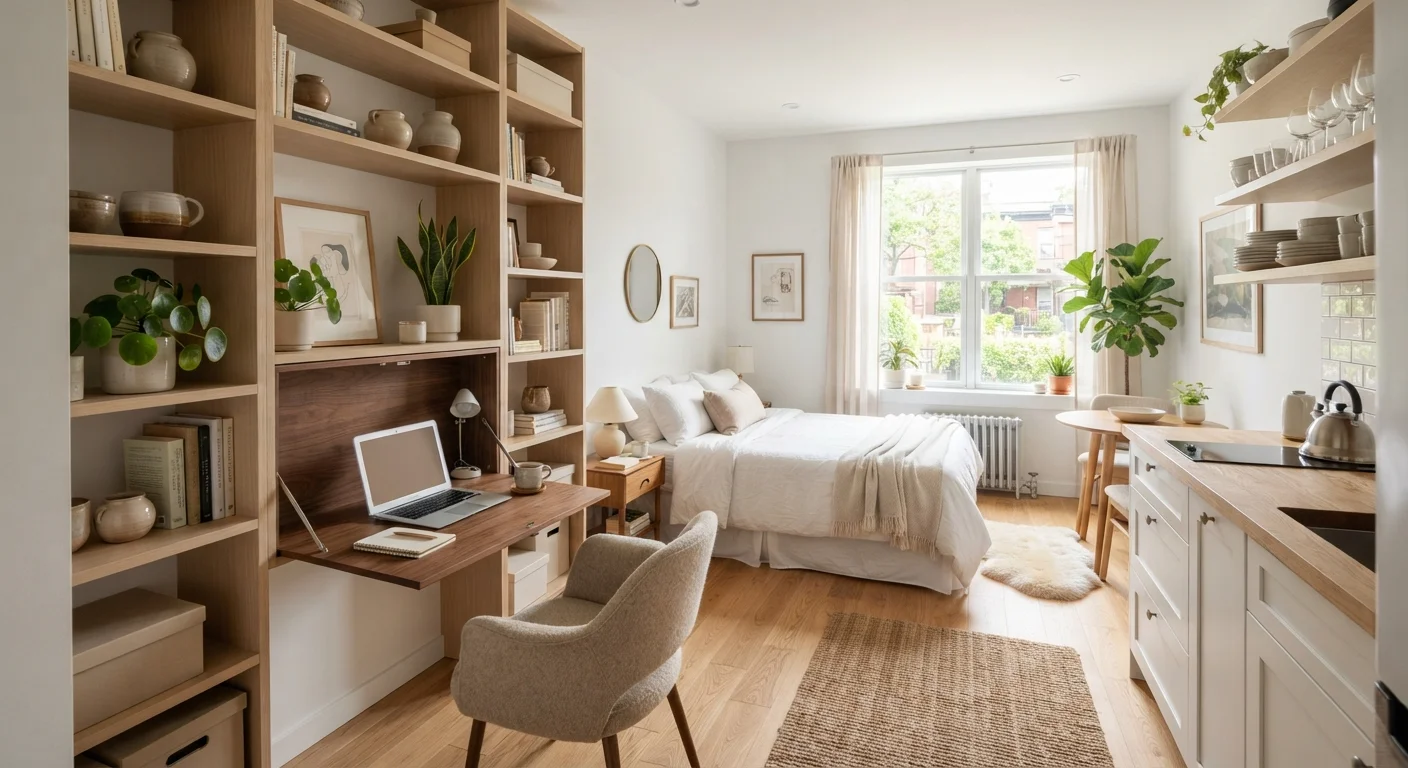
For smaller homes, the audit often reveals that the problem isn't a lack of storage - it's the placement of storage relative to where things get used. If that resonates, the strategies in small-space organization may give you a useful framework to apply to your findings.
Also consider how you naturally group items. Some people organize intuitively by category (all batteries together), while others think by location (everything near the front door belongs there). Neither is wrong, but understanding your own tendency - explored in depth in organizing by category vs. by location - helps you build systems you'll actually maintain.
Organization Systems Must Match Real Behavior
The most common reason a well-designed organization system fails is that it was built around ideal behavior rather than actual behavior. If a system requires six steps to put something away, most household members will default to the nearest flat surface. Audit your findings with honesty: the goal is to design systems that work with how your household actually operates, not how you wish it did.