
Why Debt Myths Are So Persistent
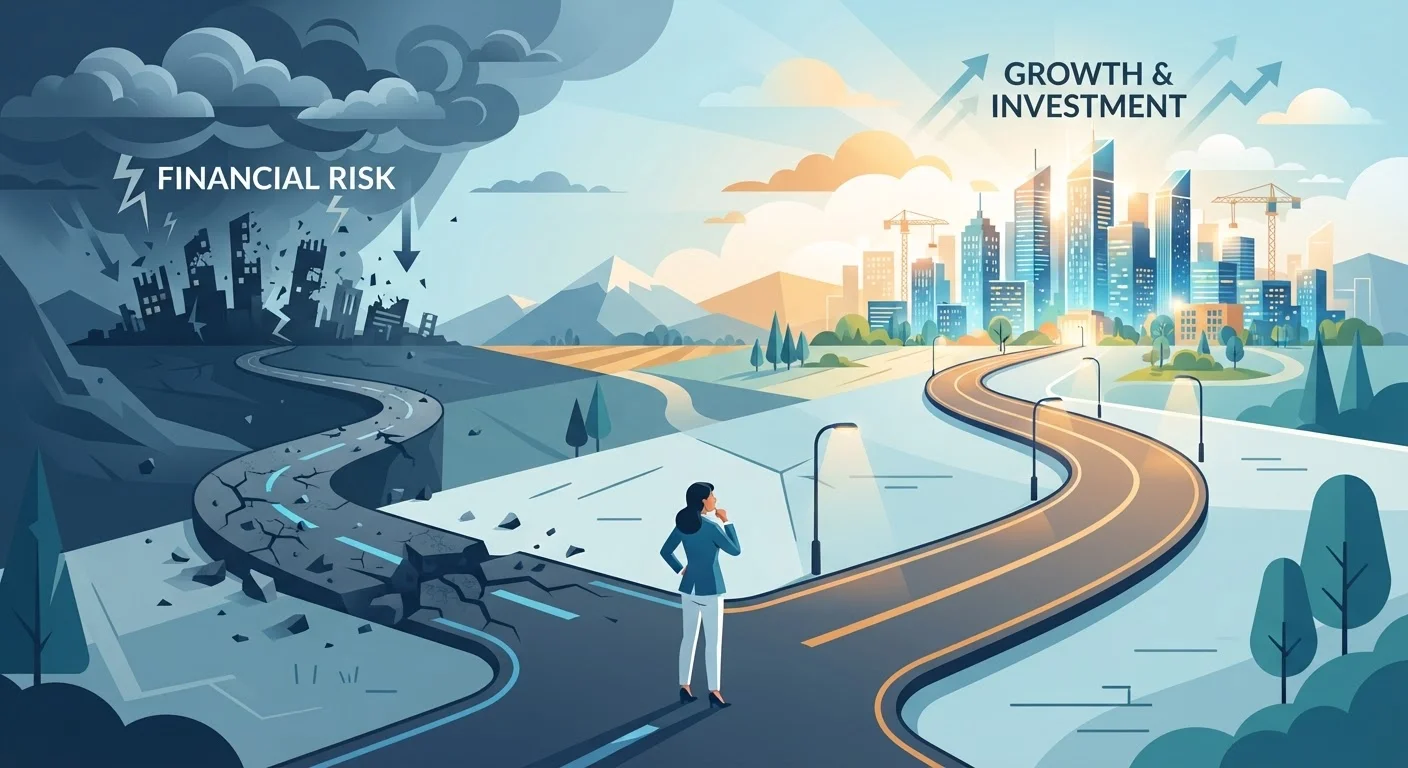
Debt is one of the most emotionally charged topics in personal finance. That emotional weight makes it fertile ground for oversimplifications - rules of thumb that feel true but hold up poorly under scrutiny. Some of these beliefs are passed down from well-meaning family members; others emerge from financial advice that applies in some situations but gets treated as universal law. Before you can build an effective payoff plan, it helps to clear out the misinformation.
If you've ever held back from budgeting because you thought it was only relevant once you're debt-free, that's a related misconception worth examining too - see Budgeting Myths That Keep People From Starting.
Myth
All debt is bad and should be avoided at all costs.
Fact
Some forms of debt - like mortgages or federal student loans - can support wealth-building or access to opportunity when used intentionally and managed responsibly.
The belief that all debt is inherently harmful oversimplifies a complicated picture. Debt is a financial tool, and like any tool, its impact depends on how it's used. A mortgage builds home equity over time; a federal student loan may increase lifetime earning potential. The key questions are whether the cost of borrowing (the interest rate) is reasonable, whether the debt funds something of lasting value, and whether repayment is manageable within your budget. For a deeper look at how to evaluate debt on its own terms, see The Difference Between Good Debt and Bad Debt.
Myth
Making minimum payments is fine as long as you don't miss them.
Fact
Minimum payments keep your account in good standing but can cost you significantly more in interest and extend repayment by many years.
Credit card minimum payments are typically calculated as a small percentage of your balance - often 1-2% plus interest. While paying the minimum prevents a late fee and protects your payment history, the bulk of your payment goes toward interest rather than principal. This means your balance shrinks very slowly. Paying even modestly above the minimum - say, a fixed amount each month rather than the variable minimum - can substantially reduce both total interest paid and time to payoff.
[warning_callout]Myth
You should pay off every debt completely before saving anything.
Fact
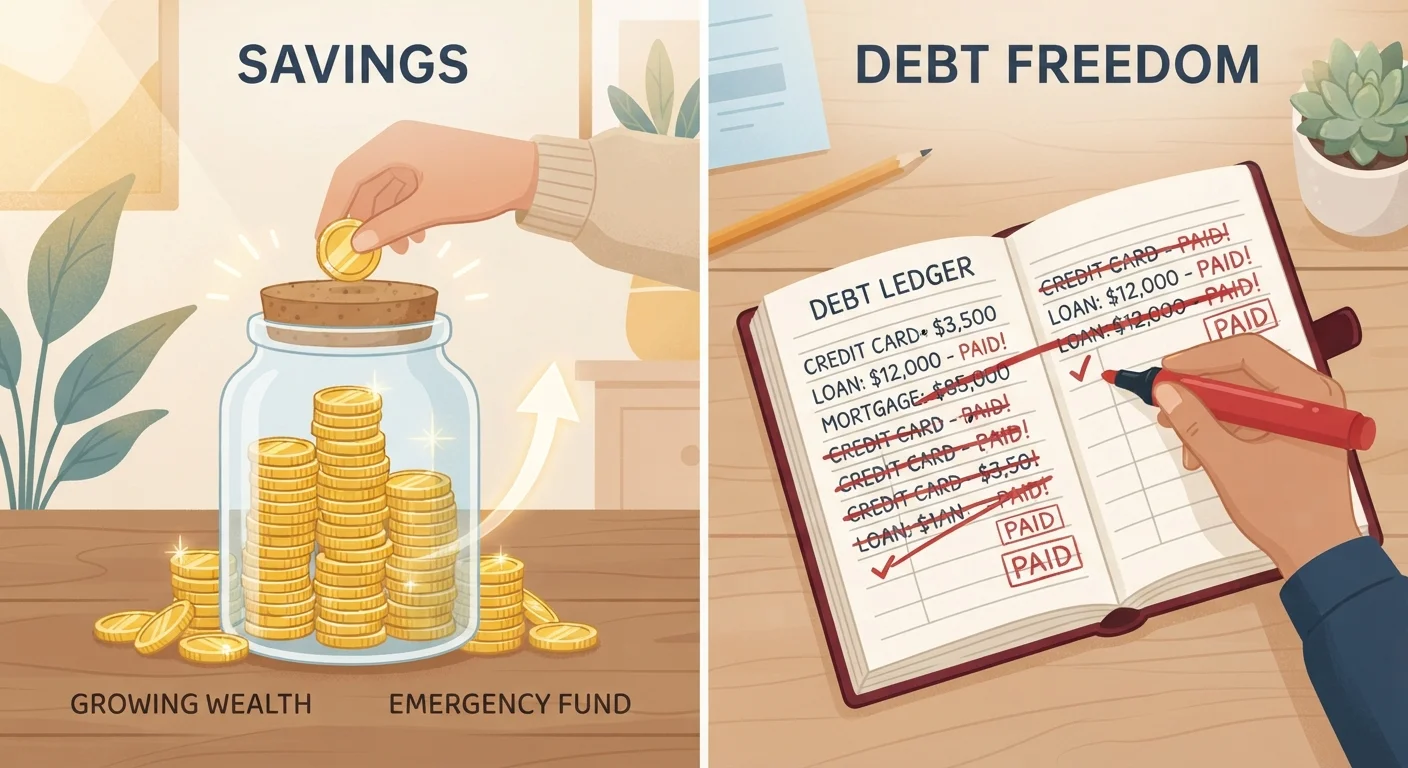
Carrying zero savings while repaying debt leaves you vulnerable to emergencies that could force you back into higher-interest borrowing.
It feels logical to eliminate debt first, but this approach has a structural flaw: without any savings buffer, an unexpected car repair or medical bill often lands on a credit card - potentially at a higher interest rate than the debt you were working to eliminate. Most financial educators suggest building a small starter emergency fund (commonly cited as $500-$1,000) before aggressively accelerating debt payoff. The right balance depends on your interest rates, income stability, and risk tolerance. Our article on Saving and Debt Repayment at the Same Time walks through how to weigh these trade-offs.
Myth
The avalanche method is always better than the snowball method.
Fact
The mathematically optimal method means little if you abandon it - the best strategy is the one you'll actually stick with.
The debt avalanche method - paying off highest-interest balances first - minimizes total interest paid on paper. The debt snowball method - clearing the smallest balances first for psychological wins - can cost more in interest but tends to sustain motivation. Research in behavioral economics suggests that quick early wins meaningfully improve the likelihood of long-term follow-through. If you're the type of person who stays motivated by seeing balances disappear, the snowball may serve you better even if it's not the cheapest route mathematically.
Myth
Debt consolidation solves your debt problem.
Fact
Consolidation simplifies and may reduce interest costs, but it doesn't reduce the principal you owe and can backfire without spending changes.
Rolling multiple debts into a single loan - often at a lower interest rate - can make repayment more manageable. But consolidation is a restructuring tool, not a reduction tool. If the habits that created the debt don't change, the freed-up credit lines can accumulate new balances, leaving you worse off than before. Before consolidating, it's worth understanding precisely what the process does and doesn't address. Debt Consolidation Explained covers the mechanics, benefits, and real trade-offs in detail.
Myth
Closing a credit card after you pay it off is always a smart move.
Fact
Closing old accounts can reduce your available credit and shorten your credit history, both of which may temporarily lower your credit score.
Credit utilization - the percentage of your available credit that you're using - is one of the most influential factors in credit scoring models. Closing a paid-off card reduces your total available credit, which can push your utilization ratio up even if your actual balances haven't changed. Additionally, the average age of your accounts matters; closing an older card shortens that history. In many cases, leaving a paid-off card open (with no balance or a small, automatically paid charge) is the more credit-friendly option. Consult a financial professional if your specific situation makes this decision complicated.
Building Habits That Outlast Your Payoff
Correcting these myths isn't just about saving money on interest - it's about building a relationship with debt that's grounded in reality rather than fear or false confidence. Understanding which debts to prioritize, how your credit works, and why a small savings cushion protects your progress are all parts of a durable financial foundation.
20+ years
Time to repay $5,000 on minimum payments
At a typical 20% APR credit card rate, minimum-only payments can stretch repayment well beyond two decades, according to CFPB repayment illustrations.
~30%
Credit utilization's weight in FICO scoring
Credit utilization accounts for roughly 30% of a FICO score calculation, making account management decisions after payoff genuinely consequential.
1 in 3
Americans with no emergency savings
Federal Reserve survey data has consistently shown that a significant share of U.S. adults would struggle to cover an unexpected $400 expense without borrowing.
Once you've paid down significant debt, the next challenge is making sure it doesn't return. The principles that keep people out of debt long-term are worth understanding early - see Principles That Keep Debt from Coming Back for evidence-backed habits to build now.
This Is Education, Not Personalized Advice
The information in this article is general financial education and does not constitute personalized financial, legal, or tax advice. Everyone's debt situation is different. For guidance tailored to your circumstances, consult a qualified, licensed financial professional.
This article is for general informational and educational purposes only and does not constitute personalized financial advice. Consult a qualified financial professional before making decisions about your specific debt situation.