Why Organization Has Its Own Language
Browse any home organization blog, book, or social media account for five minutes and you'll run into terms like "decluttering sprint," "zones," or "one-in-one-out." These phrases aren't just jargon - they're shorthand for specific methods and principles that, once understood, make it much easier to evaluate which approach fits your actual life.
This glossary collects the terms you're most likely to encounter when researching organization strategies. Knowing what they mean puts you in a better position to build habits that stick - rather than adopting a system that looks good in photos but doesn't hold up day-to-day.
For a broader look at how some popular organization ideas can backfire, see our article on common myths about home organization.
Zone
A designated area of a home assigned to a specific category of activity or items - such as a "homework zone" in a living room or a "cleaning zone" under a sink. Zones help reduce time spent searching for things by keeping related items together.
Command Center
A dedicated spot - often near an entryway or in a kitchen - where a household manages incoming mail, keys, schedules, and daily essentials. The goal is to consolidate decision-making friction into one manageable location.
One-In, One-Out Rule
A maintenance habit where bringing a new item into the home means removing a comparable existing item. It's a simple way to prevent gradual accumulation without requiring periodic big decluttering sessions.
Capsule Closet
A wardrobe intentionally limited to a small number of versatile, mix-and-match pieces. The aim is to reduce decision fatigue and storage load while keeping every item genuinely wearable.
Decluttering Sprint
A short, timed session - often 15 to 30 minutes - focused on sorting and removing items from a specific area. Sprints help people make progress without the overwhelm of an open-ended project.
Dead Space
Areas in a home that are physically present but rarely or never used for storage - such as the space above cabinets, under a bed, or the back of deep shelves. Identifying dead space is a common first step in small-home organization.
Inbox / Outbox System
A paper management method using two physical trays: one for incoming items that need attention and one for items ready to file, recycle, or pass along. Popularized in office productivity, it translates well to home paperwork.
Vertical Storage
Using wall height - rather than floor area - for storage through shelving, pegboards, hooks, or stacking. Especially useful in small spaces where floor square footage is limited.
Flow
The natural path people take through a room during daily routines. Good organization aligns storage with these paths so that items are accessible where and when they're needed, reducing the effort required to stay tidy.
Dual-Purpose Furniture
Furniture designed to serve more than one function - such as an ottoman with interior storage or a bed frame with built-in drawers. Common in small-space design as a way to increase storage without adding more pieces.
Category Sorting
An organizational approach that groups all items of the same type together before deciding what to keep or where to store things. Often contrasted with room-by-room sorting, which can leave duplicates scattered across the home.
Reset Routine
A brief daily or weekly habit of returning items to their designated spots before clutter builds up. A reset routine is a maintenance strategy, not a deep-clean - it typically takes just a few minutes.
Key Concepts in Practice
Understanding the vocabulary is only half the equation. Knowing how these concepts interact helps you build a system that works together rather than pulling in different directions.
| Most common starting point | Decluttering before organizing (Widely recommended by professional organizers) |
| Average time for a decluttering sprint | 15-30 minutes (Common guidance in organization literature) |
| Key principle of zone-based organization | Store items where you use them |
| One-in, one-out rule benefit | Prevents gradual accumulation without big sessions |
| Vertical storage primary advantage | Frees floor space in compact homes |
Zones and flows are complementary ideas: zones define where things belong; flows describe how people actually move through a space. A well-organized home aligns both - storage lands where you naturally reach for things, not just where there happens to be a shelf.
The command center concept works especially well in households with multiple people. A single designated spot for keys, mail, calendars, and school papers reduces the friction that causes clutter to accumulate everywhere else. If shared-home organization is a challenge in your household, our guide on keeping shared spaces tidy covers building systems multiple people will actually use.
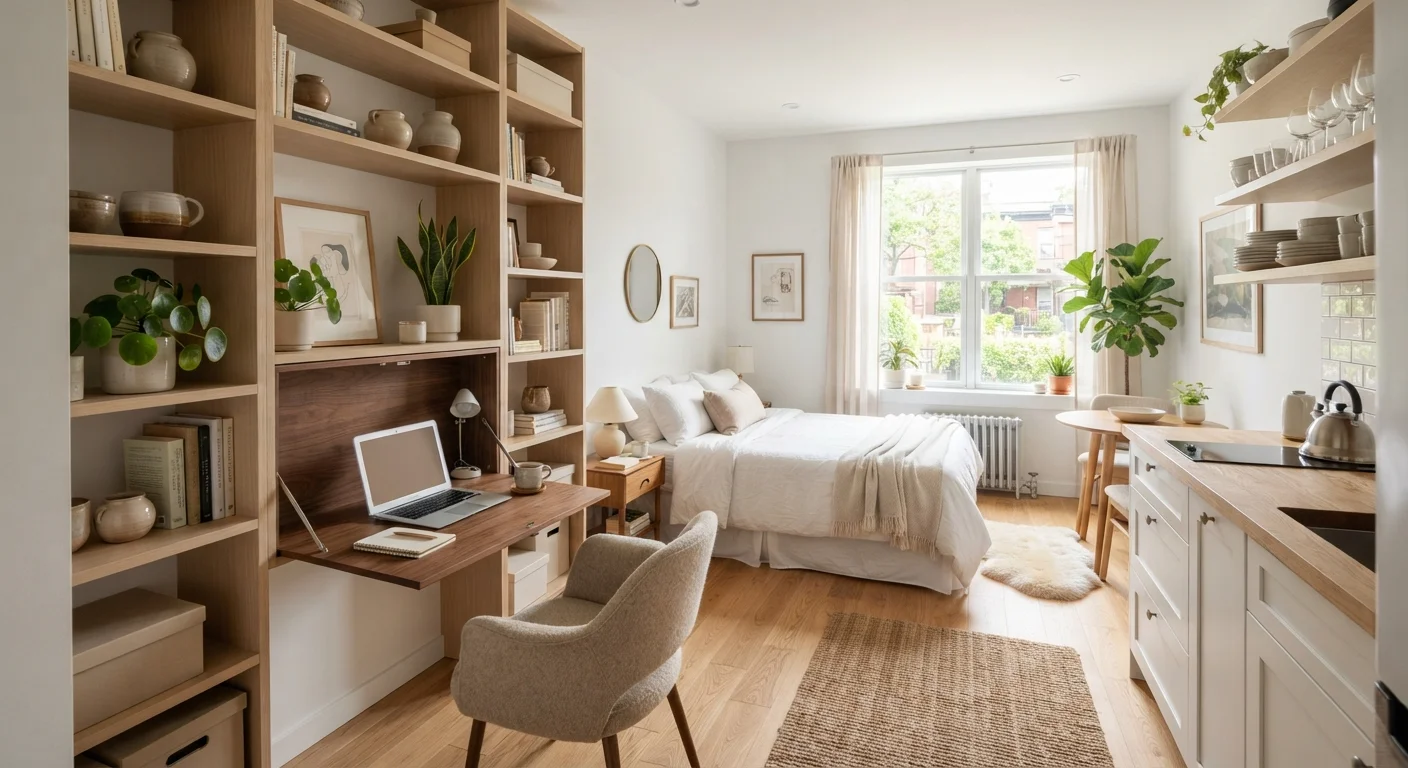
If you're working with limited square footage, the terms "vertical storage," "dual-purpose furniture," and "dead space" come up constantly. Our article on small-space organization strategies puts these ideas into context for apartments and compact homes.
Finally, many organization methods start with a decluttering phase - but "decluttering" doesn't have to mean discarding everything. If you're concerned about letting go of items with sentimental or practical value, see our piece on decluttering without losing what you love.
No Single System Works for Everyone
Organization methods - from minimalism to zone-based layouts - are frameworks, not rules. What matters is whether a system fits your household's routines, space, and preferences. Terms like "capsule closet" or "command center" describe ideas you can adapt freely, not standards you need to meet exactly. Start with the concepts that solve your most persistent frustrations and build from there.