Why Popular Organization Advice Can Backfire
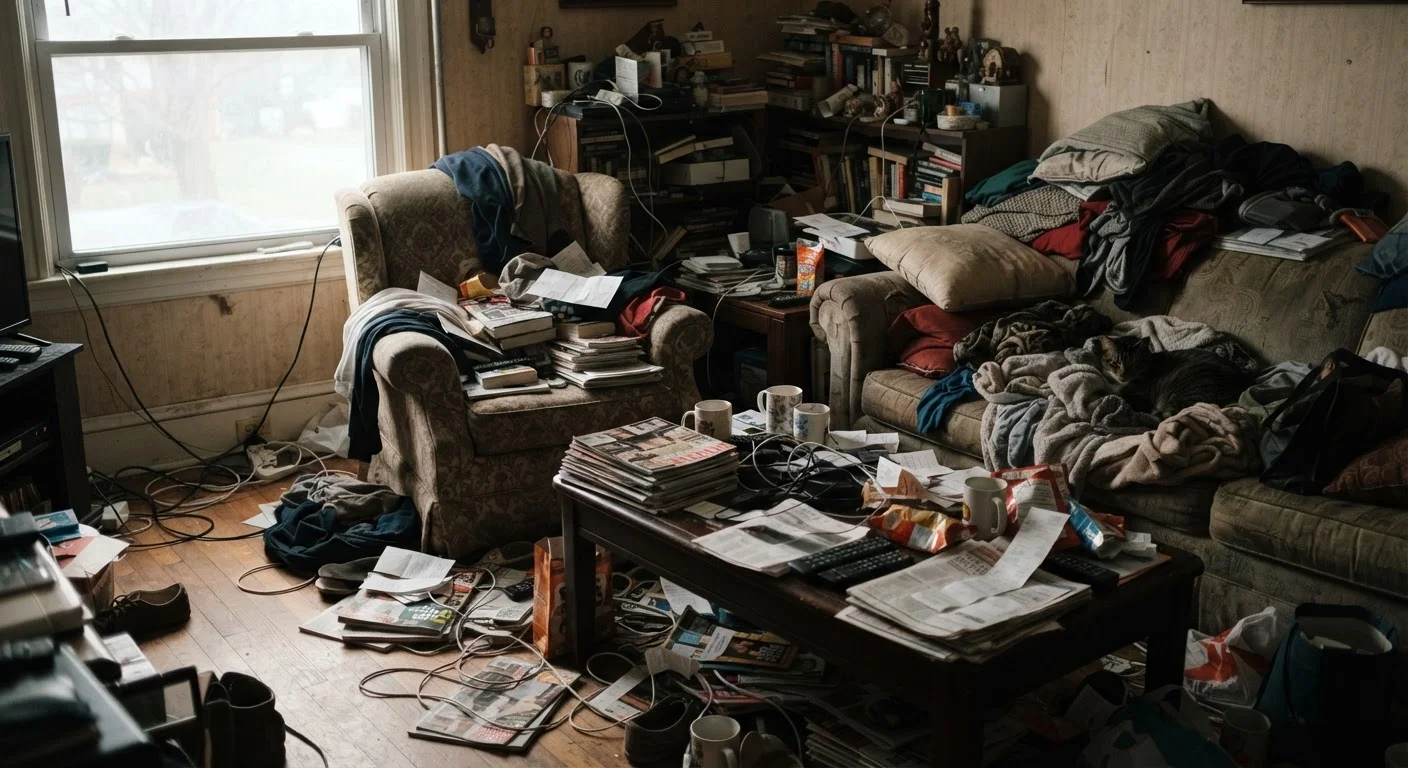
Home organization content is everywhere - social media feeds, TV shows, and entire bookstore sections devoted to the tidy life. But some of the most repeated advice is built on assumptions that don't hold up in real households. When you follow guidance that doesn't match how you actually live, you end up spending money on bins you don't use, feeling guilty about a mess that's actually normal, or setting up systems that collapse within a week.
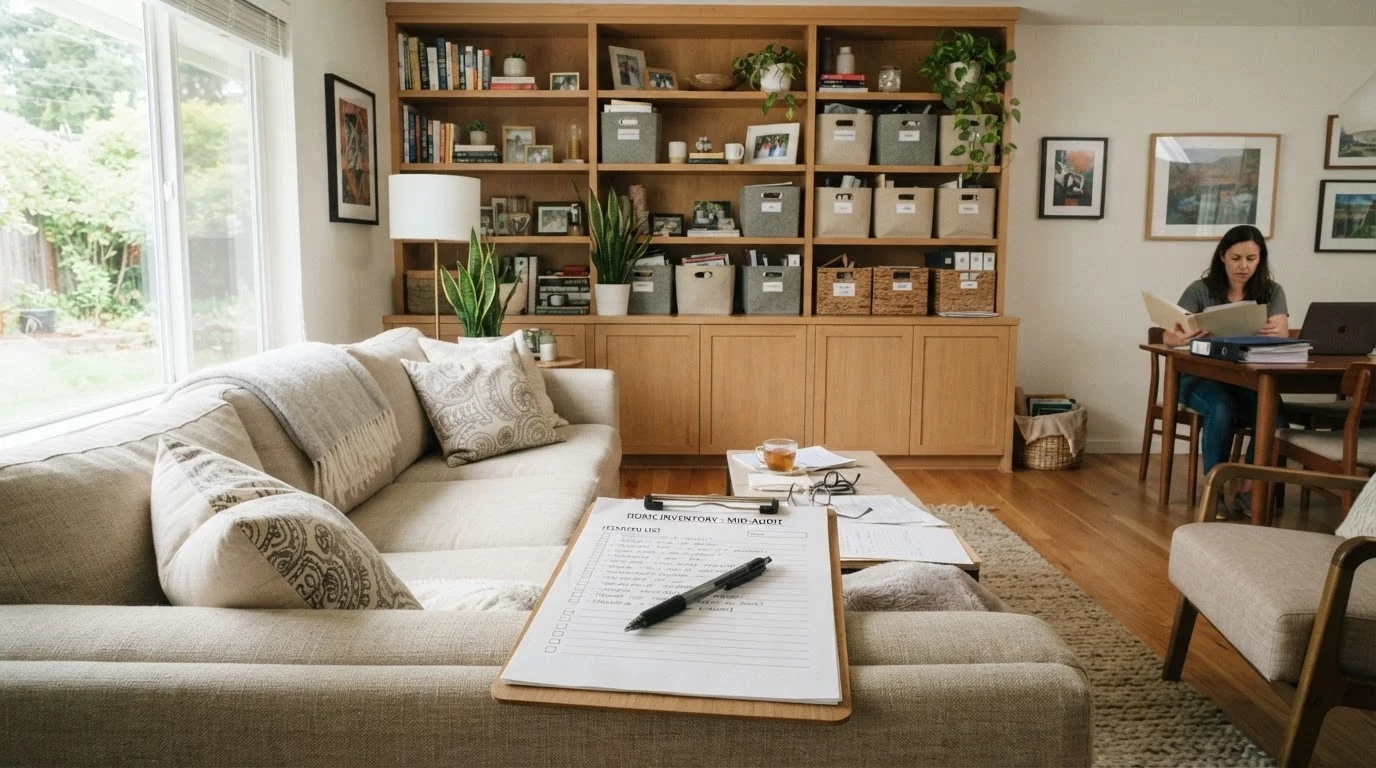
Before rearranging a single shelf, it helps to separate the advice that genuinely works from the myths that quietly make things harder. Our room-by-room organization audit is a good starting point for identifying where your home's organization is actually breaking down - before you spend a dollar on solutions.
Myth
You just need more storage space to get organized.
Fact
Adding storage without reducing belongings usually means accumulating more stuff, not organizing what you have.
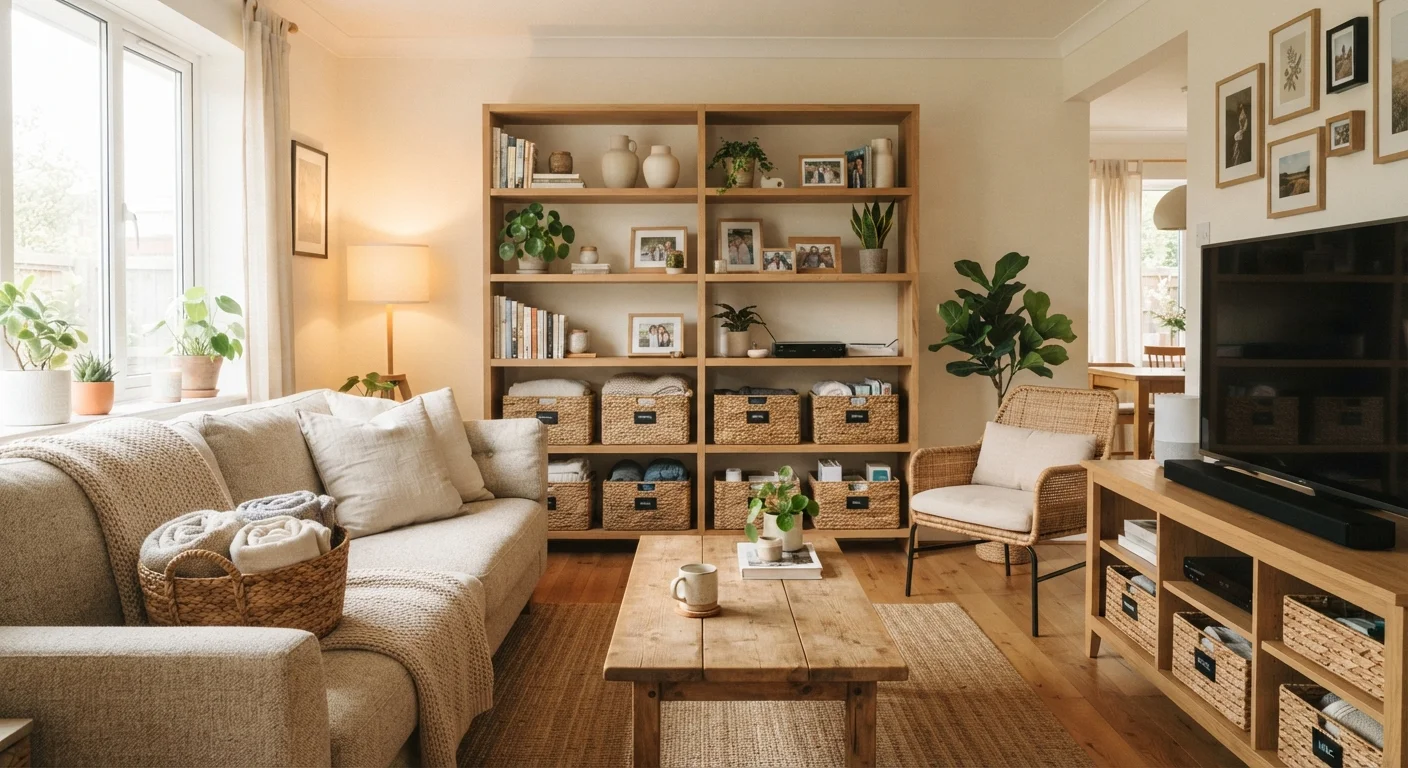
This is one of the most common - and costly - organization mistakes. Buying more bins, shelves, or cabinet organizers before addressing volume gives clutter more places to hide. Professional organizers widely agree that the first step is always editing: deciding what stays before deciding where it goes. Once you've genuinely reduced what you own, you'll often find you need less storage, not more. If you want to pare down without going to extremes, decluttering without letting go of everything you love offers a practical middle path.
Myth
Everything needs a label to stay organized.
Fact
Labels help in some contexts but are unnecessary - and sometimes counterproductive - in most everyday spaces.
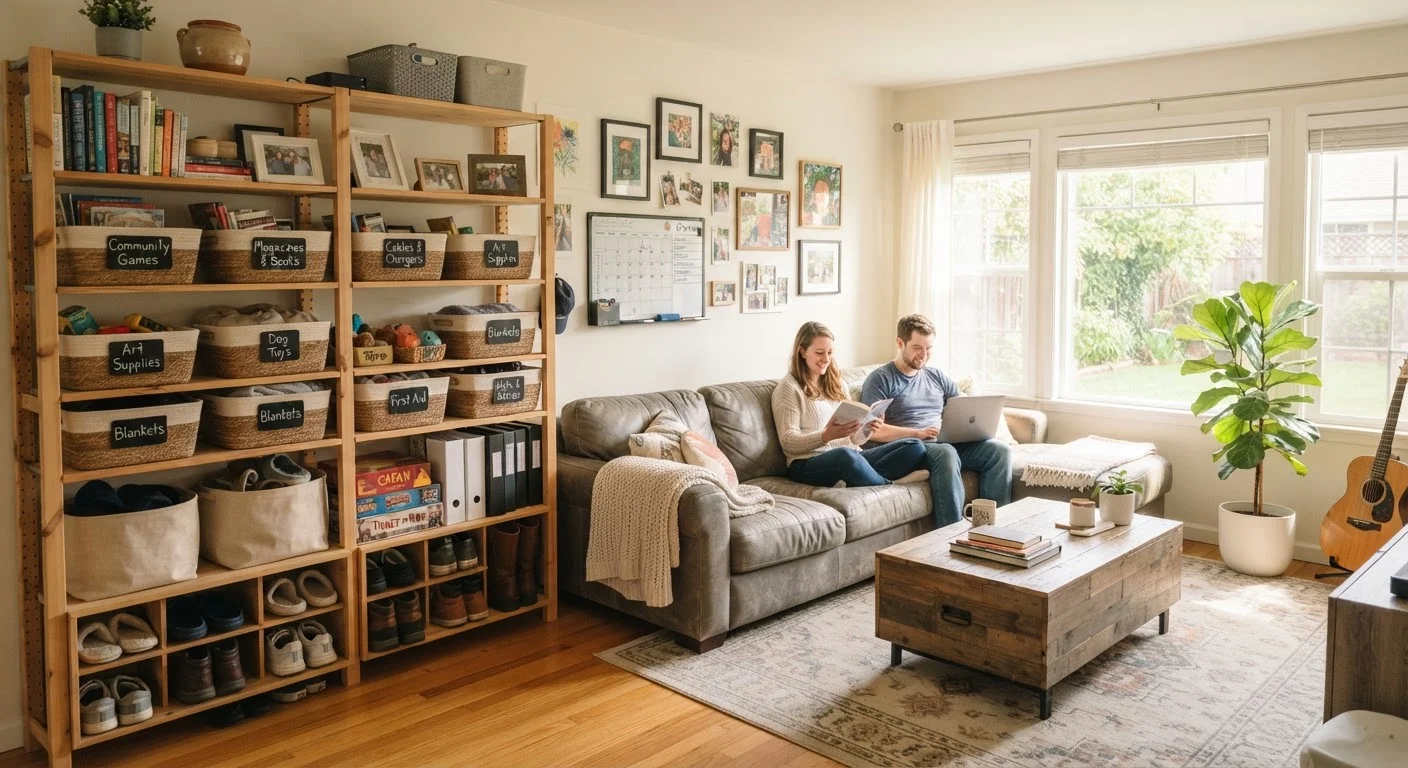
Labeling works well for shared storage, pantries with multiple users, or spaces with high turnover (like an office filing system). But labeling every basket in your linen closet or every drawer in your kitchen doesn't make those spaces more functional - it just adds a maintenance task. If the contents change, the labels become misleading. A system is only as good as your willingness to maintain it. Simpler systems, even unlabeled ones, tend to last longer because they require less upkeep.
Myth
A truly organized home should look tidy all the time.
Fact
A functional home will look lived-in during daily use - that's normal and expected, not a failure.
The image of a perpetually spotless home - every surface clear, every item in place - is largely a product of staged photography and edited video. Real households generate daily disorder: dishes are used, toys come out, mail arrives. The goal of organization isn't a permanent state of perfection; it's a home that can be restored to order efficiently. If tidying takes 10-15 minutes instead of hours, your system is working - regardless of how the space looks mid-afternoon.
Myth
You need to do a big declutter session to get organized.
Fact
One-time purges feel productive but rarely produce lasting results without changes to everyday habits.
A single weekend overhaul can be a useful reset, but if the behaviors that created the clutter don't change, the disorganization returns - often within months. Lasting organization comes from small, repeatable habits: putting things back after use, making regular decisions about what to keep, and not letting items accumulate without review. Think of the initial sort as preparation, not the solution itself. The habits you build afterward are what determine whether things stay in order.
Myth
Sentimental items are the hardest clutter to deal with, so save them for last.
Fact
Deferring emotionally difficult items indefinitely often means they never get organized at all.
Many popular decluttering methods suggest tackling sentimental items last, after you've built decision-making momentum. That's reasonable advice - but for some people, "last" never comes. If memory items are a significant part of your clutter, it's worth having a framework ready. Our article on sentimental items and the organizing dilemma they create walks through how to approach keepsakes and heirlooms without guilt or indefinite delay.
Myth
If you buy the right organizational products, your home will stay organized.
Fact
Products support organization systems, but they can't substitute for the habits and decisions that systems depend on.
A drawer divider or a closet insert can make an existing system more functional - but only if a working system already exists. The organizing product industry is large and visually appealing, which makes it easy to confuse shopping with organizing. Before purchasing any storage solution, identify the specific problem it needs to solve. A product that doesn't match your actual behavior or space will sit unused, becoming clutter itself. For unfamiliar terminology you encounter while researching solutions, a plain-language guide to home organization terms can help cut through the jargon.
What Lasting Organization Actually Looks Like
Once you've cleared out the myths, a more realistic picture emerges: sustainable organization is built on habits, not aesthetics. It's the difference between a home that photographs beautifully once and one that stays functional week after week. That distinction matters enormously for households with kids, multiple adults, or simply busy schedules.
Avoid Buying Storage Before Decluttering
Purchasing bins, baskets, or shelving units before reducing your belongings is one of the most common - and expensive - organization mistakes. You may end up storing items you don't need in containers that don't fit your actual space. Sort and reduce first, then assess what storage, if any, you actually need.
Small, consistent actions tend to outperform major overhauls. Returning items to a designated spot after use, doing a brief weekly reset, and keeping only what you genuinely need and use - these behaviors do more for long-term order than any storage system. Research in behavioral science consistently supports the idea that environment design (making the right action easy) beats willpower and motivation. For more on why disorder feels so hard to escape, see why clutter feels so overwhelming.
It's also worth noting that organization looks different across different households. Shared spaces come with their own challenges - keeping tidy when you live with others requires negotiation and shared systems, not just one person's effort. And if you're dealing with specific clutter types, targeted guides like managing paper clutter at home can be more useful than general decluttering advice.
The habits that prevent clutter from returning - explored in detail in our piece on one-in, one-out and other clutter-prevention habits - are ultimately more powerful than any single organization project. Start with fewer things, simpler systems, and honest expectations about your lifestyle. That combination works far better than any storage product.