Why Small-Space Organization Is a Different Problem
Organizing a small apartment or compact home isn't simply a scaled-down version of organizing a larger house. The constraints are fundamentally different: fewer dedicated rooms mean spaces must serve multiple purposes simultaneously, storage real estate is scarce, and visual clutter has a more immediate impact on how a home feels to live in.
The most common mistake people make is buying storage products before understanding what they're actually solving. A collection of matching bins looks appealing but does nothing if the underlying problem is owning more than the space can reasonably hold. Effective small-space organization addresses both volume - what you keep - and placement - where and how things live.
This guide works through both dimensions, room by room and habit by habit, so you can build a system that holds up over time rather than one that looks good for a week.
Start With a Honest Assessment
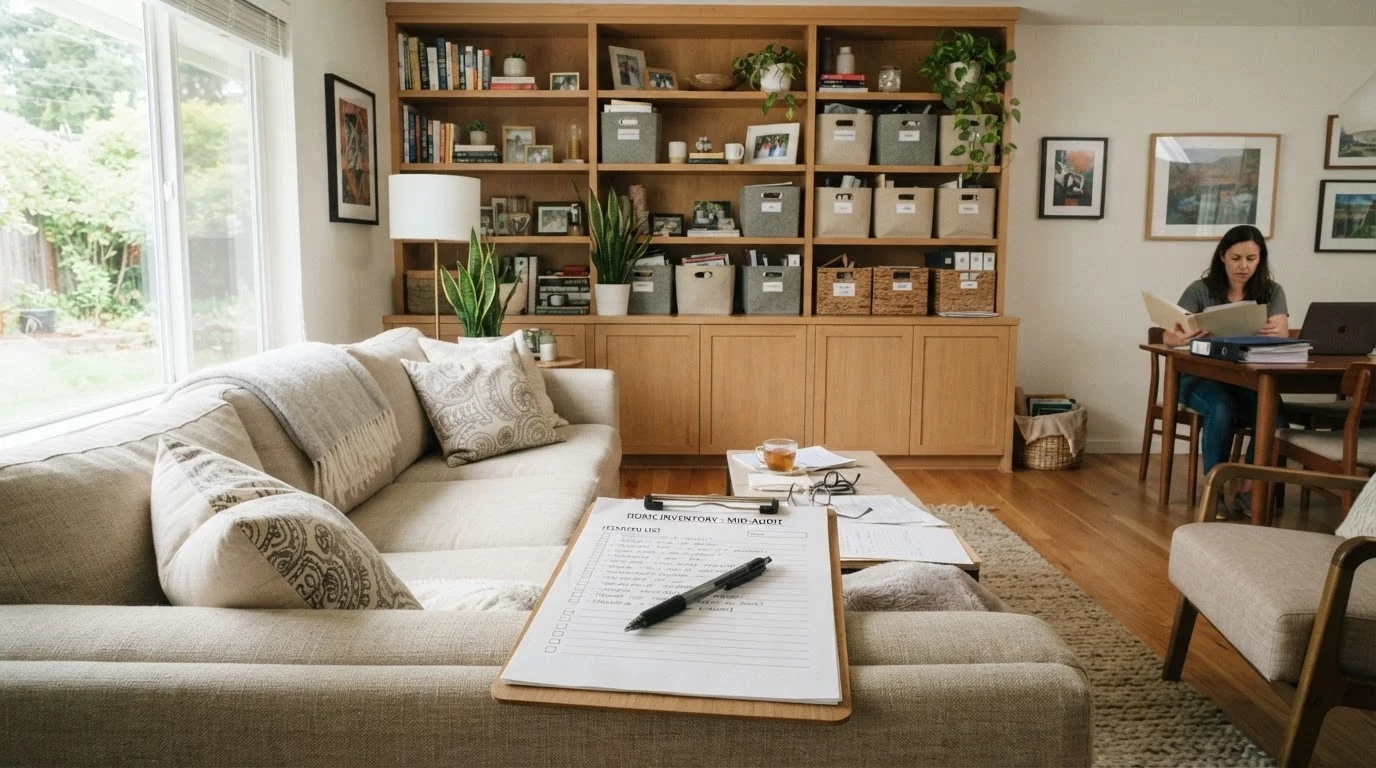
Before rearranging anything, spend time understanding where your current setup is actually breaking down. A room-by-room organization audit can surface patterns you haven't consciously noticed - surfaces that collect items because there's no logical home for them, or closets so packed that usable space goes to zero.
Walk through your home and ask three questions in each area:
- What activities happen here? List every function the space serves, not just the primary one.
- What is consistently out of place? Recurring clutter spots signal a missing or broken system, not a laziness problem.
- What rarely gets used but takes up significant space? Seasonal, sentimental, or aspirational items often consume the most room for the least return.
This audit gives you a clear picture before any money or effort is spent. It also reveals which problems are storage problems versus volume problems - a critical distinction in compact spaces.
Audit Before You Buy Anything
Resist purchasing storage products until after you've completed your assessment. Most small-space homes already have underused storage - inside furniture, above cabinets, behind doors - that a systematic look will reveal. Buying more containers before identifying the root problem often adds clutter rather than reducing it.
Use Vertical Space Deliberately
In a small home, floor space is the scarcest resource, so the walls above counter height become essential storage territory. Most apartments and compact homes leave several feet of wall space between the top of furniture and the ceiling entirely unused.
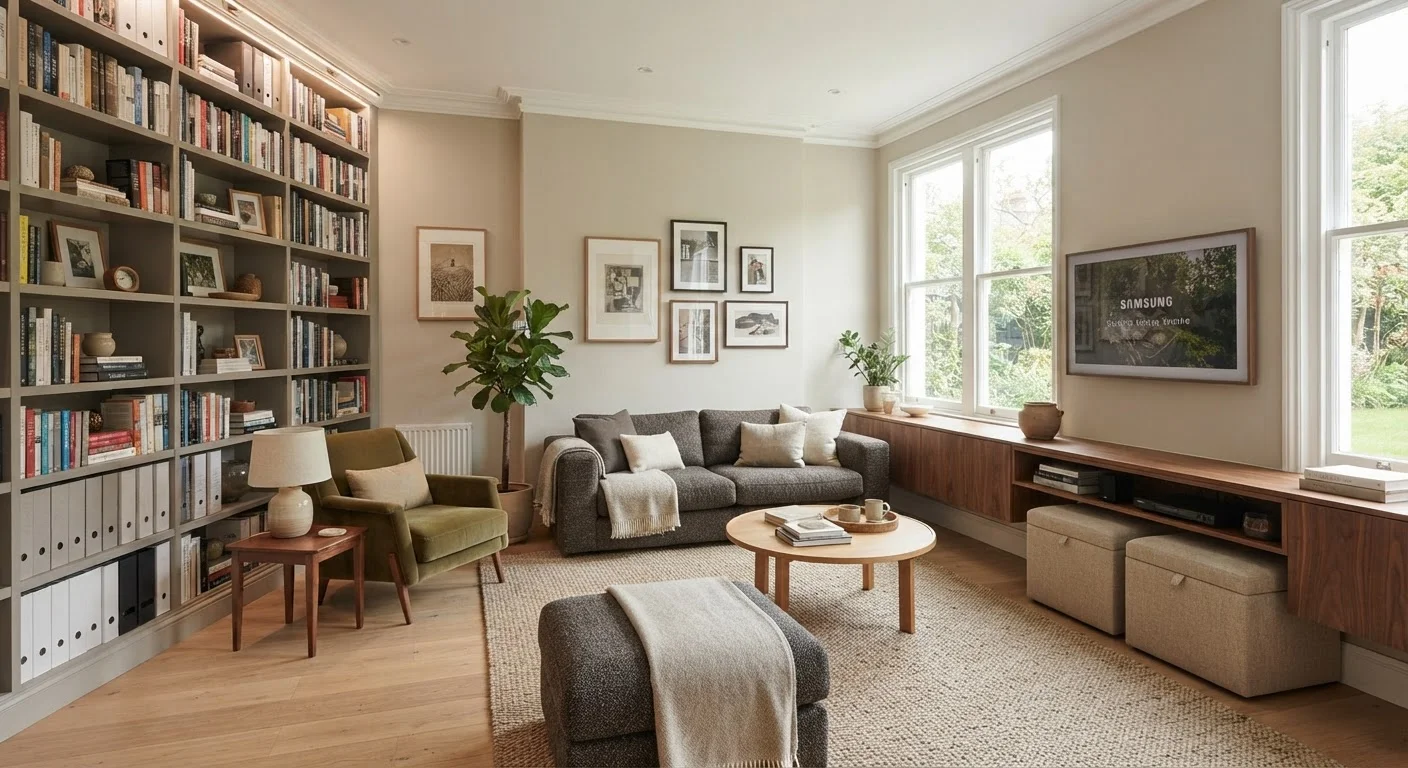
Understanding the trade-offs between vertical storage versus horizontal storage helps you make intentional choices rather than filling space arbitrarily. Floating shelves, tall bookcases anchored to walls for safety, and cabinet units that reach ceiling height all extend your usable storage significantly.
Measure the actual depth of your wall space before buying any shelf or unit. Many apartments have shallower walls or irregular surfaces that standard furniture doesn't account for, leaving awkward gaps or blocking outlets.
Precise measurements prevent costly returns and wasted effort - a common issue when shoppers rely on general size categories rather than the specific dimensions of their own walls.
Anchor tall freestanding shelving units to the wall using furniture straps even if you're renting - most landlords allow this with small screws, and the safety benefit far outweighs the minor wall repair needed at move-out.
Unsecured tall furniture is a genuine tip-over hazard, particularly in homes with children or pets. A brief conversation with your landlord before anchoring is usually sufficient.
A few principles make vertical storage more practical:
- Store infrequently used items highest - seasonal gear, spare linens, rarely consulted reference materials.
- Keep everyday items at eye level and below so retrieval is effortless.
- Use consistent containers on open shelving to reduce visual noise; mismatched items on open shelves amplify the feeling of clutter.
If you rent and can't install permanent shelving, freestanding tall shelving units and over-door organizers provide vertical capacity without wall modifications. Always check your lease terms before drilling or mounting anything.
Zone Every Area, Even in One Room
In a studio or a home where rooms double as offices, gyms, or dining areas, zoning is the organizing principle that prevents everything from bleeding together. A zone is simply a defined area assigned to a specific activity - and the rule is that items belonging to that activity live in that zone only.
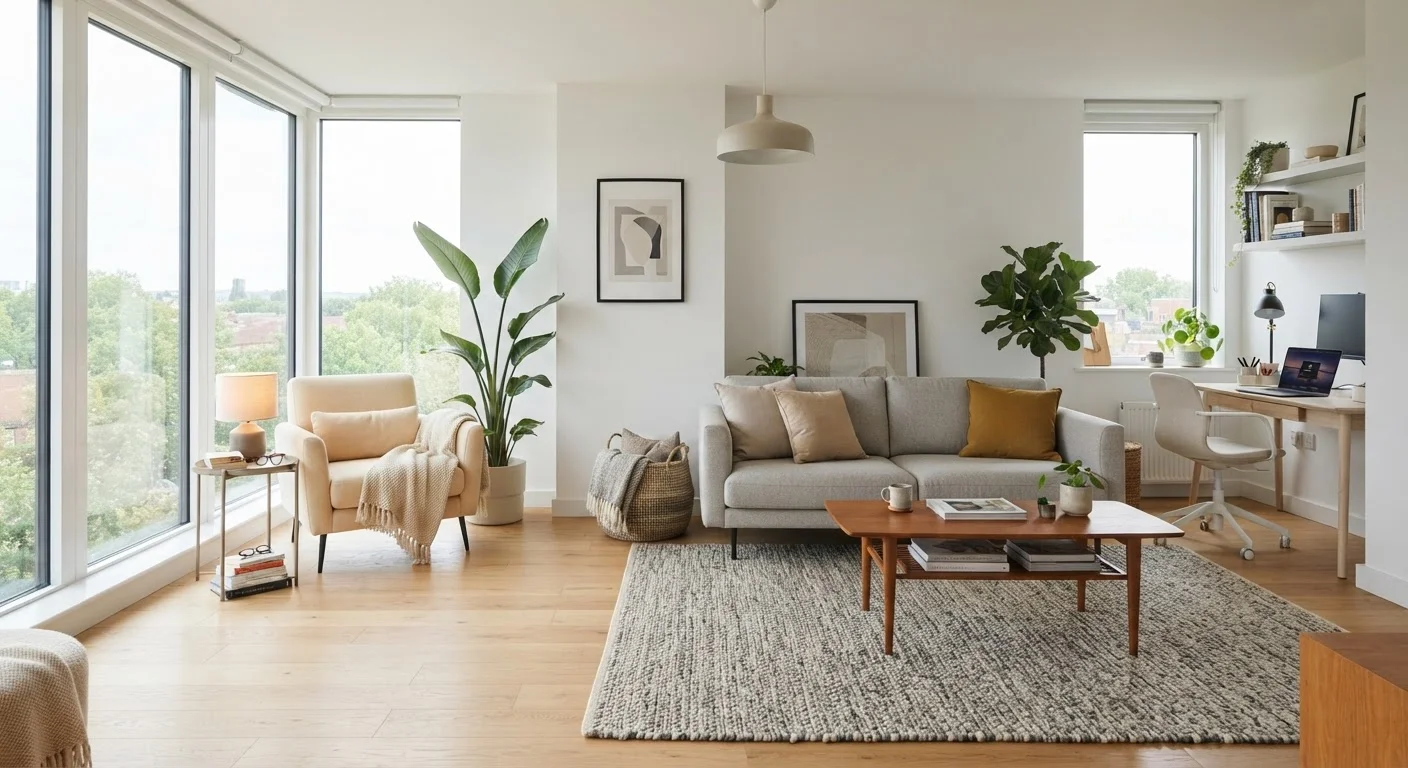
Assigning clear zones to activities works even without physical barriers. A rug defines a seating zone; a narrow console or shelf defines a workspace boundary. When zones are consistent, putting things away becomes automatic rather than a judgment call every time.
~600 sq ft
Average U.S. apartment size
According to U.S. Census Bureau data, the median newly completed apartment is around 1,000 sq ft, but many older urban units fall well below 600 sq ft.
3×
More storage with floor-to-ceiling shelving
Using full wall height rather than standard 6-foot bookshelves can roughly triple linear storage space in the same footprint, according to interior design estimates.
Practical zoning strategies for common small-space challenges:
- Studio apartments
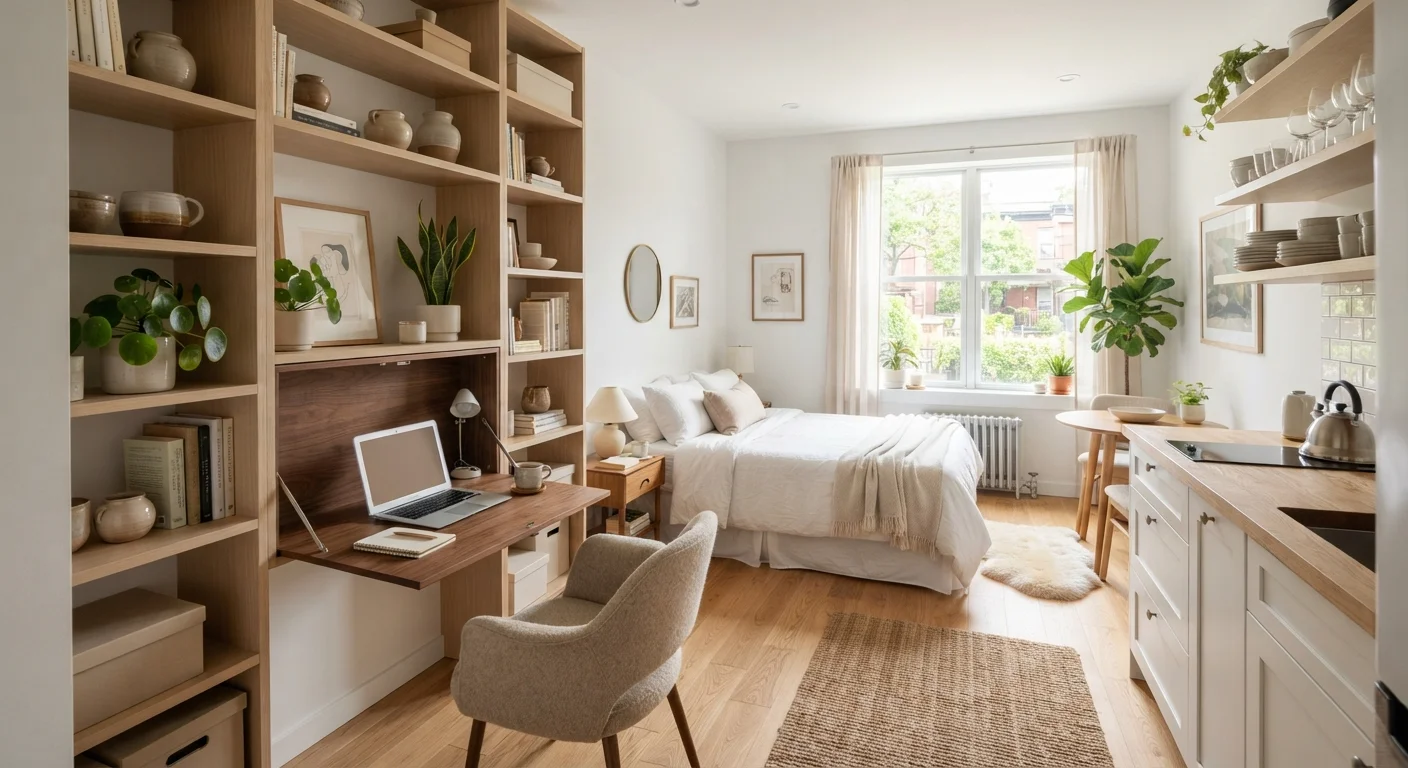
- Separate sleep, work, and living areas using furniture placement, lighting differences, and rugs rather than walls.
- Combined kitchen-dining areas
- Keep cooking tools, pantry items, and dining supplies in distinct zones rather than mixed throughout shared cabinetry.
- Shared homes
- Personal zones for each resident reduce conflict and make tidying faster - see our guide on organizing shared homes for more on this.
Build Habits, Not Just Systems
Storage systems are only as effective as the daily habits that maintain them. In a compact home, there's little buffer space to absorb disorder - a few days of items left out of place can make a small apartment feel chaotic quickly.
Two habits have an outsized impact in small spaces:
- One-in, one-out: When something new enters the home, something leaves. This keeps volume from gradually expanding beyond what the space can hold.
- Reset routines: A brief daily or nightly reset - returning items to their zones, clearing surfaces - prevents accumulation from compounding.
These habits don't require extra time so much as consistency. The reset works best when it's tied to an existing routine, like clearing the kitchen counter after dinner or straightening the living area before bed. For households with multiple people, shared habits require explicit agreement. Building systems everyone uses is a separate challenge from building systems that work for one person.
Avoid Over-Systematizing
Elaborate organization systems with many categories and containers can backfire in small homes - they require more maintenance than simpler approaches and frustrate other household members who don't share the same mental model. Aim for systems that are obvious enough to work without instruction, especially in shared living situations.
Decluttering as an Ongoing Practice
Decluttering isn't a single event you do once and move on from - in a small home, it's a recurring maintenance task. Volume creep is normal: gifts arrive, purchases accumulate, and items that no longer serve you linger past their usefulness.
A periodic review every few months - going through a specific category or room with fresh eyes - prevents the slow accumulation that undermines even well-designed systems. You don't need to embrace minimalism to benefit from regular editing. Decluttering thoughtfully means making considered decisions about what earns its space, not discarding everything you own.
For renters and apartment dwellers specifically, targeted upgrades can also expand what a space is capable of - our guide on small-space upgrades that change how a room functions covers practical improvements that address real spatial constraints without requiring major renovation.
The goal isn't a perfectly curated home at all times. It's a home where things have logical places, daily routines stay manageable, and square footage - however limited - is used with intention.
“The question is never 'where can I put this?' It should always be 'does this belong in my life right now?' Storage is a consequence of decision-making, not a substitute for it.”
— Julie Morgenstern, Professional organizer and author of 'Organizing from the Inside Out'