
Why Most Decluttering Advice Doesn't Stick
The most common decluttering advice - keep only what sparks joy, purge ruthlessly, go minimalist - works well for some people and fails completely for others. The problem isn't a lack of willpower. It's that most approaches ask you to make sweeping, irreversible decisions under time pressure, without a clear sense of what you're actually trying to achieve.
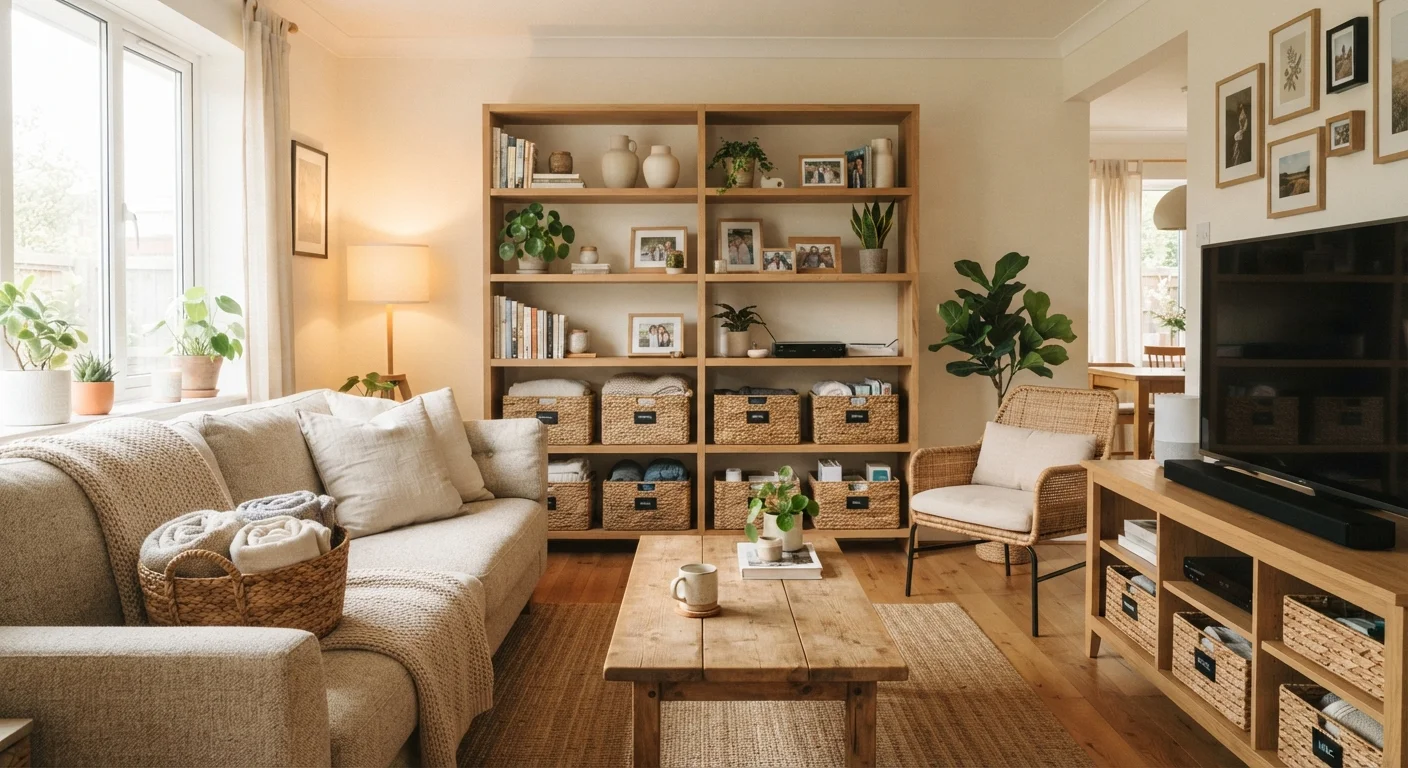
A more practical framework starts with a simple question: What kind of home do I want to live in day to day? Not a staged-for-a-magazine home. A functional, comfortable, personally meaningful one. That framing shifts decluttering from an exercise in deprivation to an act of curation. You're not letting go of everything - you're making deliberate room for what genuinely matters.
It's also worth dispelling a common myth: organization and accumulation aren't opposites. You can own a lot and live in a tidy, functional home. What creates friction is owning things without a system - no logical home for items, no clear sense of what you have. Before you reach for more storage bins, consider that the real issue is often volume and placement, not a shortage of containers. For more on this, see common myths that make organizing harder.
What you will need
What You'll Need Before You Start
Donation bags or boxes
Collect items in good condition that you're ready to pass on to others.
Trash bags
Immediately remove broken, expired, or unusable items from your space.
Sticky notes or labels
Temporarily mark categories like 'keep,' 'relocate,' or 'decide later' without permanent commitment.
A timer
Set focused work intervals to prevent fatigue and keep sessions manageable.
You don't need specialized products or elaborate systems to begin. The core tools are simple: something to collect donations, something for trash, and a willingness to make decisions incrementally rather than all at once.
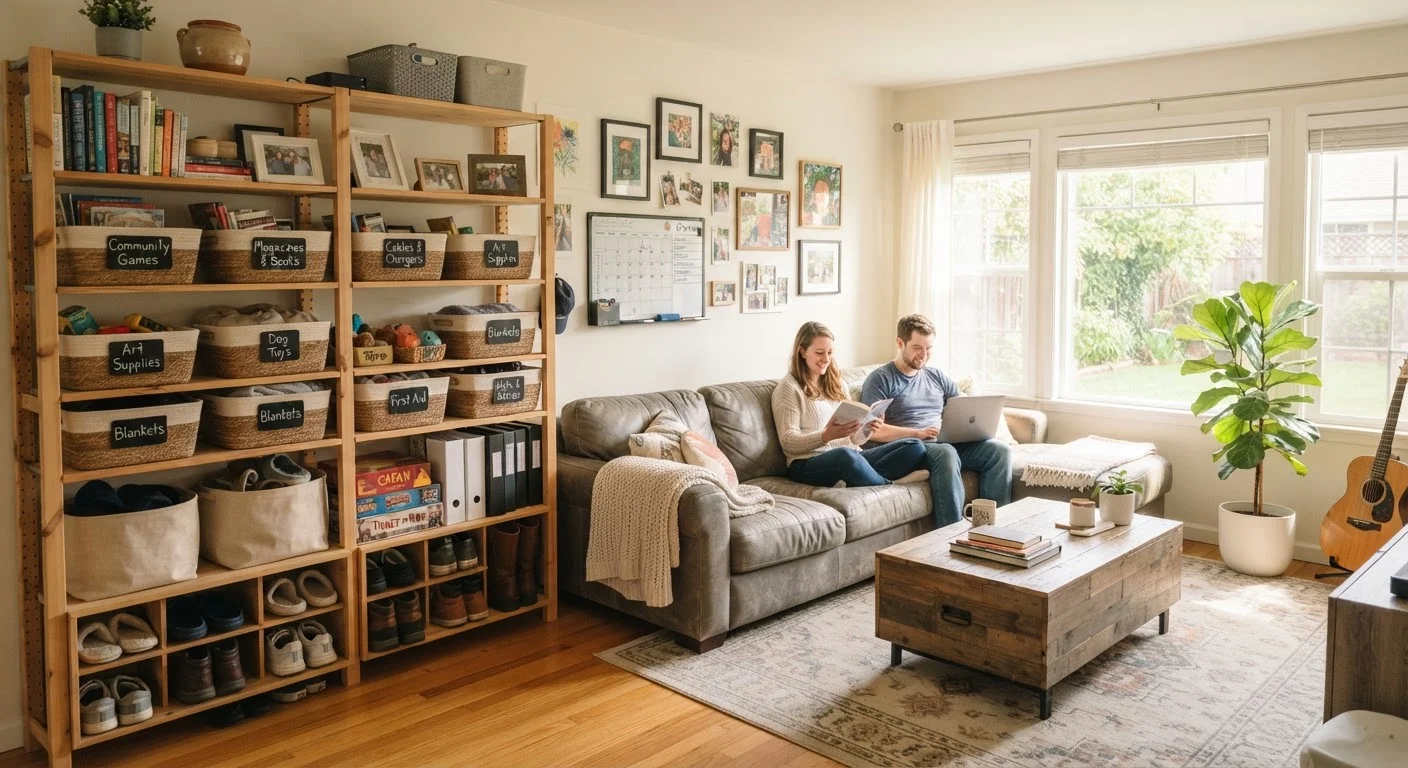
If you share your home with others, it's worth aligning on the plan before sorting through shared spaces. Different standards and attachments can make a collaborative declutter surprisingly contentious. See strategies for organizing a shared home for a practical approach.
Step-by-Step: How to Declutter Thoughtfully
Don't Start With Sentimental Items
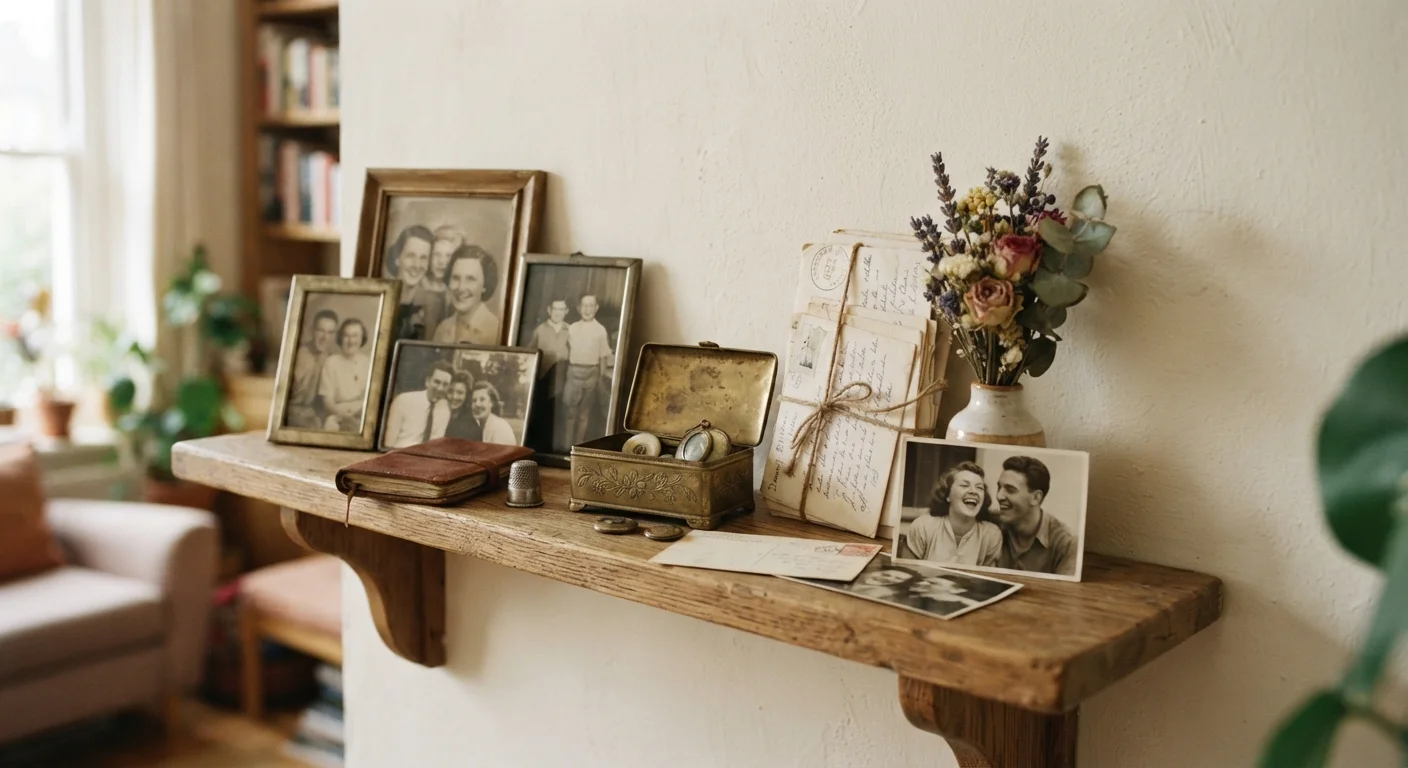
Photographs, heirlooms, and memory-laden objects are the hardest category to sort. Tackling them first almost always stalls the entire process. Build your decision-making confidence by starting with easier, lower-stakes items - like expired pantry goods or duplicate kitchen tools - then revisit sentimental pieces once you have a clearer sense of your own criteria.
Choose one starting zone - not the whole house
Pick a single room, or even a single category like clothing or kitchen gadgets, as your starting point. Trying to tackle everything at once scatters your focus and quickly becomes discouraging. A contained win - a cleared-out junk drawer, an organized linen closet - builds the momentum that carries you into harder areas.
Pull everything out and see what you actually have
Before making any decisions, remove all items from the space and place them where you can see them. Clutter tends to hide in layers; you can't make clear choices about things you didn't know you owned. This step often reveals duplicates, forgotten purchases, and items that have drifted far from where they belong.
Sort by function, not sentiment - for now
For each item, ask: Does this serve my actual, current life? Not a hypothetical future life, not the person you meant to become when you bought it. Useful questions include: Have I used this in the past year? Would I replace it if it disappeared tomorrow? Does it fit the space I actually have? Items that clearly earn a 'yes' go back. Items that earn a clear 'no' go directly into the donation or trash bag.
For sentimental items, set them aside for a dedicated session - see the important note above.
Handle the 'maybe' pile with a deadline system
Not every decision will be clear-cut, and that's normal. For genuinely undecided items, use the 'maybe box' method: seal them in a labeled container with a review date. This lets you move forward without forcing premature decisions. When the date arrives, items you never retrieved are strong candidates for donation.
[tip_callout]Give sentimental items their own separate session
Keepsakes, gifts, inherited objects, and memory items operate by different rules than kitchen spatulas. Schedule a dedicated time to go through them - ideally not on the same day as your main sort. A useful framework: rather than keeping every sentimental item, consider whether you can honor the memory another way, such as photographing an object before letting it go, or passing it to a family member who will use it. For a deeper look at this challenge, see how to navigate sentimental items.
Return kept items with a designated home
Everything that stays should return to a specific, logical spot - not just 'somewhere on the shelf.' Items without a fixed home drift and re-create clutter. Group like items together, place frequently used things within easy reach, and store seasonal or occasional-use items further away. If a kept item doesn't have a sensible place, that's useful information: you may have more than your space can comfortably hold.
Remove donations and trash the same day
Don't let sorted-out items sit in your home. Load donation bags into your car or set them by the door for immediate removal. Items that linger tend to get second-guessed or absorbed back into the household. The physical act of removing them closes the decision loop.
After the Declutter: Staying Organized Without Constant Effort
A single decluttering session will not permanently resolve clutter if the habits that created it remain unchanged. The most effective long-term strategy is building a small number of simple, consistent routines rather than relying on periodic large-scale purges.
One of the most well-established approaches is the one-in, one-out rule: when something new enters the home, something comparable leaves. It's not a rigid law, but as a general habit it prevents gradual accumulation from quietly undoing your work. For a full set of practical routines, see habits that prevent clutter from returning.
If paper is a persistent problem in your home - mail, receipts, manuals, school forms - it benefits from its own dedicated system. See how to manage paper clutter at home for practical containment strategies. And if you're working with limited square footage, small-space organization strategies can help you make the most of what you have.
The goal isn't a perfect home. It's a home that works for your actual life - one where you can find what you need, enjoy what you own, and let go of the rest without regret.