Why Paper Clutter Builds Up So Quickly
Paper doesn't pile up because people are disorganized. It piles up because most homes have no defined process for handling it. Mail gets set down near the door, receipts land in a drawer, and school forms end up on the kitchen counter alongside appliance manuals that arrived with a new purchase three months ago.
The root issue is a missing decision point. Without a clear moment to sort each piece of paper - keep it, act on it, or let it go - everything defaults to a flat surface. That surface becomes a pile, and the pile becomes invisible background noise that grows steadily over time.
Understanding this dynamic is the first step. Paper clutter is a flow problem, not a storage problem. Adding more folders or bins without changing how paper enters and moves through your home rarely helps. See our common myths about home organization article for other organizational misconceptions that can make the problem worse.
Landing zone
A single designated spot in your home where all incoming paper is placed first, before sorting. It prevents paper from scattering across multiple surfaces.
Action file
A folder or slot reserved for papers that require a response, payment, or follow-up - things you need to do something with in the near future.
Document retention
How long you hold onto a particular type of record before it's safe to discard it. Different document types have different recommended retention periods.
Paperless billing
Receiving statements and bills digitally rather than by mail, which reduces the volume of physical paper entering your home each month.
Shredding
Physically destroying documents before disposal to prevent sensitive personal or financial information from being accessed by others.
The Most Common Sources of Home Paper
Knowing where your paper comes from makes it easier to intercept before it accumulates. Most household paper falls into these categories:
- Mail: Bills, statements, catalogs, marketing offers, and neighborhood flyers arrive daily for most households.
- Financial documents: Pay stubs, tax forms, bank and investment statements, and insurance paperwork.
- School and activity forms: Permission slips, calendars, report cards, and registration paperwork for children's activities.
- Receipts: From groceries, clothing, home repairs, and medical appointments.
- Manuals and warranties: Accompanying nearly every appliance, tool, or electronic device purchased.
- Health-related papers: Explanation-of-benefits forms, appointment summaries, prescription inserts, and vaccination records.
Each category has different handling needs. A receipt from a grocery run doesn't need the same treatment as a warranty or a tax document. Recognizing these differences is what allows you to build a system that doesn't require deliberation every time a piece of paper crosses your threshold.
How to Set Up a Basic Paper System
A workable paper system has three elements: an entry point, a sorting habit, and a filing destination. You don't need color-coded binders or a dedicated room. You need a consistent place and a repeatable routine.
Step 1: Create a Landing Zone
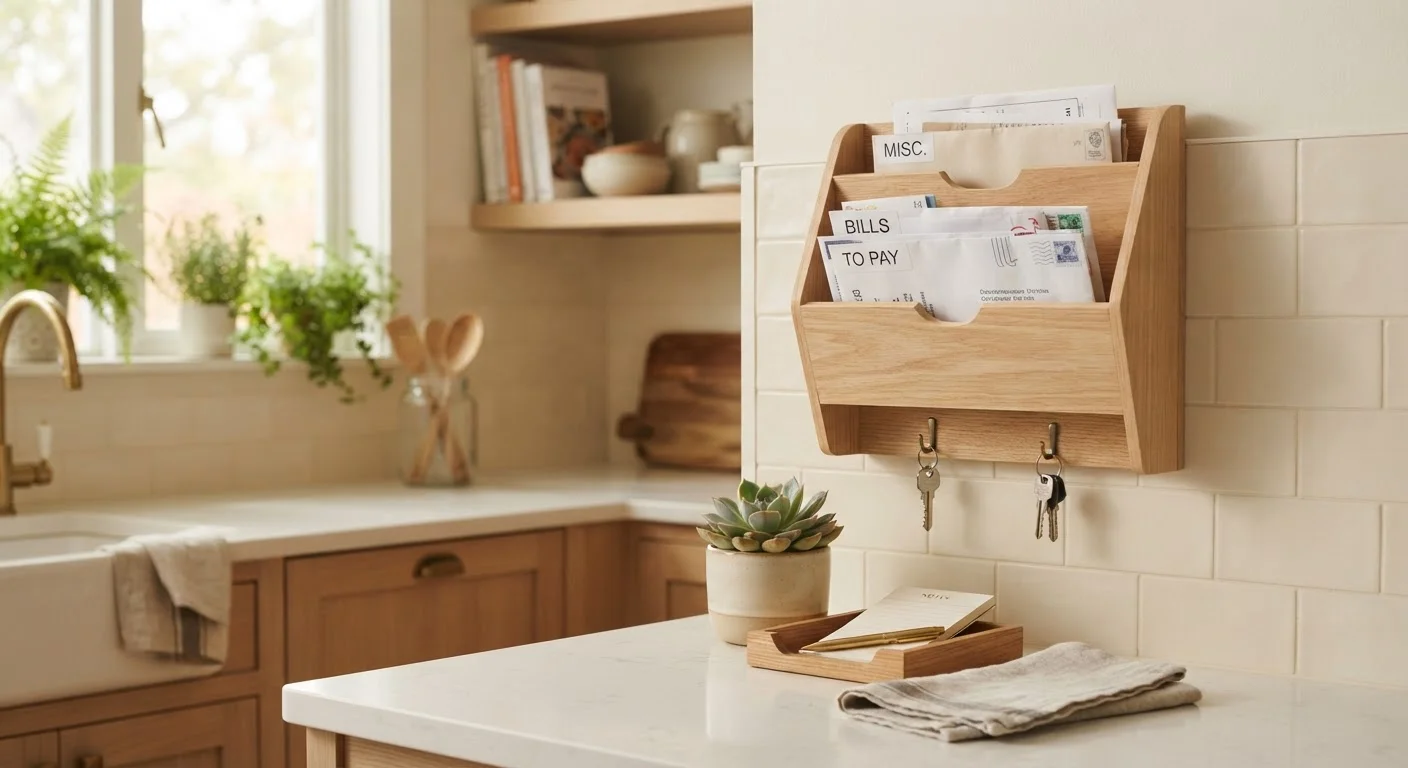
Designate one spot - a wall-mounted sorter, a small tray, or a single drawer near the entry - where all incoming paper lands. Nowhere else. This prevents the scatter-across-every-surface pattern that makes paper hard to manage.
Step 2: Sort on a Regular Schedule
Once or twice a week, process what's in the landing zone. Use three categories: Act (requires a response or payment), File (worth keeping for reference), and Recycle or Shred (no further use). Keep this step brief - most pieces of paper take fewer than ten seconds to categorize.
Step 3: Give Filed Papers a Permanent Home
A small accordion folder or a set of hanging folders organized by category - household, financial, medical, insurance - is sufficient for most families. Label them plainly and put them somewhere accessible, not buried in a closet. If your home office doubles as your filing headquarters, see our guide to organizing a home office for complementary strategies.
Start Small With One Category
If building a full filing system feels daunting, start with just one paper category - financial documents, for example - and create a simple home for those alone. Once that habit is established, add the next category. Incremental systems tend to last longer than ones built all at once.
What to Keep, What to Shred, What to Toss
One reason paper accumulates is uncertainty - people keep things because they're not sure whether they'll need them later. General guidance on document retention can reduce that hesitation.
| Document Type | How Long to Keep |
|---|---|
| Tax returns and supporting records | At least 7 years |
| Active insurance policies | While the policy is in force |
| Property deeds and mortgage documents | As long as you own the property |
| Pay stubs | Until reconciled with your annual W-2 |
| Utility and credit card statements | 1-3 months, unless needed for taxes |
| Appliance manuals | While you own the appliance (or check online) |
| Medical records and vaccination history | Indefinitely |
| Receipts for major purchases | Duration of warranty period |
Note that these are general guidelines, not legal or financial advice. For documents connected to business activity, property disputes, or ongoing tax questions, consult a qualified professional. For context on how document management connects to everyday financial habits, the Everyday Money Tips hub covers practical approaches to financial record-keeping.
Don't Toss Documents During Active Disputes
If you're involved in an insurance claim, legal matter, or tax audit, hold all related paperwork until the matter is fully resolved - even if normal retention guidelines suggest the document could be discarded. When in doubt, consult a legal or financial professional before destroying records.
Making Your System Stick Long-Term
The hardest part of any paper system isn't setting it up - it's continuing to use it after the initial motivation fades. A few habits make that more likely.
Reduce incoming volume. Sign up for paperless billing and statements wherever possible. Opt out of catalog and marketing mail through official opt-out services. Fewer papers arriving means less to process.
Handle paper once. When you pick up a piece of mail, make a decision about it in that moment rather than setting it back down to revisit. Even an imperfect immediate decision is usually better than repeated postponing.
Scan selectively. For documents you want to reference but don't need the physical copy of - manuals, for instance - a quick scan stored in an organized digital folder can eliminate paper entirely. Keep sensitive digital files secure and backed up.
If you share your home with a partner, children, or housemates, bringing them into the system matters. A paper system only one person maintains tends to break down. Our guide to organization in shared homes addresses how to align different habits under one roof. Once your paper system is working, everyday habits that prevent clutter from returning can help you sustain the progress long-term.