Why Physical Environment Affects Mental Focus
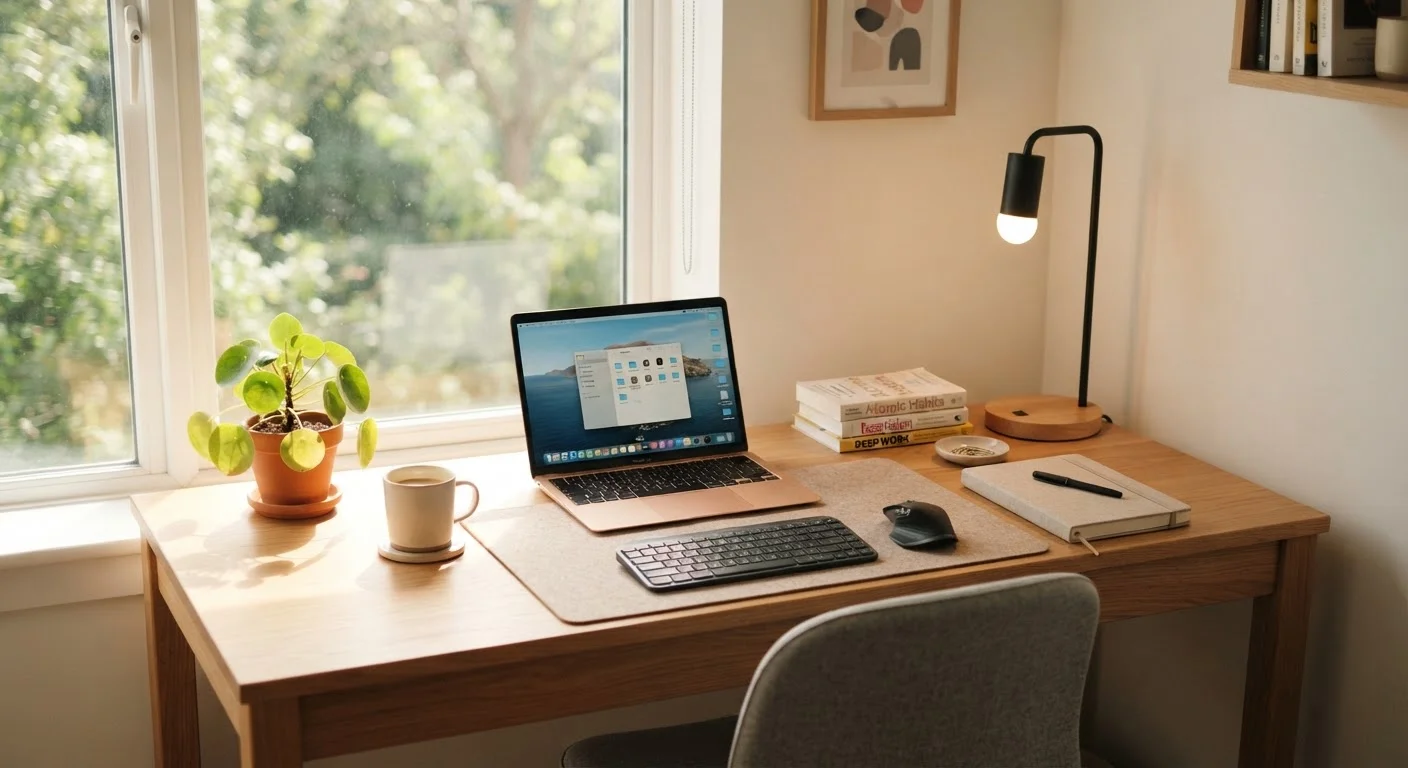
A cluttered workspace isn't just visually unpleasant - it creates low-level cognitive friction. When unrelated objects, papers, and supplies are visible on a desk, they make small competing demands on attention. The brain registers them as unresolved items, which can make sustained concentration harder to maintain. Organizing a home office is therefore less about aesthetics and more about reducing the number of things competing for your awareness while you work.
Home offices present a particular challenge because the space often doubles as a place for personal tasks, deliveries, mail, and household items. Without intentional systems, the workspace gradually absorbs the ambient clutter of the home around it. The steps below are designed to reverse that drift and keep it reversed.
Desk tray or inbox
Corrals incoming paper so documents don't scatter across the desk surface.
Cable management clips or ties
Keeps charging and device cables from creating visual and physical tangle on the desk.
Small desktop drawer unit or caddy
Stores frequently used supplies - pens, sticky notes, scissors - in one accessible place.
Label maker or adhesive labels
Marks storage containers and files so items always return to the correct location.
File folder or accordion file
Provides a home for active paper documents that need to be accessible but off the desk surface.
Maintaining the System Over Time
The most common reason organized home offices revert to chaos isn't a lack of storage - it's the absence of a maintenance habit. Organizational systems need to be simple enough that returning things to their place takes less effort than leaving them out. If your system feels complicated mid-workday, simplify it rather than abandon it.
If you share your home with others and the workspace is semi-shared or subject to interruption, organizing shared home spaces covers how to establish norms that other household members can follow without constant reminders.
Finally, organization is one piece of a broader focus strategy. How you structure your workday - whether through time blocking or to-do lists - matters just as much as the state of your desk. A well-organized space works best when it's paired with a clear plan for how you'll use it.
Avoid Organizing Without Editing First
Buying storage containers before you've removed unnecessary items usually makes the problem worse - you're just neatly storing things you don't need. Start by reducing what's on and around your desk, then decide what containers or systems you actually require. Purchasing first often leads to wasted money and a still-cluttered space.