Why Sentimental Items Are So Hard to Organize
Most home organization advice focuses on utility: if you haven't used it in a year, out it goes. That logic works well for duplicate kitchen gadgets or outgrown shoes. It falls apart completely when you're holding your grandmother's brooch or a handmade card from your child's first year of school.
Sentimental items occupy a different category entirely. They aren't kept because they're functional - they're kept because they carry meaning. And because meaning is personal and invisible to anyone else, no storage system can decide their value for you. That's what makes them so difficult to organize and, for many people, the reason entire boxes go untouched for years.
The goal of this guide isn't to push you toward minimalism or convince you to discard things you love. It's to help you build a realistic framework for making intentional decisions - so your meaningful keepsakes are actually accessible, honored, and organized rather than buried under guilt and dust. For a broader look at how decluttering can coexist with keeping what matters, see our guide on decluttering without letting go of everything you love.
Give Yourself Permission to Take Your Time
Unlike organizing a pantry or a linen closet, working through sentimental items can surface unexpected emotions. There's no rule that says this has to happen in one sitting. Pacing yourself - and stepping away when you feel overwhelmed - tends to produce better, more considered decisions than pushing through when you're emotionally depleted.
What You'll Need Before You Start
Before diving into the sorting process, gather your materials and set aside uninterrupted time. Rushing through memory items leads to hasty decisions you may regret or, more commonly, avoidance that pushes the task off indefinitely.
What you will need
Acid-free storage boxes
Protect paper items, photographs, and textiles from deterioration over time.
Document or photo scanner
Create high-resolution digital copies of photos, letters, and children's artwork.
Shadow box or display frame
Present small meaningful objects or flat keepsakes as intentional décor rather than stored clutter.
Sticky note labels
Temporarily mark sorting piles without damaging items during the decision-making process.
Step-by-Step: A Framework for Sentimental Organization
Follow these steps at whatever pace feels sustainable. You don't need to complete everything in one session - in fact, spreading the process over a few days often leads to better decisions.
Gather everything in one place
Before making any decisions, collect all sentimental items from wherever they're currently stored - closet shelves, attic bins, junk drawers, under the bed. Seeing the full scope of what you have is essential. It's common to discover duplicates, forgotten items, or things that no longer feel meaningful once they're out in the light.
Sort by emotional weight, not category
Rather than sorting by object type (photos, letters, gifts), sort by how strongly each item resonates with you. A simple three-pile system works well:
- Deeply meaningful: Items that produce a genuine emotional response and feel irreplaceable.
- Moderately meaningful: Items you feel attached to, but perhaps out of obligation or habit rather than strong feeling.
- Uncertain: Items you're unsure about - set these aside for a second pass rather than forcing a decision now.
This approach aligns with how organizing by category works in other contexts - grouping like things surfaces patterns that make decisions easier.
Decide how each item will be honored
For items in your 'deeply meaningful' pile, choose a specific way to honor them - not just store them:
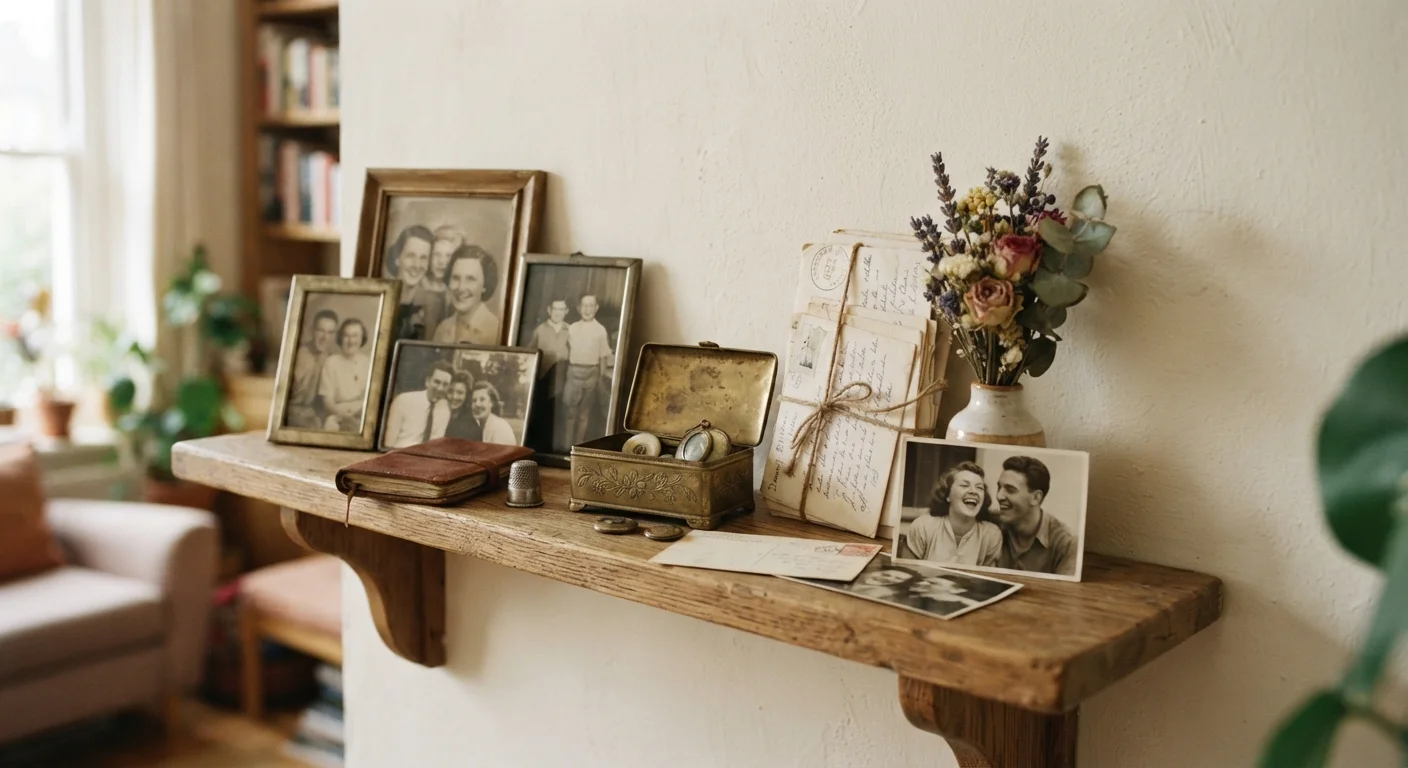
- Display: A framed photo, a shadow box, or a dedicated shelf makes items visible and appreciated daily.
- Active use: Quilts, dishes, and jewelry don't need to live in boxes. Using inherited items is a meaningful way to keep them present.
- Archival storage: Items too fragile or numerous to display can go into a properly labeled, acid-free storage container.
- Digitize: Photos, documents, and drawings can be scanned at high resolution, preserving the memory without the physical footprint.
Revisit the 'moderately meaningful' pile
Go back to your middle pile with fresh eyes. Ask yourself: if this item were lost in a move or a flood, how would I actually feel? That thought experiment often clarifies which items matter more than you realized - and which you've been keeping out of guilt rather than genuine attachment. Items that don't pass that test are reasonable candidates for passing on to family members who may value them more, or releasing altogether.
Assign a home for what you're keeping
Everything you've decided to keep needs a specific, intentional place. Vague storage - a box labeled 'memories' shoved in a corner - tends to become a catch-all that defeats the purpose of this process. Use clearly labeled containers, designate a specific drawer or shelf, and make sure items are stored in a way that protects them (away from moisture, direct sunlight, and pests for physical items; backed up in multiple locations for digital files).
Don't Organize During a High-Stress Period
Sorting sentimental items immediately after a loss, a move, or a major life transition can lead to decisions you'll regret. If you're in the middle of an emotionally demanding time, it's reasonable to simply box things up safely and return to them when you have more emotional bandwidth. Preservation now, decisions later, is a valid approach.
Maintaining the System Over Time
Once you've sorted and stored your sentimental items thoughtfully, the challenge shifts to keeping that order intact. Memory collections tend to grow - birthdays, holidays, and milestones all generate new meaningful objects.
A useful principle here is the container rule: your designated memory storage (a box, a shelf, a drawer) defines the limit. When something new comes in and the container is full, something must be reconsidered. This isn't about being ruthless - it's about being intentional. The one-in, one-out approach applies gently here and can prevent gradual re-accumulation without requiring constant major overhauls.
If you share your home, sentimental clutter can become a sensitive negotiation. Each person's attachment to objects is valid, even when it creates friction. Our guide on organizing shared living spaces offers strategies for navigating those conversations constructively. And if you find yourself questioning broader organizing assumptions along the way, it's worth reviewing common myths about home organization - some popular beliefs genuinely make the process harder than it needs to be.