
Your Brain Doesn't Ignore Clutter - It Works Against It
Walk into a room piled with unsorted mail, misplaced items, and forgotten projects, and something happens almost immediately: your brain gets busier. This isn't imagined. Neuroscience research has shown that visual disorder competes for attentional resources, even when you're actively trying to focus on something else.
The brain's visual cortex is wired to process everything in your field of view, not just what you intend to look at. In a cluttered space, that means a constant background effort to filter out irrelevant stimuli. This is sometimes described as cognitive load - the mental energy spent managing environmental noise rather than directed thinking. The more cluttered a space, the higher the baseline cognitive load it imposes.
This helps explain why so many people find it genuinely difficult to concentrate in a messy room. It's not a lack of willpower. The environment itself is creating friction. A well-organized home office directly addresses this dynamic - because a disorganized workspace fragments attention in measurable ways.
Clutter Tolerance Varies Between People
Not everyone experiences clutter the same way. Some people function well in visually busy environments, while others find even mild disorder significantly disruptive. Research suggests personality traits, background, and neurodivergent conditions like ADHD can all influence how strongly someone responds to environmental clutter. There's no universal threshold for what counts as 'too much.'
Clutter as a Stress Signal: What Research Has Found
Psychologists Darby Saxbe and Rena Repetti published research finding that women who described their homes as cluttered or unfinished showed higher levels of cortisol - a primary stress hormone - throughout the day compared to those who described their homes as restful. The connection between physical environment and physiological stress response was direct enough to be measurable.
This doesn't mean clutter causes the same stress in everyone. Individual tolerance for visual disorder varies considerably. But the general pattern - that living in a persistently cluttered environment costs something in terms of mental and physical wellbeing - is well-supported by environmental psychology research.
~54%
Americans overwhelmed by home clutter
A survey by the National Association of Professional Organizers found that roughly 54% of Americans feel overwhelmed by clutter and don't know what to do about it.
Higher cortisol
Stress hormone levels in cluttered homes
Research by Saxbe and Repetti found women in high-clutter homes showed elevated cortisol throughout the day compared to those in more restful environments.
Clutter also tends to be emotionally loaded. Many objects carry unresolved meaning: gifts you feel guilty discarding, projects you haven't finished, purchases you regret. Each of these items is a small reminder of an incomplete loop, and the accumulation of those reminders contributes to what researchers sometimes call attentional residue - mental energy that stays attached to unresolved things rather than freeing up for the present moment.
Why Clutter Accumulates: The Decision Fatigue Loop
Most clutter isn't the result of laziness. It's the result of deferred decisions. Every object in a home without a designated place requires a micro-decision each time it's encountered: where does this go? What do I do with it? Is it still useful? Over time, the sheer number of these small decisions adds up, and decision fatigue sets in - making it progressively harder to act on any of them.
This is why clutter tends to build in waves and resist easy resolution. A pile grows not because the person stopped caring, but because each new item added a question that went unanswered. Common myths about home organization often make this cycle worse by suggesting that the solution is more storage - when the real need is fewer unresolved decisions.
Lower the Decision Barrier First
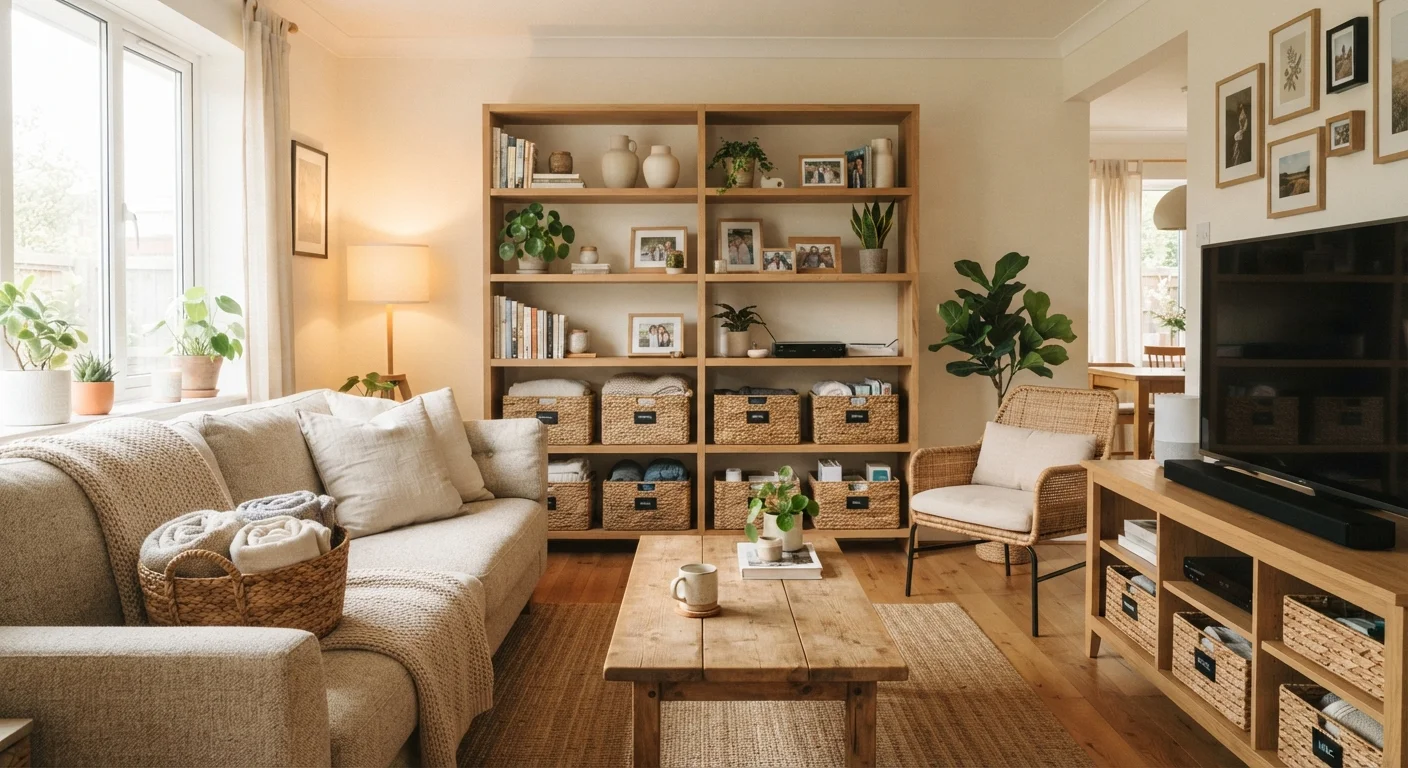
Before attempting a full declutter, give every category of item a designated home - even if it's imperfect. When objects have a place to return to, the daily micro-decisions disappear. Start with whatever surface causes you the most stress and build outward from there.
Understanding this cycle matters for anyone trying to get organized and stay that way. The goal isn't to find willpower for a massive overhaul; it's to reduce the number of decisions the environment demands daily. That's the logic behind systems like one-in, one-out habits - they create standing rules so fewer choices need to be made in the moment.
Moving From Understanding to Action
Knowing why clutter feels overwhelming doesn't automatically clear a countertop - but it reframes the problem usefully. When you understand that a messy space is genuinely taxing your cognitive resources and nudging your stress response upward, tidying becomes less about perfectionism and more about protecting your own mental bandwidth.
That reframe tends to make a meaningful difference in how people approach the process. Rather than waiting for the motivation to tackle everything at once, the more effective approach is usually smaller and more consistent: one surface, one category, one habit at a time. Thoughtful decluttering doesn't require going minimalist - it requires reducing the number of things in your space that demand attention without giving anything back.
For households where multiple people share space, the challenge is compounded. Different tolerances for clutter and different habits create friction on top of the existing cognitive load. Organizing a shared home involves building systems that distribute the decision-making rather than leaving it to one person to manage.
The psychological case for a more organized home isn't about achieving a magazine-worthy space. It's about reducing the invisible tax your environment places on your attention, mood, and energy - and reclaiming that capacity for things that actually matter to you.